Ten Facts That Explain a Remarkably Different Neighbor
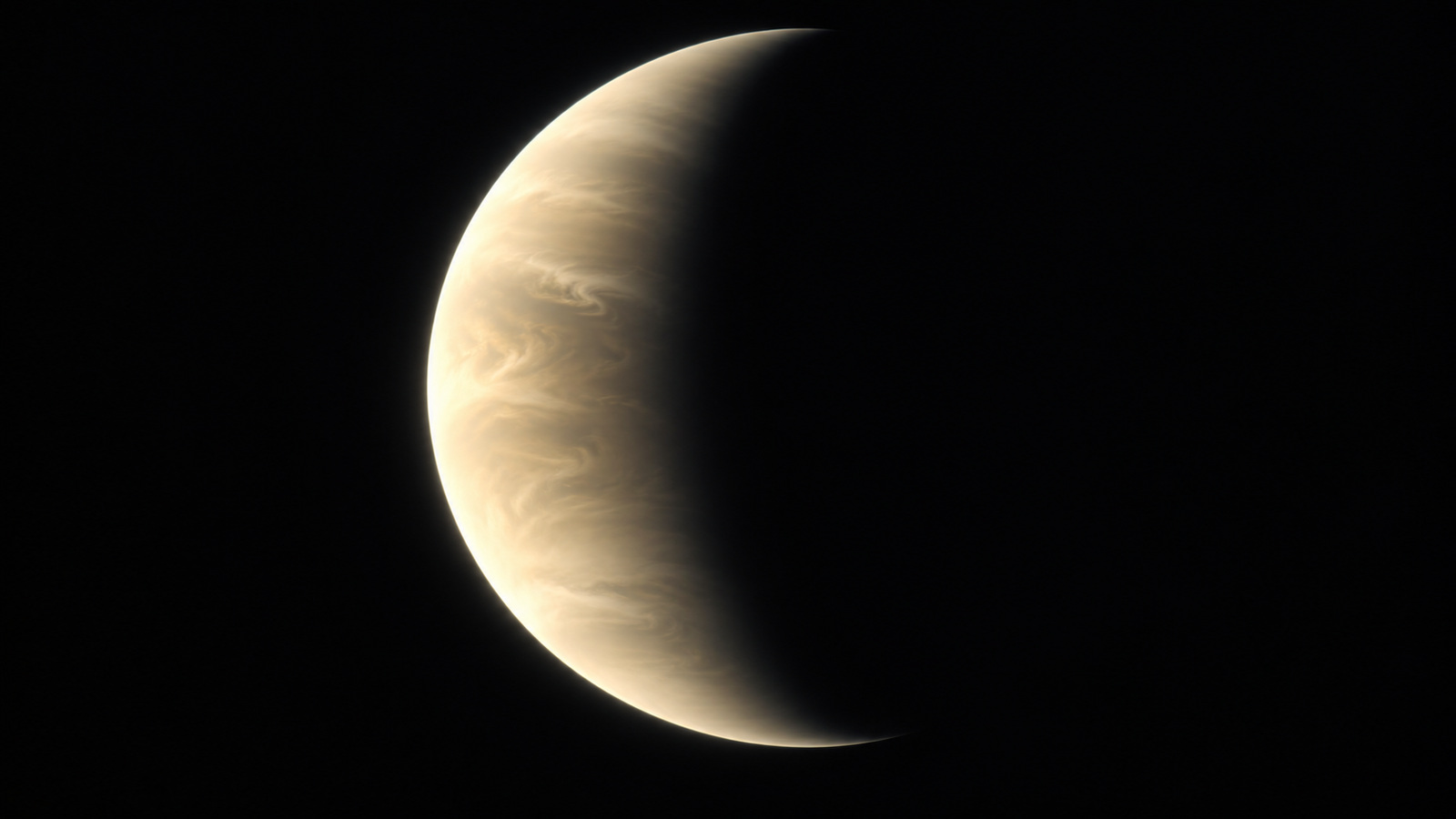
Venus is often called Earth’s twin because its dimensions are similar, but the comparison quickly becomes more interesting than a matching pair of globes. Its dense atmosphere, immense surface heat, unusual rotation, and cloud circulation reveal a world that followed a very different path. Radar opens a view beneath the clouds, while old spacecraft data continue to reveal evidence of geological activity. The ten facts below form an accessible planetary portrait rather than a collection of unrelated superlatives. Each also carries a useful qualification: a similar size does not promise a similar climate, a bright cloud deck does not imply water clouds, and a measured signal should be distinguished from the historical explanation proposed for it. Venus is fascinating because the connections between these properties challenge familiar assumptions.
1. Venus Is Nearly Earth’s Width
Venus is approximately 12,100 kilometers in diameter, compared with Earth’s roughly 12,740. The difference is modest enough to make the twin nickname understandable in a size comparison. Both are rocky planets rather than hydrogen-dominated giants with no accessible solid ground. Yet diameter alone says little about atmospheric chemistry, surface water, or biological conditions. A comparison becomes useful when it states exactly which resemblance is meant, instead of allowing one shared property to stand for the entire environment.
Mass and gravity are similar in broad terms too, although not identical. An object on Venus would retain its mass while experiencing a somewhat smaller gravitational weight than on Earth. These relationships help explain why the planet is a valuable comparison for studying rocky-world evolution. They do not make its surface a welcoming destination. Heat, pressure, composition, and available water are independent conditions that must be evaluated alongside the size resemblance. ESA’s Earth-Venus comparison places those similarities beside the more consequential differences.
2. Its Surface Air Pressure Is About Ninety Times Earth’s
The atmosphere above Venus’s surface produces a pressure near ninety-two times Earth’s sea-level value. This is the weight of a vast overlying column of gas, not simply a statement that the air contains a high percentage of carbon dioxide. Atmospheric amount and chemical proportion answer separate questions. Mars also has carbon-dioxide-dominated air, yet its low total pressure creates a radically different environment. Comparing percentages without comparing quantities would hide that contrast.
Pressure acts in every direction around a sealed object, so a vehicle must withstand the difference between inside and outside conditions. A broad analogy with deep terrestrial water can convey the severity, but the media and thermal settings differ. Venus presents hot dense gas, not a cold ocean at the same nominal pressure. Materials, seals, electronics, and communication systems therefore face a combined engineering problem. One matched number does not reproduce the whole environment.
Pressure also changes with elevation. High terrain has less atmosphere above it than low terrain, and atmospheric profiles vary with height through many layers. A characteristic surface number should not be assigned to a floating platform high in the clouds. The planet’s atmosphere is a vertical structure whose conditions must be specified by location. The ninety-times comparison is memorable because it refers to the surface setting, not because every atmospheric altitude shares it.
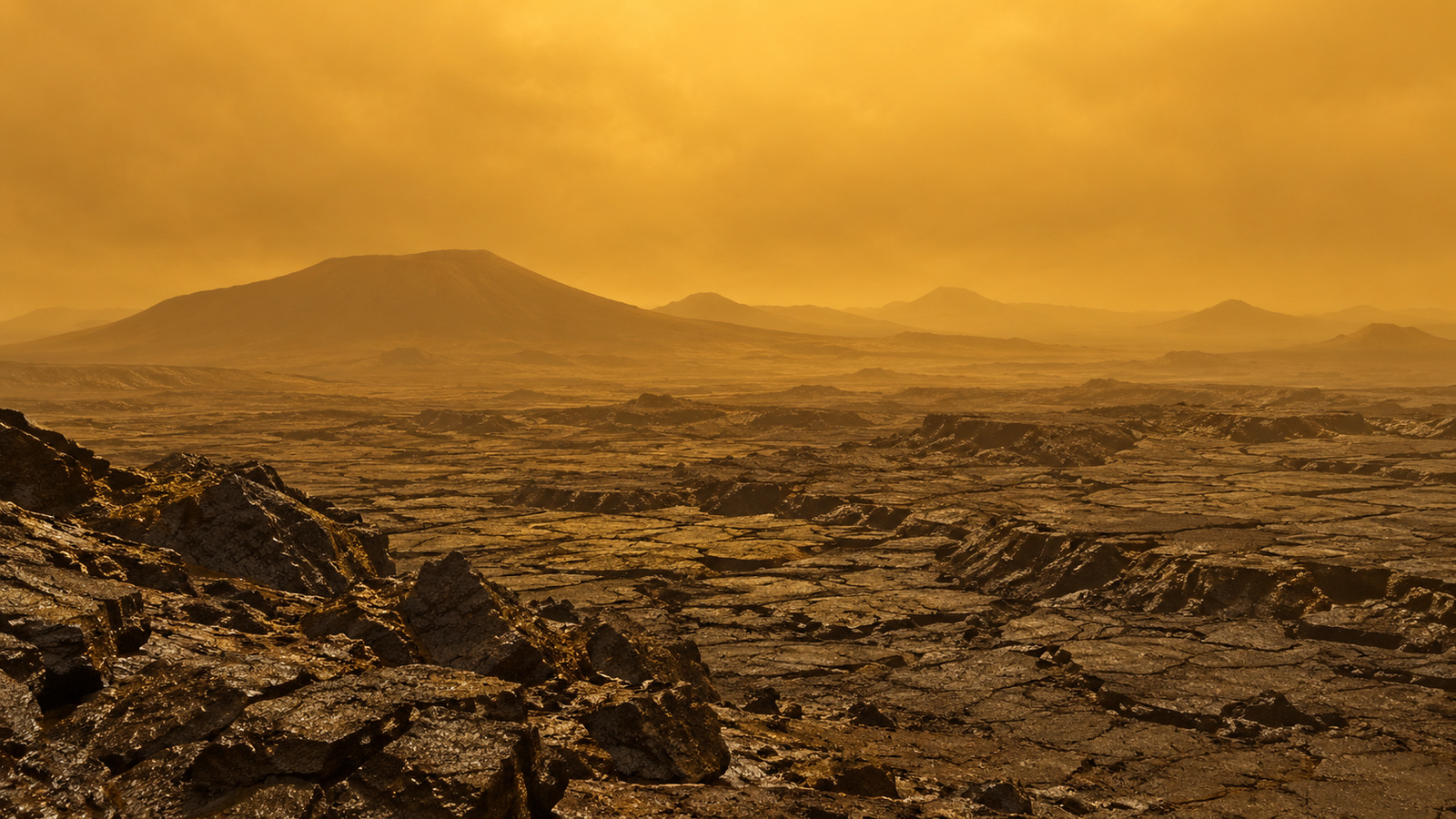
3. The Surface Is Hotter Than Mercury’s Typical Surface
Venus maintains surface temperatures around 460 degrees Celsius, despite orbiting farther from the Sun than Mercury. Its strong greenhouse environment changes how energy leaves the lower atmosphere and ground, while circulation moderates differences across the planet. The closest-to-the-Sun ranking therefore does not determine the hottest typical surface. Mercury’s exposed terrain can become intensely heated in daylight and very cold at night, whereas Venus sustains a different overall thermal state. The explanation needs atmospheric physics rather than distance alone. A maximum at one location and a representative planetary surface temperature must also remain distinct comparisons.
4. The Famous Clouds Contain Sulfuric Acid
Venus’s bright cloud layers are not terrestrial-style water clouds painted yellow. Sulfuric-acid droplets are a major component, and their optical behavior helps produce the planet’s highly reflective appearance. Cloud particle populations and surrounding gas vary with altitude, so one simple description cannot specify every layer’s detailed chemistry. The clouds are nevertheless a real physical barrier to ordinary visible views of the surface. A photograph of the bright disk generally shows atmospheric appearance rather than ground geography.
A cooler cloud region also should not be mistaken for a biologically comfortable environment. Chemical acidity and very low availability of usable water are serious constraints beyond temperature. Familiar words such as droplet and cloud can encourage a false Earth analogy if their composition is omitted. The accurate comparison identifies which property is similar and which is not. The planet demonstrates that liquid particles can exist in an atmosphere without providing the kind of watery habitat associated with life on Earth.
5. Venus Rotates Backward and Extremely Slowly
The solid planet takes about 243 Earth days to turn once relative to distant stars, while its orbital year is about 225 Earth days. Its spin is retrograde under the standard convention, opposite the usual direction adopted by most planets. That actual physical rotation is distinct from a planet’s apparent retrograde track in Earth’s sky.
A fixed point on Venus follows the slow spin whether an Earth observer can see the planet or not. The direction is a measured property, while its full evolutionary cause remains a subject of research.
The phrase day longer than year applies to the sidereal rotation, not to every definition of day. The Sun’s mean return to the same local sky position takes about 117 Earth days because spin and revolution combine in opposite directions. That solar cycle is shorter than the year and includes both illumination and darkness. It is not simply a 117-day sunrise-to-sunset interval. NASA’s Venus lithograph supplies the contrasting clocks needed to read the famous fact correctly.
Precise timing requires more detail than these rounded values. Venus’s rotation rate shows variation, and the atmosphere can exchange angular momentum with the planet. The broad ordering of the clocks remains intact, but a mission using exact terrain coordinates needs a refined rotation model. Planetary fact summaries are therefore appropriate for comparison without serving as navigation tables. Knowing which level of accuracy is intended prevents a small measured correction from looking like a reversal of the entire explanation.
6. The Upper Clouds Circle Much Faster Than the Surface
Atmospheric superrotation carries upper cloud patterns around Venus in only a few Earth days. The contrast with the slow solid-body spin is dramatic, but it describes moving air rather than the entire planet rotating at a new rate. Wind speeds vary with altitude and latitude, and cloud features can change shape while traveling. A tracked cloud consequently supplies a particular atmospheric measurement. It cannot define the underlying rocky world’s day.
The circulation problem joins heating, momentum transport, waves, and other atmospheric processes. It is not explained simply by imagining a giant terrestrial windstorm scaled up. Venus Express cloud observations show how repeated views can reveal rapid movement and evolving patterns. A sequence carries information unavailable in one attractive portrait. The atmosphere’s fast clock and the surface’s slow clock coexist, making Venus a natural experiment in how planetary rotation and weather interact.
7. Radar Mapped the Landscape Hidden Below
Ordinary visible light does not provide a clear global view through Venus’s thick clouds. Radar can probe the surface remotely, recording echoes that depend on terrain and material properties. NASA’s Magellan mission assembled an extensive map revealing plains, mountains, impact craters, and volcanic structures. Radar brightness should not be read as a literal visible color or a direct photograph of rock chemistry. Geometry and roughness influence the signal as well as the material. The achievement was to convert those measurements into a structured view of a hidden geological world.
8. Archival Images Reveal Evidence of Active Volcanism
Reanalysis of Magellan radar observations has identified surface changes interpreted as evidence of eruptions during the mission era. A 2023 study examined a changed volcanic vent, and further work described additional changes consistent with lava flows. These investigations matter because they turn a static catalog of old volcanic landforms into evidence about activity on much shorter timescales. JPL’s account of the additional results explains the comparison between observations. The relevant evidence is change between measured views, not the fact that a volcano looks dramatic.
Radar comparisons require attention to viewing angle and instrument geometry. A surface can appear different when illuminated from another direction, even without geological change. Researchers therefore assess whether the observed difference is consistent with a genuine new feature and whether alternatives can explain it. The resulting interpretation should retain its stated confidence and scope. A changed region does not establish that every volcanic mountain on Venus is continuously erupting.
The old observations also do not amount to a live broadcast of conditions today. They establish activity during the sampled interval and strengthen the picture of a dynamic planet. Future missions can seek changes over additional times and improve the spatial coverage. This is a useful example of how careful archival work adds new knowledge without pretending the measurement was made yesterday. A discovery date and the date of the underlying event belong separately in the explanation.
9. Venus Interacts Magnetically Without an Earth-Like Dynamo Field
Venus lacks a strong intrinsic global magnetic field comparable to Earth’s, yet its environment still interacts with the solar wind. Charged atmospheric particles and incoming fields form an induced magnetic environment and tail. The absence of one kind of planetary field is therefore not the absence of all magnetic physics. ESA’s observations of the extended ionosphere illustrate how changing solar-wind conditions affect this surrounding region. The environment is a plasma interaction system rather than a simple blank space around a nonmagnetic rock.
This also cautions against explaining atmospheric evolution with one shield metaphor. Escape depends on radiation, chemistry, particle interactions, gravity, and history, as well as magnetic conditions. Comparing Venus with Earth can constrain those processes, but one missing dynamo does not provide a complete account of every difference. A dense atmosphere can persist while participating in active space interactions. The measured field setting and the long-term atmospheric inventory are linked problems requiring several kinds of evidence.
10. Venus Has No Confirmed Natural Moon
Venus has no confirmed natural satellite, although bodies can share aspects of its journey around the Sun without becoming moons. The distinction depends on the orbit: a satellite circles Venus as a gravitationally bound companion, whereas a co-orbital relationship describes solar motion related to the planet’s own orbit. This makes a reported nearby object something to classify, rather than an automatic revision of the moon inventory. The present absence of a satellite is established; why Venus reached that state is a different question. Formation, loss and tidal evolution offer possible historical pathways, but none should be selected merely because it makes an appealing story. The Sun’s competing gravity and Venus’s slow retrograde spin constrain which satellite histories can work. A useful explanation must reproduce those conditions as well as the absence of a moon today. Beside the similar diameter, fast clouds and severe surface environment, the moonless system adds another precise reason why Earth’s twin is only a limited comparison.