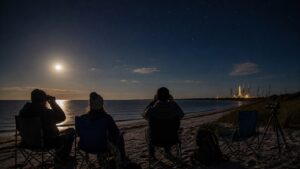
The Artemis program marks humanity’s bold return to the Moon—this time to stay, explore deeper, and prepare for journeys beyond Earth. Named after the twin sister of Apollo, Artemis represents a new era of space exploration powered by advanced technology, international partnerships, and a renewed sense of discovery. On Lyra Street, Artemis is where science, ambition, and imagination converge. This groundbreaking initiative is more than a lunar landing. Artemis is building a sustainable presence on the Moon through powerful rockets like the Space Launch System, the Orion spacecraft designed for deep-space travel, and the future Gateway station orbiting the Moon. Each mission pushes the boundaries of what humans can achieve in space—testing life-support systems, refining lunar navigation, and unlocking knowledge hidden in the Moon’s surface. Artemis also sets its sights on Mars. Every experiment, landing, and orbit is a stepping stone toward long-duration human exploration of the solar system. Whether you’re fascinated by lunar science, human spaceflight, cutting-edge engineering, or the future of interplanetary travel, Artemis on Lyra Street offers a front-row seat to the next giant leap for humanity.
A: No—Artemis aims for repeatable missions, new tech, and long-term lunar operations.
A: It offers strong science targets and possible water ice for future resources.
A: A lunar-orbit hub can support logistics, science, and mission flexibility.
A: Yes—testing habitats, suits, radiation mitigation, and operations far from Earth.
A: Better monitoring, shielding strategies, mission planning, and hardened systems.
A: Yes—commercial landers, hardware, software, and services are part of the program.
A: Ice studies, geology, space weather, radiation measurements, and technology demos.
A: The goal is a sustained presence—starting with habitats, power, and mobility over time.
A: Typically a few days, depending on the mission profile and trajectory.
A: Yes—missions are widely shared through updates, media, and public outreach.

Artemis Missions Explained: Timeline, Goals, and What to Watch in the Sky
Artemis Missions Explained: Timeline, Goals, and What to Watch in the Sky is most useful when it connects a big astronomy story to what a real reader can do under the sky. The headline may involve a famous telescope, a p
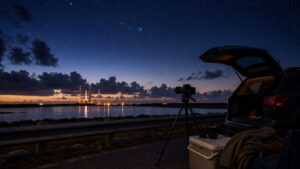
When Is the Next Artemis Launch? Complete Viewing Guide (2026-2030)
When Is the Next Artemis Launch? Complete Viewing Guide (2026–2030) is most useful when it connects a big astronomy story to what a real reader can do under the sky. The headline may involve a famous telescope, a peak me

How to See Artemis Launches From Earth: Best Locations & Times
How to See Artemis Launches From Earth: Best Locations & Times is most useful when it connects a big astronomy story to what a real reader can do under the sky. The headline may involve a famous telescope, a peak meteor
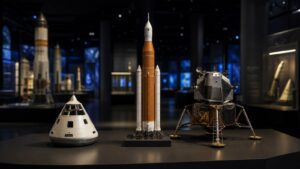
Artemis I, II, III: What’s the Difference and Why It Matters
Artemis I, II, III: What’s the Difference and Why It Matters is most useful when it connects a big astronomy story to what a real reader can do under the sky. The headline may involve a famous telescope, a peak meteor ni

Can You See Artemis From Your Backyard? Viewing Tips by Region
Can You See Artemis From Your Backyard? Viewing Tips by Region is most useful when it connects a big astronomy story to what a real reader can do under the sky. The headline may involve a famous telescope, a peak meteor
