

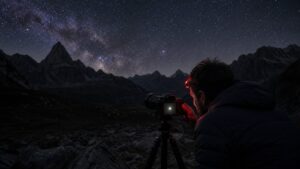
Beginner Astrophotography Guide: How to Photograph the Night Sky
Night-sky photography is a negotiation between scarce light and constant motion. A longer exposure gathers more photons, yet stars drift across the sensor as Earth rotates. Higher sensitivity brightens the recorded signal, yet it also makes noise and limited dynamic range more visible. Good first images come from balancing those constraints rather than searching for one universal setting.
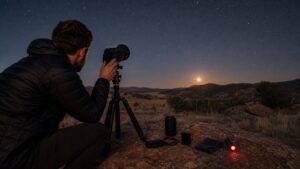
Astrophotography for Beginners: Gear, Settings, and First Shots
The best beginner kit is not the largest collection of accessories. It is a small group of components that removes predictable failure points: a camera that permits manual control, a lens suited to the desired field, a stable support, dependable power, and a way to verify focus. Once those basics are covered, the first subjects can be chosen to teach different skills in a deliberate
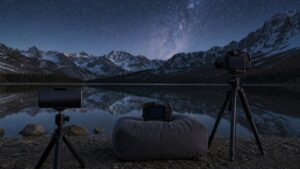
How to Take Stunning Night Sky Photos with Any Camera
Every camera has a different ceiling, but almost every camera benefits from the same fundamentals: darkness, stability, accurate focus, controlled highlights, and a composition worth looking at. The practical challenge is to identify which controls the device offers and then design the photograph around those limits instead of imitating equipment it does not have.