A telescope reveals small and faint details, but it is not the entrance ticket to astronomy. The unaided eye excels at broad structures, motion, brightness changes, and relationships that cannot fit inside an eyepiece. Learning those large-scale patterns first creates the spatial intuition that later makes binoculars and telescopes easier to use.
Turn Your Body Into an Instrument
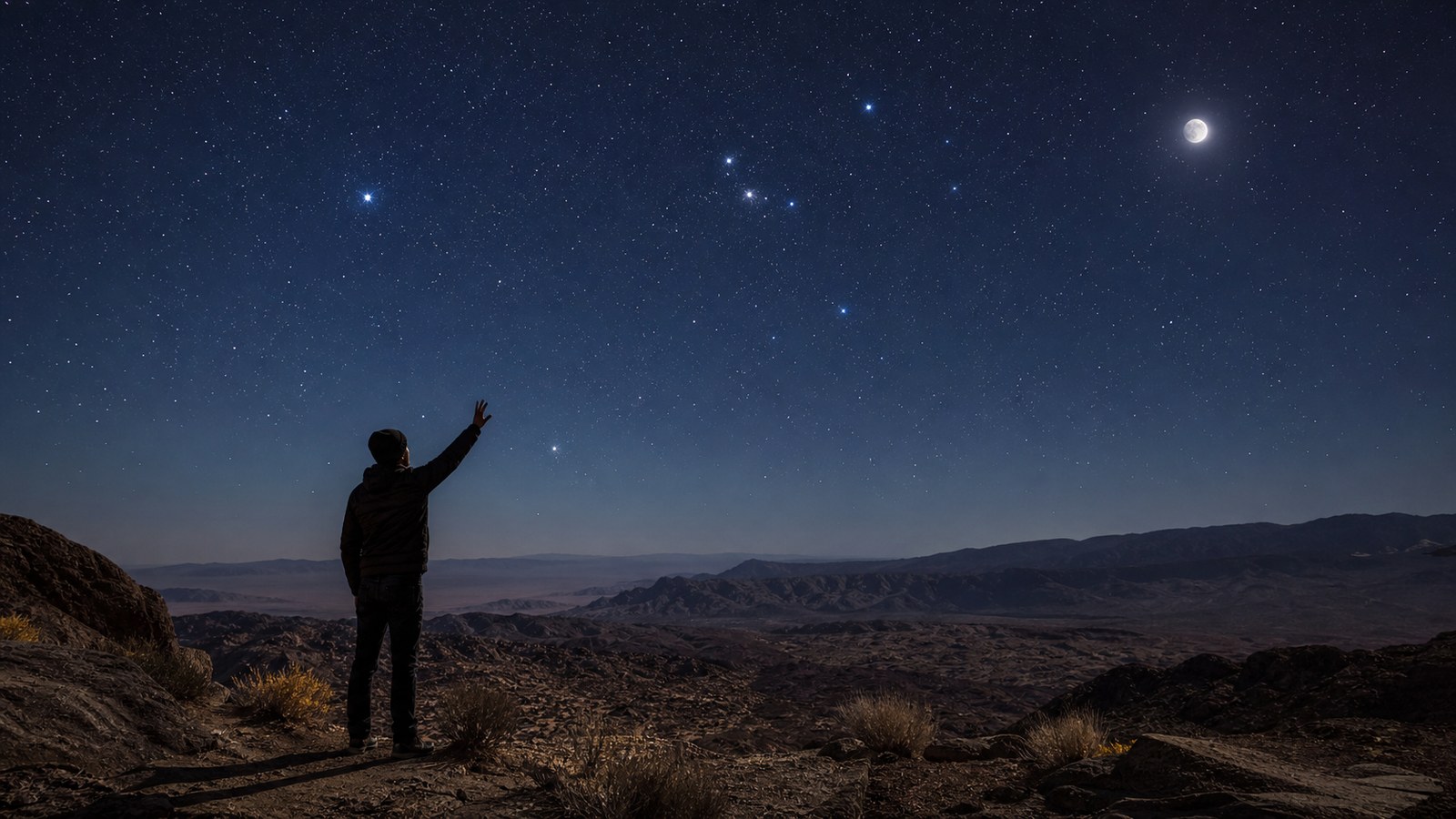
Hands held at arm's length provide repeatable estimates of angular distance across the sky. The underlying physics also explains a common surprise. A little finger is roughly one degree wide, three middle fingers cover about five degrees, and a fist spans near ten degrees for many adults. Calibrate your own hand against the Moon, whose apparent width is about half a degree, then measure separations between bright stars. Hand measures are approximate and vary by person, so they guide navigation rather than replace precise astronomical coordinates. The most useful response is to observe the result, note the conditions, and adjust one variable at a time. The goal is a repeatable result, not a single lucky success.
Calibrate your own hand against the Moon, whose apparent width is about half a degree, then measure separations between bright stars. This is less a rule to memorize than a relationship to observe. Hand measures are approximate and vary by person, so they guide navigation rather than replace precise astronomical coordinates. Hands held at arm's length provide repeatable estimates of angular distance across the sky. A little finger is roughly one degree wide, three middle fingers cover about five degrees, and a fist spans near ten degrees for many adults. The most useful response is to observe the result, note the conditions, and adjust one variable at a time. That record makes the lesson transferable instead of leaving it as a one-night impression.
Follow the Moon for One Month
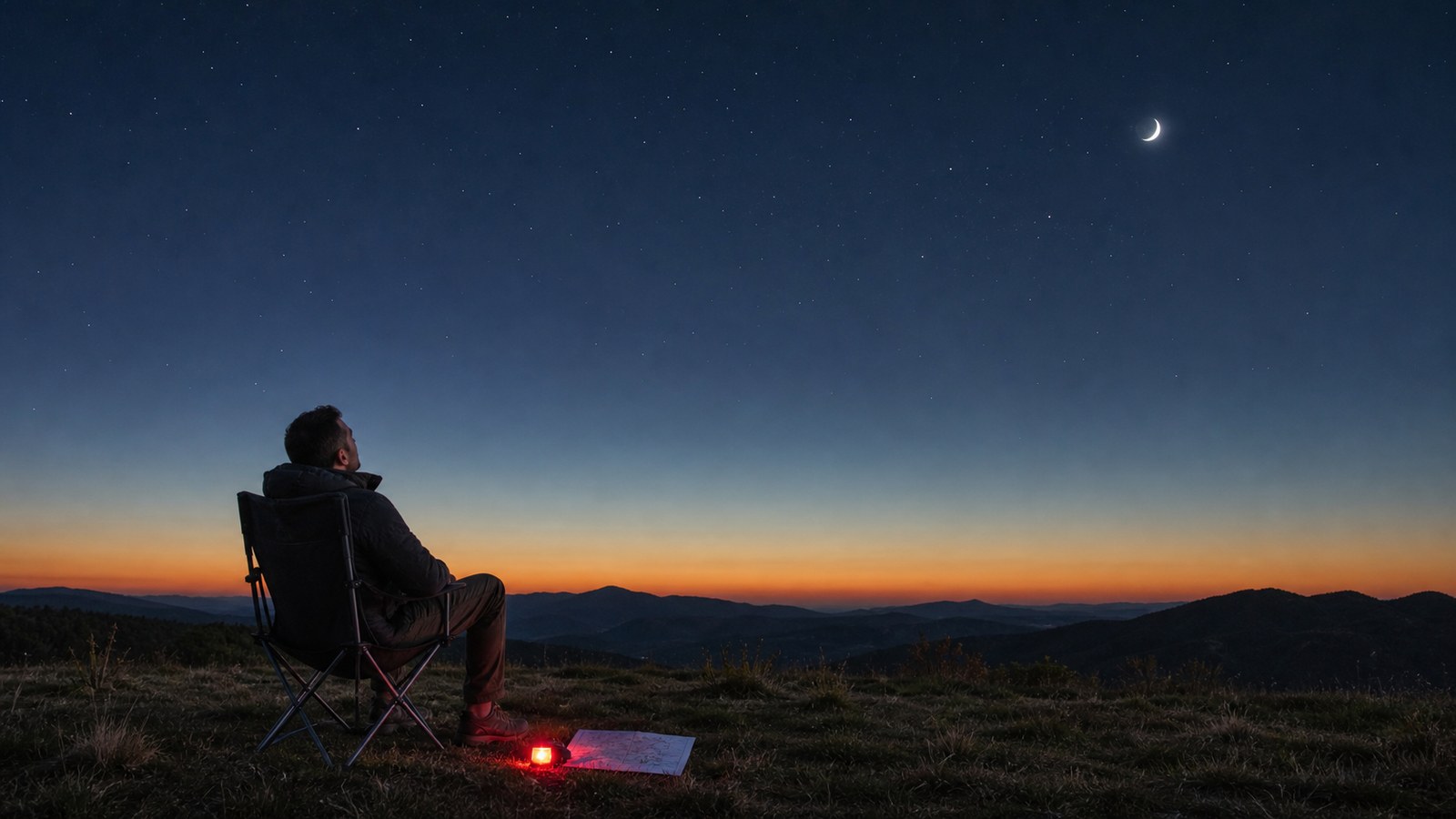
The Moon's changing phase and position make orbital motion visible without any optical aid. Seen as a workflow problem, the solution becomes more manageable. It moves eastward against the stars from night to night while its illumination changes with the Sun-Earth-Moon angle. Sketch the crescent, half, gibbous, and full phases at similar times and note how the Moon's location shifts. Phase is not Earth's shadow except during a lunar eclipse; ordinary phases come from seeing different portions of the sunlit hemisphere. The most useful response is to observe the result, note the conditions, and adjust one variable at a time. This approach preserves both accuracy and the enjoyment of discovery.
Sketch the crescent, half, gibbous, and full phases at similar times and note how the Moon's location shifts. The safest assumption is that conditions will vary and the plan must adapt. Phase is not Earth's shadow except during a lunar eclipse; ordinary phases come from seeing different portions of the sunlit hemisphere. The Moon's changing phase and position make orbital motion visible without any optical aid. It moves eastward against the stars from night to night while its illumination changes with the Sun-Earth-Moon angle. The most useful response is to observe the result, note the conditions, and adjust one variable at a time. A second attempt under changed conditions will reveal whether the first result was typical.
See Color and Brightness Among Stars
Bright stars show subtle colors that reflect surface temperature, from orange-red Betelgeuse to blue-white Rigel. For an observer, the consequence is immediate. Atmospheric turbulence produces stronger color flashing near the horizon by refracting different wavelengths unevenly. Compare stars of contrasting color when they are high in the sky and use averted vision for fainter companions. Do not infer actual size or distance from naked-eye brightness because luminosity and distance are entangled. The most useful response is to observe the result, note the conditions, and adjust one variable at a time. Over time, those small checks become automatic and free attention for finer detail.
Compare stars of contrasting color when they are high in the sky and use averted vision for fainter companions. The strongest evidence comes from what changes when one condition is altered. Do not infer actual size or distance from naked-eye brightness because luminosity and distance are entangled. Bright stars show subtle colors that reflect surface temperature, from orange-red Betelgeuse to blue-white Rigel. Atmospheric turbulence produces stronger color flashing near the horizon by refracting different wavelengths unevenly. The most useful response is to observe the result, note the conditions, and adjust one variable at a time. When uncertainty remains, choose the more conservative interpretation and gather another observation.
Watch Motion in Real Time
Meteors, satellites, aircraft, and Earth's rotation produce distinct kinds of movement across the sky. The effect may be subtle at first, yet it becomes obvious across several sessions. Satellites usually glide steadily and may fade into Earth's shadow; aircraft blink and often change apparent speed or direction. Use a reclining chair for meteor watching, scan a broad area, and record tracks relative to known stars. A single meteor cannot establish a shower; shower membership is inferred when many trails point back toward a common radiant. The most useful response is to observe the result, note the conditions, and adjust one variable at a time. The same reasoning can then be applied to more difficult targets or environments.
Use a reclining chair for meteor watching, scan a broad area, and record tracks relative to known stars. The result is not merely aesthetic; it changes what information can be perceived. A single meteor cannot establish a shower; shower membership is inferred when many trails point back toward a common radiant. Meteors, satellites, aircraft, and Earth's rotation produce distinct kinds of movement across the sky. Satellites usually glide steadily and may fade into Earth's shadow; aircraft blink and often change apparent speed or direction. The most useful response is to observe the result, note the conditions, and adjust one variable at a time. The goal is a repeatable result, not a single lucky success.
Trace the Milky Way and Dark Gaps
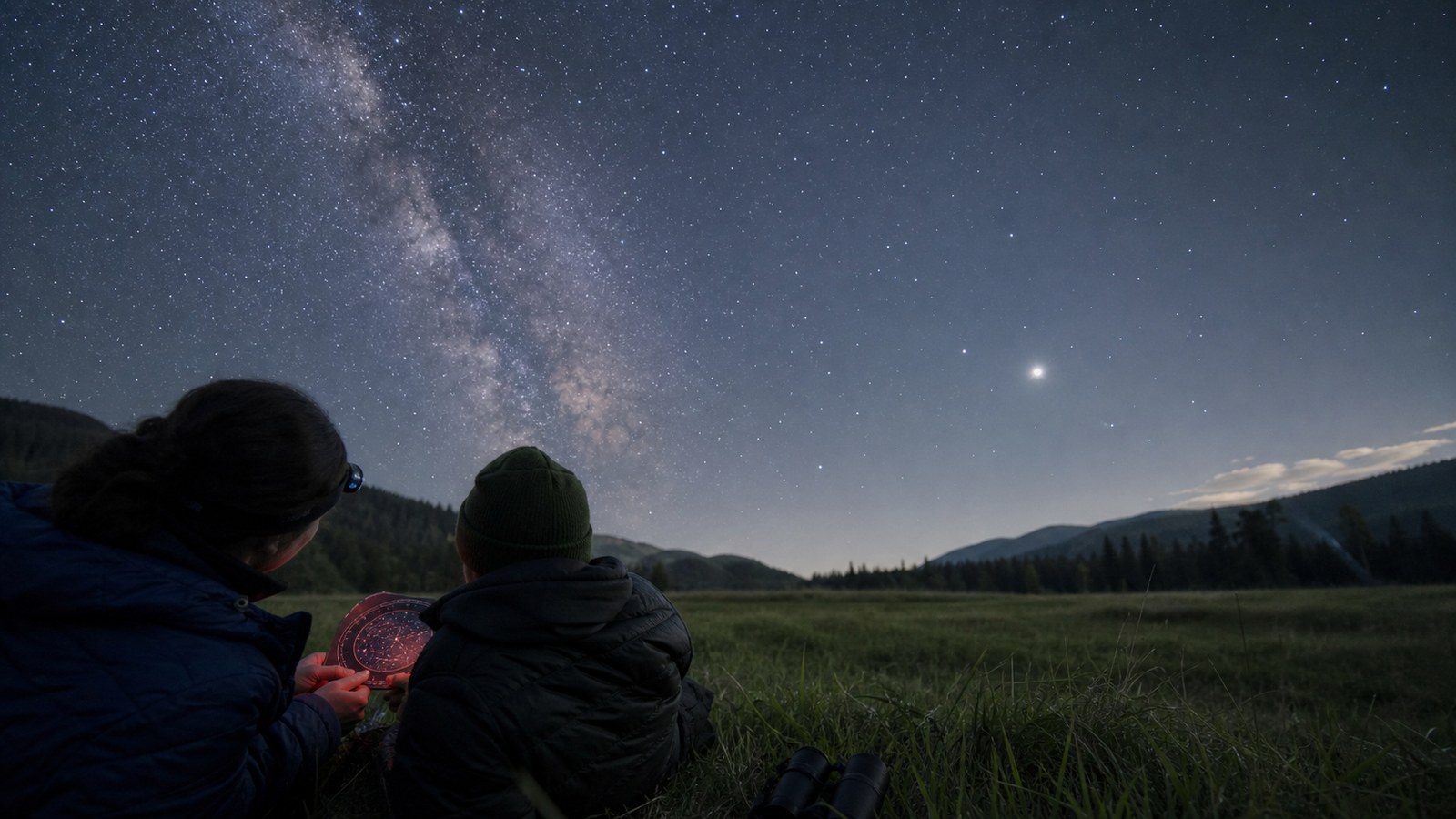
Under a sufficiently dark sky, the Milky Way appears as unresolved starlight interrupted by lanes of interstellar dust. The practical importance of this point appears in the field. Dark nebulae block background stars and create structured voids rather than truly empty regions. Observe after astronomical twilight, away from moonlight, and allow full dark adaptation before judging visibility. Photos show more color and density than human night vision, so visual expectations should not be set by long exposures. The most useful response is to observe the result, note the conditions, and adjust one variable at a time. Keep the observation tied to time, direction, and conditions so it can be compared later.
Observe after astronomical twilight, away from moonlight, and allow full dark adaptation before judging visibility. Experience tends to confirm the value of a controlled approach. Photos show more color and density than human night vision, so visual expectations should not be set by long exposures. Under a sufficiently dark sky, the Milky Way appears as unresolved starlight interrupted by lanes of interstellar dust. Dark nebulae block background stars and create structured voids rather than truly empty regions. The most useful response is to observe the result, note the conditions, and adjust one variable at a time. This approach preserves both accuracy and the enjoyment of discovery.
Make Repetition Your Upgrade
Returning to the same location reveals seasonal change, planetary motion, and improving perception without new equipment. This is less a rule to memorize than a relationship to observe. Familiar landmarks reduce navigation effort, leaving more attention for faint detail and subtle differences. Create a monthly route of five targets and note which appear, disappear, rise earlier, or change brightness. Constantly changing sites and targets can disguise progress because there is no stable baseline for comparison. The most useful response is to observe the result, note the conditions, and adjust one variable at a time. That record makes the lesson transferable instead of leaving it as a one-night impression.
Create a monthly route of five targets and note which appear, disappear, rise earlier, or change brightness. A simple check before the session prevents a much harder correction later. Constantly changing sites and targets can disguise progress because there is no stable baseline for comparison. Returning to the same location reveals seasonal change, planetary motion, and improving perception without new equipment. Familiar landmarks reduce navigation effort, leaving more attention for faint detail and subtle differences. The most useful response is to observe the result, note the conditions, and adjust one variable at a time. Over time, those small checks become automatic and free attention for finer detail.
Satellites usually glide steadily and may fade into Earth's shadow; aircraft blink and often change apparent speed or direction. Seen as a workflow problem, the solution becomes more manageable. Use a reclining chair for meteor watching, scan a broad area, and record tracks relative to known stars. A single meteor cannot establish a shower; shower membership is inferred when many trails point back toward a common radiant. Meteors, satellites, aircraft, and Earth's rotation produce distinct kinds of movement across the sky. The most useful response is to observe the result, note the conditions, and adjust one variable at a time. This approach preserves both accuracy and the enjoyment of discovery.
Satellites usually glide steadily and may fade into Earth's shadow; aircraft blink and often change apparent speed or direction. The strongest evidence comes from what changes when one condition is altered. Use a reclining chair for meteor watching, scan a broad area, and record tracks relative to known stars. A single meteor cannot establish a shower; shower membership is inferred when many trails point back toward a common radiant. Meteors, satellites, aircraft, and Earth's rotation produce distinct kinds of movement across the sky. The most useful response is to observe the result, note the conditions, and adjust one variable at a time. When uncertainty remains, choose the more conservative interpretation and gather another observation.
It moves eastward against the stars from night to night while its illumination changes with the Sun-Earth-Moon angle. Experience tends to confirm the value of a controlled approach. Sketch the crescent, half, gibbous, and full phases at similar times and note how the Moon's location shifts. Phase is not Earth's shadow except during a lunar eclipse; ordinary phases come from seeing different portions of the sunlit hemisphere. The Moon's changing phase and position make orbital motion visible without any optical aid. The most useful response is to observe the result, note the conditions, and adjust one variable at a time. This approach preserves both accuracy and the enjoyment of discovery.
A Practical Next Session
Naked-eye astronomy teaches scale, motion, and patience in a way no instrument can replace. A month of measuring angles, tracking the Moon, comparing stellar colors, and recording moving objects builds a practical mental map. When optical equipment eventually enters the picture, it will extend an observing practice that already works.