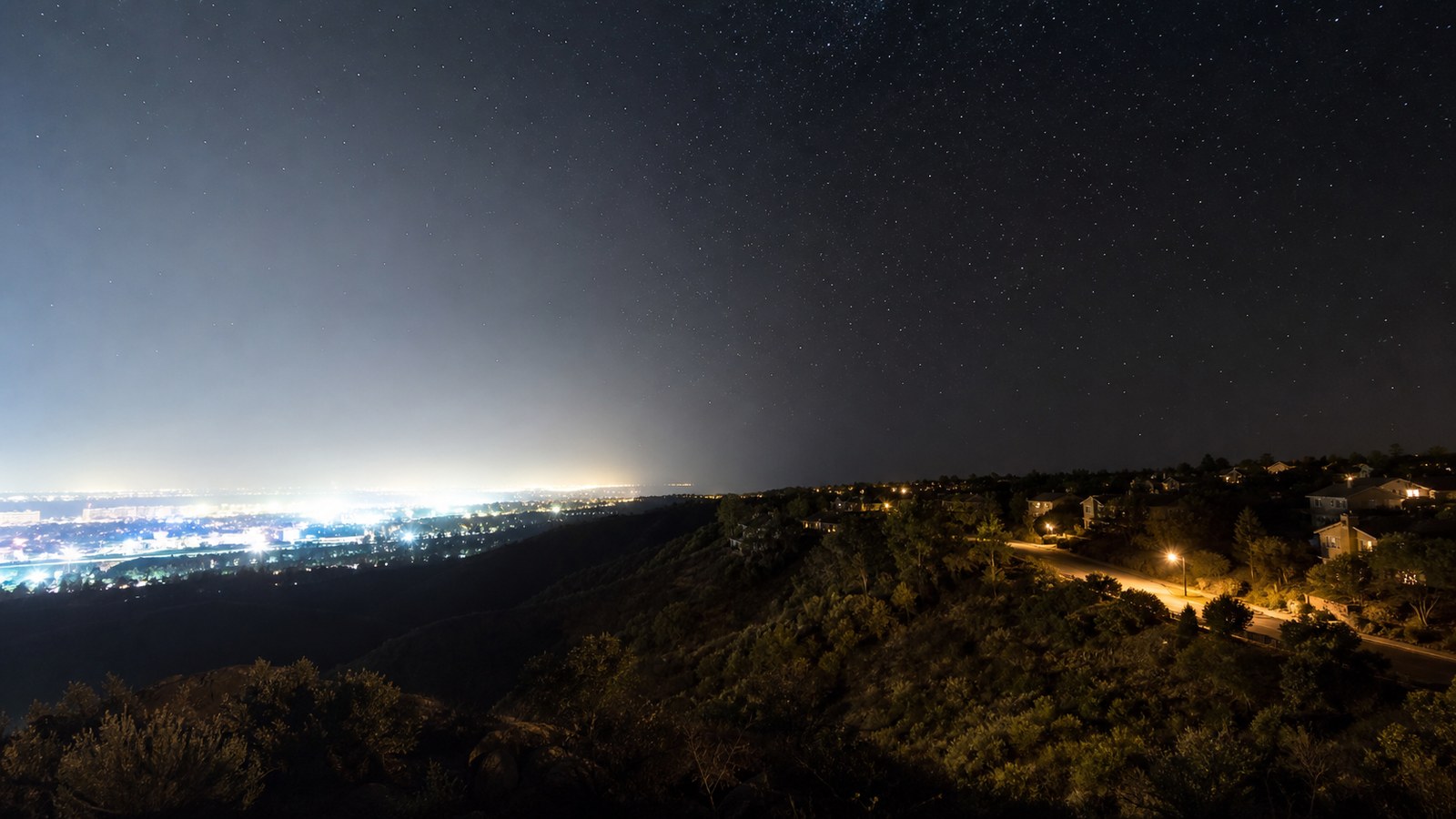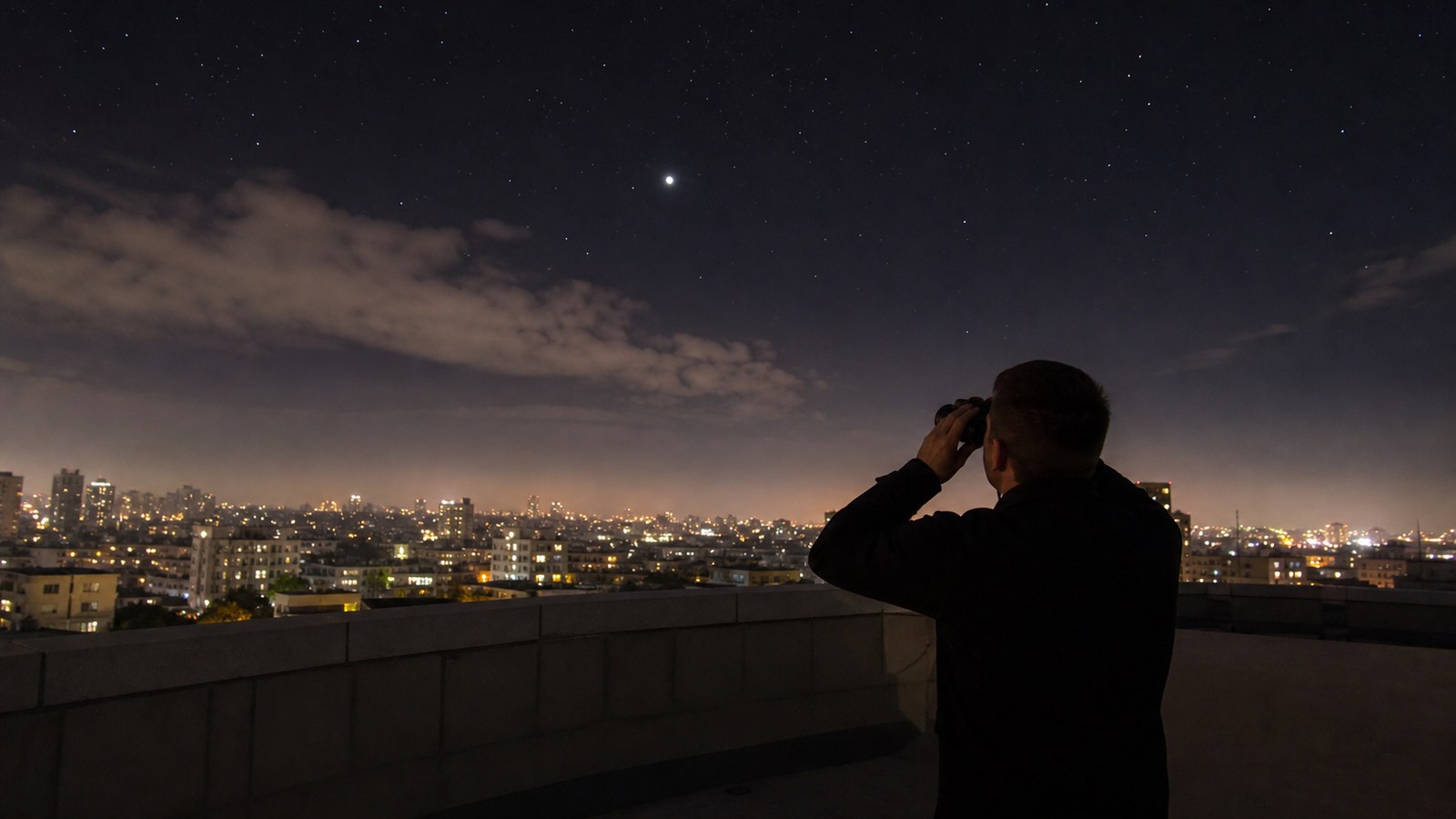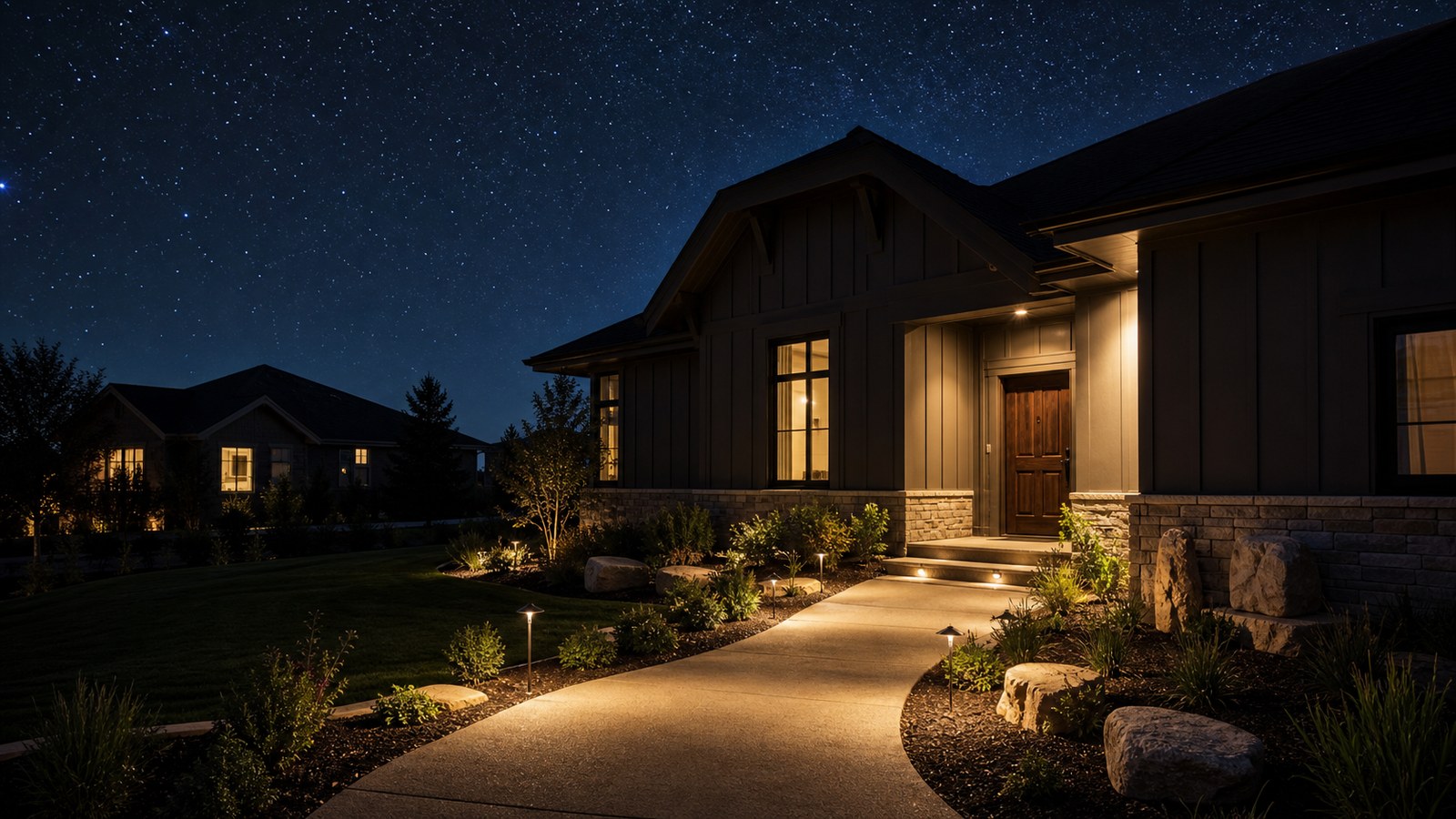
Reducing light pollution at home does not require making a property unsafe or unusable after dark. It requires asking each fixture to perform a defined job and preventing the light from escaping that job. The most effective changes often cost little: aiming a lamp downward, lowering output, adding a timer, selecting a warmer source, or removing illumination that serves no current purpose.
Audit Every Exterior Light
A nighttime walk reveals glare, uplight, trespass, reflections, and fixtures that remain on without a task. This is where technique matters more than expensive equipment. The observer should view each lamp from the property boundary and from the positions of neighbors, pedestrians, windows, and habitat. Record location, purpose, wattage or lumens, color temperature, operating hours, shielding, and where the beam actually lands. Judging a fixture only from directly underneath can hide the near-horizontal glare that causes discomfort and long-distance scatter. The most useful response is to observe the result, note the conditions, and adjust one variable at a time. That record makes the lesson transferable instead of leaving it as a one-night impression.
Record location, purpose, wattage or lumens, color temperature, operating hours, shielding, and where the beam actually lands. For an observer, the consequence is immediate. Judging a fixture only from directly underneath can hide the near-horizontal glare that causes discomfort and long-distance scatter. A nighttime walk reveals glare, uplight, trespass, reflections, and fixtures that remain on without a task. The observer should view each lamp from the property boundary and from the positions of neighbors, pedestrians, windows, and habitat. The most useful response is to observe the result, note the conditions, and adjust one variable at a time. Over time, those small checks become automatic and free attention for finer detail.
Aim Light Below the Horizon
Full shielding blocks direct light above the horizontal plane and reduces wasted illumination. The distinction matters because similar-looking outcomes can have different causes. Light emitted near or above horizontal travels farther through the atmosphere and contributes disproportionately to skyglow and glare. Use fully shielded fixtures, recess bulbs inside opaque housings, and tilt adjustable heads downward. A bright bulb inside a shallow decorative shade may still expose the source from across the street. The most useful response is to observe the result, note the conditions, and adjust one variable at a time. A second attempt under changed conditions will reveal whether the first result was typical.
Use fully shielded fixtures, recess bulbs inside opaque housings, and tilt adjustable heads downward. The effect may be subtle at first, yet it becomes obvious across several sessions. A bright bulb inside a shallow decorative shade may still expose the source from across the street. Full shielding blocks direct light above the horizontal plane and reduces wasted illumination. Light emitted near or above horizontal travels farther through the atmosphere and contributes disproportionately to skyglow and glare. The most useful response is to observe the result, note the conditions, and adjust one variable at a time. The same reasoning can then be applied to more difficult targets or environments.
Lower Output to the Task
Human vision often performs better with moderate, uniform illumination than with intense pools surrounded by darkness. Real conditions rarely isolate one factor, so context must remain visible. Excess brightness contracts the pupil and deepens apparent shadows, making adjacent areas harder to see. Reduce lumens, add dimming, and test whether faces, steps, and obstacles remain visible at the lower level. Replacing an old lamp with an efficient LED of equal wattage can accidentally increase brightness because LEDs produce more light per watt. The most useful response is to observe the result, note the conditions, and adjust one variable at a time. When uncertainty remains, choose the more conservative interpretation and gather another observation.
Reduce lumens, add dimming, and test whether faces, steps, and obstacles remain visible at the lower level. The practical importance of this point appears in the field. Replacing an old lamp with an efficient LED of equal wattage can accidentally increase brightness because LEDs produce more light per watt. Human vision often performs better with moderate, uniform illumination than with intense pools surrounded by darkness. Excess brightness contracts the pupil and deepens apparent shadows, making adjacent areas harder to see. The most useful response is to observe the result, note the conditions, and adjust one variable at a time. Keep the observation tied to time, direction, and conditions so it can be compared later.
Control the Hours of Operation
Timers, motion sensors, and curfews prevent useful lighting from becoming all-night lighting. The underlying physics also explains a common surprise. Duration matters because environmental exposure and energy use accumulate even when an individual lamp is well aimed. Set short motion timeouts, narrow sensor zones, and schedule decorative or landscape lighting to turn off. Poorly adjusted sensors triggered by branches, animals, or passing traffic can flash repeatedly and create more disturbance than a steady low lamp. The most useful response is to observe the result, note the conditions, and adjust one variable at a time. The goal is a repeatable result, not a single lucky success.
Set short motion timeouts, narrow sensor zones, and schedule decorative or landscape lighting to turn off. This is less a rule to memorize than a relationship to observe. Poorly adjusted sensors triggered by branches, animals, or passing traffic can flash repeatedly and create more disturbance than a steady low lamp. Timers, motion sensors, and curfews prevent useful lighting from becoming all-night lighting. Duration matters because environmental exposure and energy use accumulate even when an individual lamp is well aimed. The most useful response is to observe the result, note the conditions, and adjust one variable at a time. That record makes the lesson transferable instead of leaving it as a one-night impression.
Choose Warmer Spectral Output
Shorter-wavelength blue-rich light scatters strongly in the atmosphere and can affect nocturnal organisms. Seen as a workflow problem, the solution becomes more manageable. Correlated color temperature is an imperfect but practical shopping guide; lower values generally appear warmer. Prefer warm sources, often 3000 K or below where appropriate, while still checking shielding and brightness. Warm color alone does not make a fixture responsible if it shines upward, crosses property lines, or remains unnecessarily bright. The most useful response is to observe the result, note the conditions, and adjust one variable at a time. This approach preserves both accuracy and the enjoyment of discovery.
Prefer warm sources, often 3000 K or below where appropriate, while still checking shielding and brightness. The safest assumption is that conditions will vary and the plan must adapt. Warm color alone does not make a fixture responsible if it shines upward, crosses property lines, or remains unnecessarily bright. Shorter-wavelength blue-rich light scatters strongly in the atmosphere and can affect nocturnal organisms. Correlated color temperature is an imperfect but practical shopping guide; lower values generally appear warmer. The most useful response is to observe the result, note the conditions, and adjust one variable at a time. A second attempt under changed conditions will reveal whether the first result was typical.
Maintain the Improvement
Vegetation growth, fixture movement, replacement bulbs, and changed household routines can undo a good lighting plan. For an observer, the consequence is immediate. Outdoor systems drift over time because mounts loosen, lenses yellow, sensors fail, and new users alter controls. Repeat the audit seasonally, clean lenses, retest sensor zones, and document replacement specifications. A one-time retrofit without follow-up can gradually return to glare and waste without anyone noticing the change. The most useful response is to observe the result, note the conditions, and adjust one variable at a time. Over time, those small checks become automatic and free attention for finer detail.
Repeat the audit seasonally, clean lenses, retest sensor zones, and document replacement specifications. The strongest evidence comes from what changes when one condition is altered. A one-time retrofit without follow-up can gradually return to glare and waste without anyone noticing the change. Vegetation growth, fixture movement, replacement bulbs, and changed household routines can undo a good lighting plan. Outdoor systems drift over time because mounts loosen, lenses yellow, sensors fail, and new users alter controls. The most useful response is to observe the result, note the conditions, and adjust one variable at a time. When uncertainty remains, choose the more conservative interpretation and gather another observation.
Duration matters because environmental exposure and energy use accumulate even when an individual lamp is well aimed. A useful way to test the idea is through repeated comparison. Set short motion timeouts, narrow sensor zones, and schedule decorative or landscape lighting to turn off. Poorly adjusted sensors triggered by branches, animals, or passing traffic can flash repeatedly and create more disturbance than a steady low lamp. Timers, motion sensors, and curfews prevent useful lighting from becoming all-night lighting. The most useful response is to observe the result, note the conditions, and adjust one variable at a time. That record makes the lesson transferable instead of leaving it as a one-night impression.
The observer should view each lamp from the property boundary and from the positions of neighbors, pedestrians, windows, and habitat. A simple check before the session prevents a much harder correction later. Record location, purpose, wattage or lumens, color temperature, operating hours, shielding, and where the beam actually lands. Judging a fixture only from directly underneath can hide the near-horizontal glare that causes discomfort and long-distance scatter. A nighttime walk reveals glare, uplight, trespass, reflections, and fixtures that remain on without a task. The most useful response is to observe the result, note the conditions, and adjust one variable at a time. Over time, those small checks become automatic and free attention for finer detail.
Light emitted near or above horizontal travels farther through the atmosphere and contributes disproportionately to skyglow and glare. The effect may be subtle at first, yet it becomes obvious across several sessions. Use fully shielded fixtures, recess bulbs inside opaque housings, and tilt adjustable heads downward. A bright bulb inside a shallow decorative shade may still expose the source from across the street. Full shielding blocks direct light above the horizontal plane and reduces wasted illumination. The most useful response is to observe the result, note the conditions, and adjust one variable at a time. The same reasoning can then be applied to more difficult targets or environments.
Light emitted near or above horizontal travels farther through the atmosphere and contributes disproportionately to skyglow and glare. This relationship becomes easier to understand when the variables are separated. Use fully shielded fixtures, recess bulbs inside opaque housings, and tilt adjustable heads downward. A bright bulb inside a shallow decorative shade may still expose the source from across the street. Full shielding blocks direct light above the horizontal plane and reduces wasted illumination. The most useful response is to observe the result, note the conditions, and adjust one variable at a time. When uncertainty remains, choose the more conservative interpretation and gather another observation.
A Practical Next Session
A responsible home lighting system is useful, targeted, low level, controlled, and warm-colored. Apply those tests to every fixture rather than relying on a single product label. The result can preserve navigation and security while lowering energy use, reducing neighbor complaints, protecting nighttime habitat, and returning more contrast to the sky.