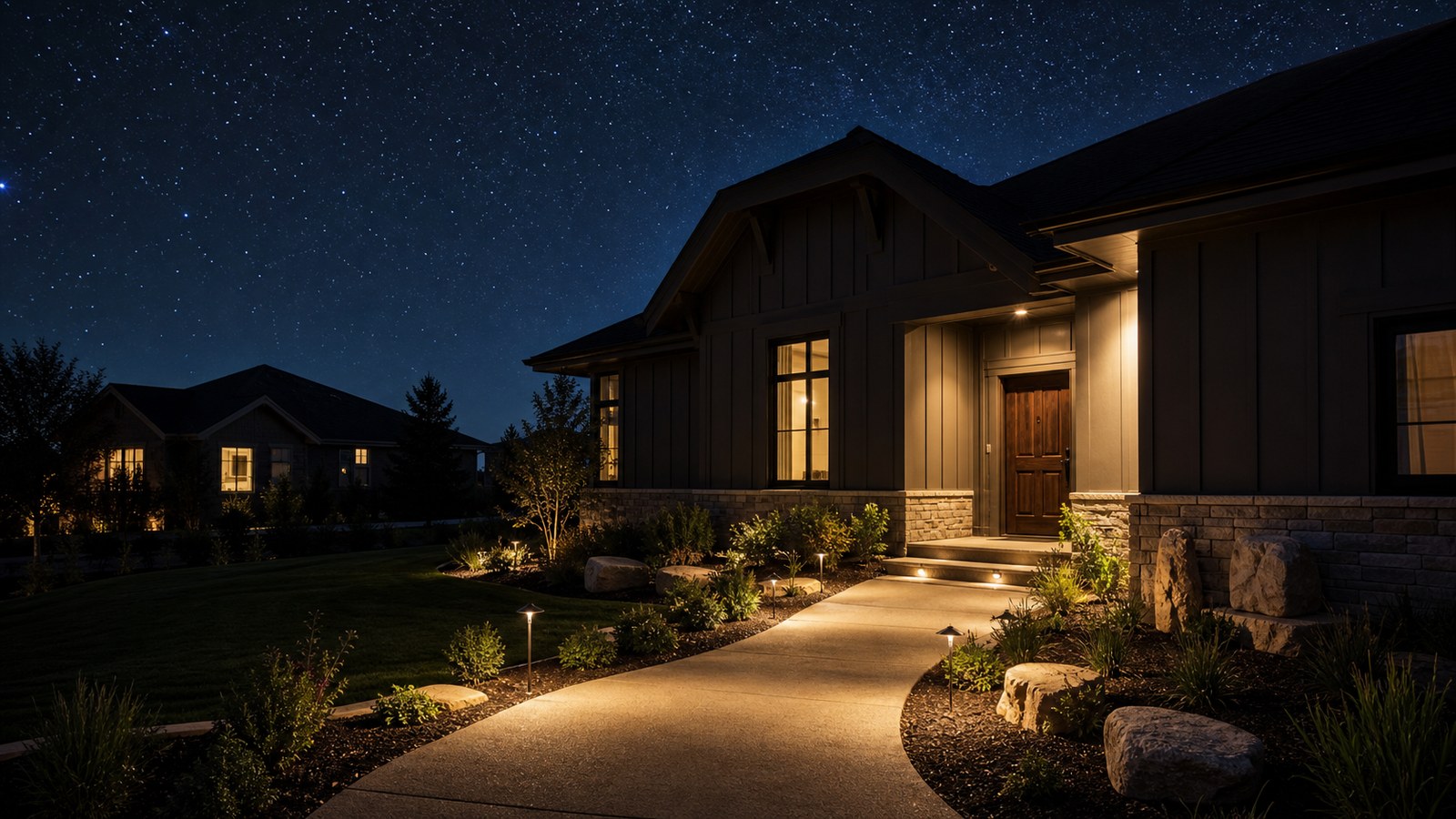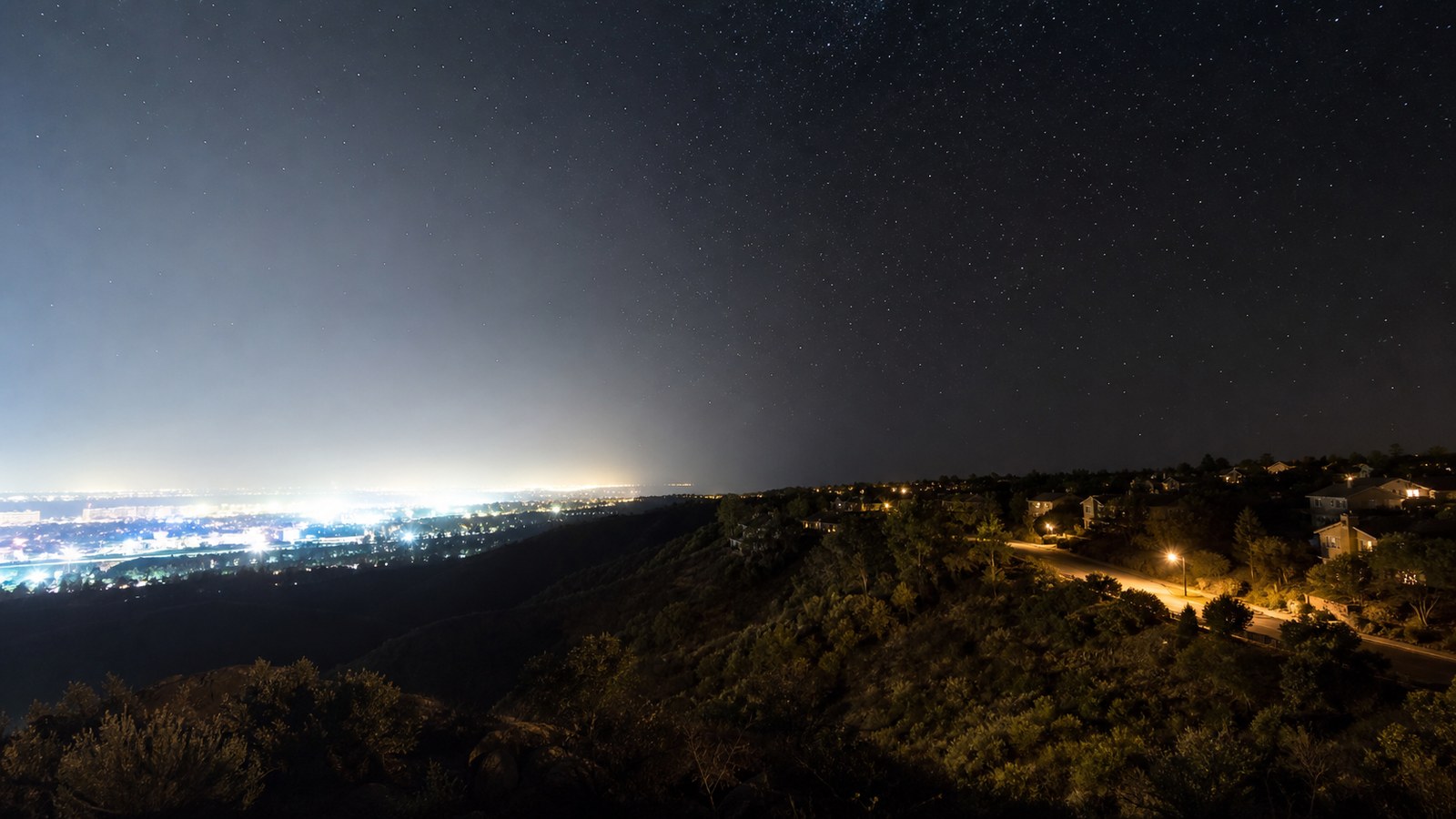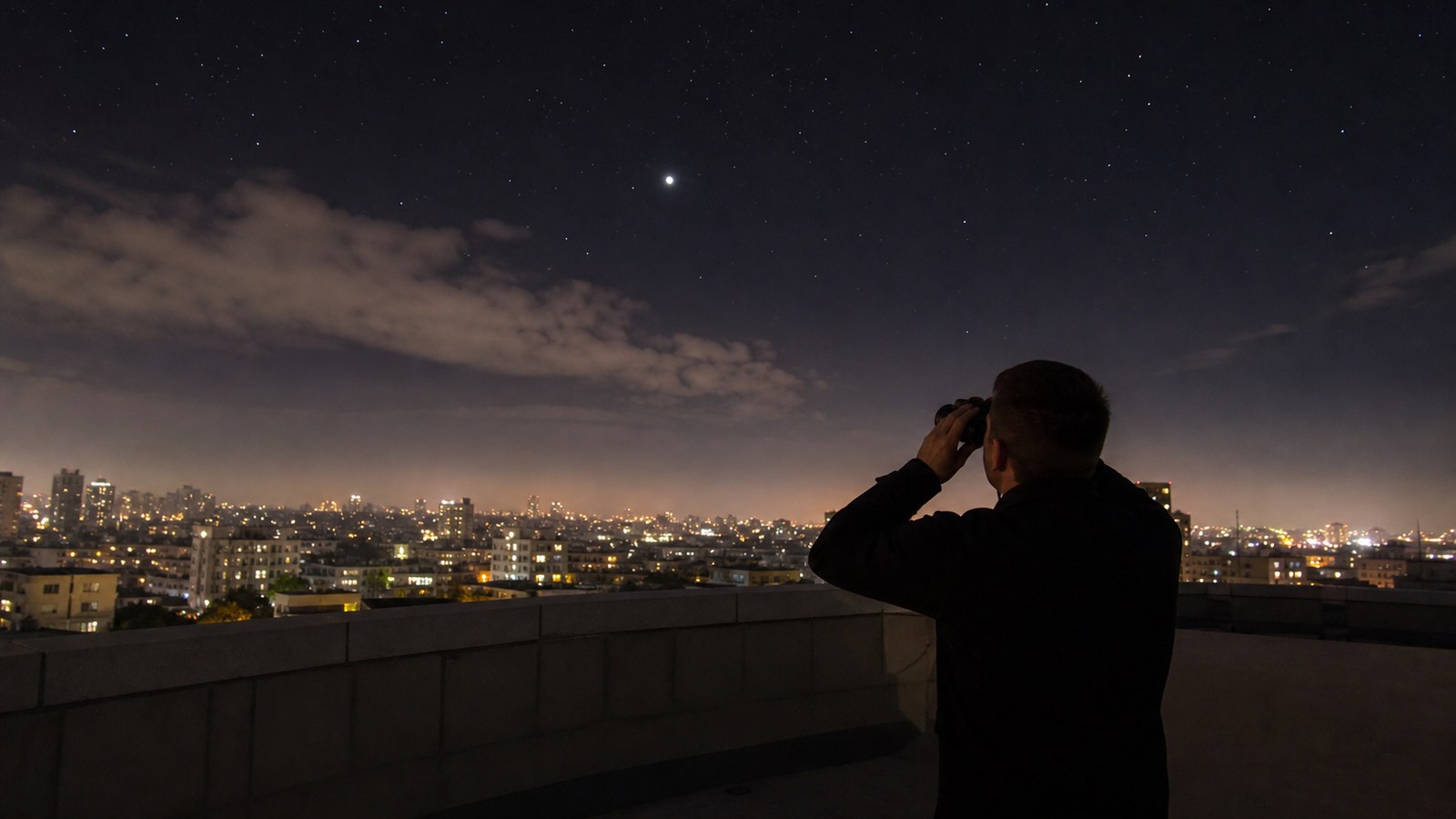
City astronomy is not failed rural astronomy. It is a different observing environment in which contrast, glare, and target choice matter more than raw distance from a downtown core. Bright planets, the Moon, double stars, clusters, and many seasonal patterns remain accessible when the observer controls nearby light and works with the clearest parts of the urban sky.
Escape Glare Before Escaping the City
A nearby unshielded lamp can damage visibility more than the general skyglow overhead. Long-term skill develops by noticing this pattern repeatedly. Direct glare scatters inside the eye and reduces contrast across the entire visual field. Stand in a building shadow, use a dark hood, choose a park interior, or position a temporary opaque screen without blocking public access. Trespassing or covering public fixtures is not an acceptable observing strategy; select a lawful site instead. The most useful response is to observe the result, note the conditions, and adjust one variable at a time. The same reasoning can then be applied to more difficult targets or environments.
Stand in a building shadow, use a dark hood, choose a park interior, or position a temporary opaque screen without blocking public access. The underlying physics also explains a common surprise. Trespassing or covering public fixtures is not an acceptable observing strategy; select a lawful site instead. A nearby unshielded lamp can damage visibility more than the general skyglow overhead. Direct glare scatters inside the eye and reduces contrast across the entire visual field. The most useful response is to observe the result, note the conditions, and adjust one variable at a time. The goal is a repeatable result, not a single lucky success.
Observe High Above the Horizon
Objects near the zenith are viewed through less atmosphere and usually less concentrated urban glow. At night, small operational choices can produce large differences. Low-altitude light crosses a longer atmospheric path, increasing extinction, turbulence, and scattered background brightness. Plan sessions around meridian transit, when the chosen target reaches its highest altitude. A famous object can look disappointing if observed while rising through haze even though it becomes clear later in the night. The most useful response is to observe the result, note the conditions, and adjust one variable at a time. Keep the observation tied to time, direction, and conditions so it can be compared later.
Plan sessions around meridian transit, when the chosen target reaches its highest altitude. Seen as a workflow problem, the solution becomes more manageable. A famous object can look disappointing if observed while rising through haze even though it becomes clear later in the night. Objects near the zenith are viewed through less atmosphere and usually less concentrated urban glow. Low-altitude light crosses a longer atmospheric path, increasing extinction, turbulence, and scattered background brightness. The most useful response is to observe the result, note the conditions, and adjust one variable at a time. This approach preserves both accuracy and the enjoyment of discovery.
Choose Targets With Strong Surface Brightness
Planets, lunar features, colorful double stars, compact clusters, and variable stars tolerate bright backgrounds better than diffuse galaxies. This is where technique matters more than expensive equipment. Large faint objects spread their light across an area, so skyglow can erase the contrast even when total magnitude sounds bright. Build an urban list that includes Jupiter, Saturn, the Moon, Albireo, the Pleiades, and bright open clusters by season. Catalog magnitude alone does not predict urban visibility because integrated brightness and surface brightness describe different things. The most useful response is to observe the result, note the conditions, and adjust one variable at a time. That record makes the lesson transferable instead of leaving it as a one-night impression.
Build an urban list that includes Jupiter, Saturn, the Moon, Albireo, the Pleiades, and bright open clusters by season. For an observer, the consequence is immediate. Catalog magnitude alone does not predict urban visibility because integrated brightness and surface brightness describe different things. Planets, lunar features, colorful double stars, compact clusters, and variable stars tolerate bright backgrounds better than diffuse galaxies. Large faint objects spread their light across an area, so skyglow can erase the contrast even when total magnitude sounds bright. The most useful response is to observe the result, note the conditions, and adjust one variable at a time. Over time, those small checks become automatic and free attention for finer detail.
Use Timing as a Filter
Late hours, post-front weather, reduced traffic, and moonless intervals can improve an urban observing window. The distinction matters because similar-looking outcomes can have different causes. Cleaner air scatters less artificial light, and fewer active businesses or sports fields can reduce local illumination. Watch transparency forecasts, observe after rain or a cold front, and compare the same site at different hours. Waiting for astronomical perfection can prevent practice; even a short favorable window can support a focused session. The most useful response is to observe the result, note the conditions, and adjust one variable at a time. A second attempt under changed conditions will reveal whether the first result was typical.
Watch transparency forecasts, observe after rain or a cold front, and compare the same site at different hours. The effect may be subtle at first, yet it becomes obvious across several sessions. Waiting for astronomical perfection can prevent practice; even a short favorable window can support a focused session. Late hours, post-front weather, reduced traffic, and moonless intervals can improve an urban observing window. Cleaner air scatters less artificial light, and fewer active businesses or sports fields can reduce local illumination. The most useful response is to observe the result, note the conditions, and adjust one variable at a time. The same reasoning can then be applied to more difficult targets or environments.
Apply Optical Tools Carefully
Binoculars and telescopes magnify targets while restricting the field, which can darken the apparent sky background. Real conditions rarely isolate one factor, so context must remain visible. Magnification spreads background light over more retinal area, improving contrast for some compact objects within practical limits. Use moderate magnification on clusters and double stars, a lunar filter only for comfort, and a stable mount. So-called light-pollution filters cannot recreate a dark sky and may distort color or provide little benefit under broad-spectrum LED lighting. The most useful response is to observe the result, note the conditions, and adjust one variable at a time. When uncertainty remains, choose the more conservative interpretation and gather another observation.
Use moderate magnification on clusters and double stars, a lunar filter only for comfort, and a stable mount. The practical importance of this point appears in the field. So-called light-pollution filters cannot recreate a dark sky and may distort color or provide little benefit under broad-spectrum LED lighting. Binoculars and telescopes magnify targets while restricting the field, which can darken the apparent sky background. Magnification spreads background light over more retinal area, improving contrast for some compact objects within practical limits. The most useful response is to observe the result, note the conditions, and adjust one variable at a time. Keep the observation tied to time, direction, and conditions so it can be compared later.
Create an Urban Baseline
Repeated observations from one micro-site reveal which improvements come from weather, timing, technique, or equipment. The underlying physics also explains a common surprise. A stable baseline separates real changes from the excitement of visiting a new location. Track limiting magnitude, sky clarity, visible landmarks, and successful targets after each session. Without notes, memory tends to overvalue exceptional nights and underestimate the steady progress of observing skill. The most useful response is to observe the result, note the conditions, and adjust one variable at a time. The goal is a repeatable result, not a single lucky success.
Track limiting magnitude, sky clarity, visible landmarks, and successful targets after each session. This is less a rule to memorize than a relationship to observe. Without notes, memory tends to overvalue exceptional nights and underestimate the steady progress of observing skill. Repeated observations from one micro-site reveal which improvements come from weather, timing, technique, or equipment. A stable baseline separates real changes from the excitement of visiting a new location. The most useful response is to observe the result, note the conditions, and adjust one variable at a time. That record makes the lesson transferable instead of leaving it as a one-night impression.
Large faint objects spread their light across an area, so skyglow can erase the contrast even when total magnitude sounds bright. For an observer, the consequence is immediate. Build an urban list that includes Jupiter, Saturn, the Moon, Albireo, the Pleiades, and bright open clusters by season. Catalog magnitude alone does not predict urban visibility because integrated brightness and surface brightness describe different things. Planets, lunar features, colorful double stars, compact clusters, and variable stars tolerate bright backgrounds better than diffuse galaxies. The most useful response is to observe the result, note the conditions, and adjust one variable at a time. Over time, those small checks become automatic and free attention for finer detail.
Large faint objects spread their light across an area, so skyglow can erase the contrast even when total magnitude sounds bright. The result is not merely aesthetic; it changes what information can be perceived. Build an urban list that includes Jupiter, Saturn, the Moon, Albireo, the Pleiades, and bright open clusters by season. Catalog magnitude alone does not predict urban visibility because integrated brightness and surface brightness describe different things. Planets, lunar features, colorful double stars, compact clusters, and variable stars tolerate bright backgrounds better than diffuse galaxies. The most useful response is to observe the result, note the conditions, and adjust one variable at a time. The goal is a repeatable result, not a single lucky success.
Direct glare scatters inside the eye and reduces contrast across the entire visual field. A simple check before the session prevents a much harder correction later. Stand in a building shadow, use a dark hood, choose a park interior, or position a temporary opaque screen without blocking public access. Trespassing or covering public fixtures is not an acceptable observing strategy; select a lawful site instead. A nearby unshielded lamp can damage visibility more than the general skyglow overhead. The most useful response is to observe the result, note the conditions, and adjust one variable at a time. Over time, those small checks become automatic and free attention for finer detail.
Large faint objects spread their light across an area, so skyglow can erase the contrast even when total magnitude sounds bright. At night, small operational choices can produce large differences. Build an urban list that includes Jupiter, Saturn, the Moon, Albireo, the Pleiades, and bright open clusters by season. Catalog magnitude alone does not predict urban visibility because integrated brightness and surface brightness describe different things. Planets, lunar features, colorful double stars, compact clusters, and variable stars tolerate bright backgrounds better than diffuse galaxies. The most useful response is to observe the result, note the conditions, and adjust one variable at a time. Keep the observation tied to time, direction, and conditions so it can be compared later.
A Practical Next Session
Urban observers succeed by engineering contrast. Block direct glare, look high, select compact bright targets, exploit transparent windows, use moderate magnification, and return to a known site. Dark-sky travel remains valuable, but a city can support years of real observation when its constraints are treated as design parameters rather than defeat.