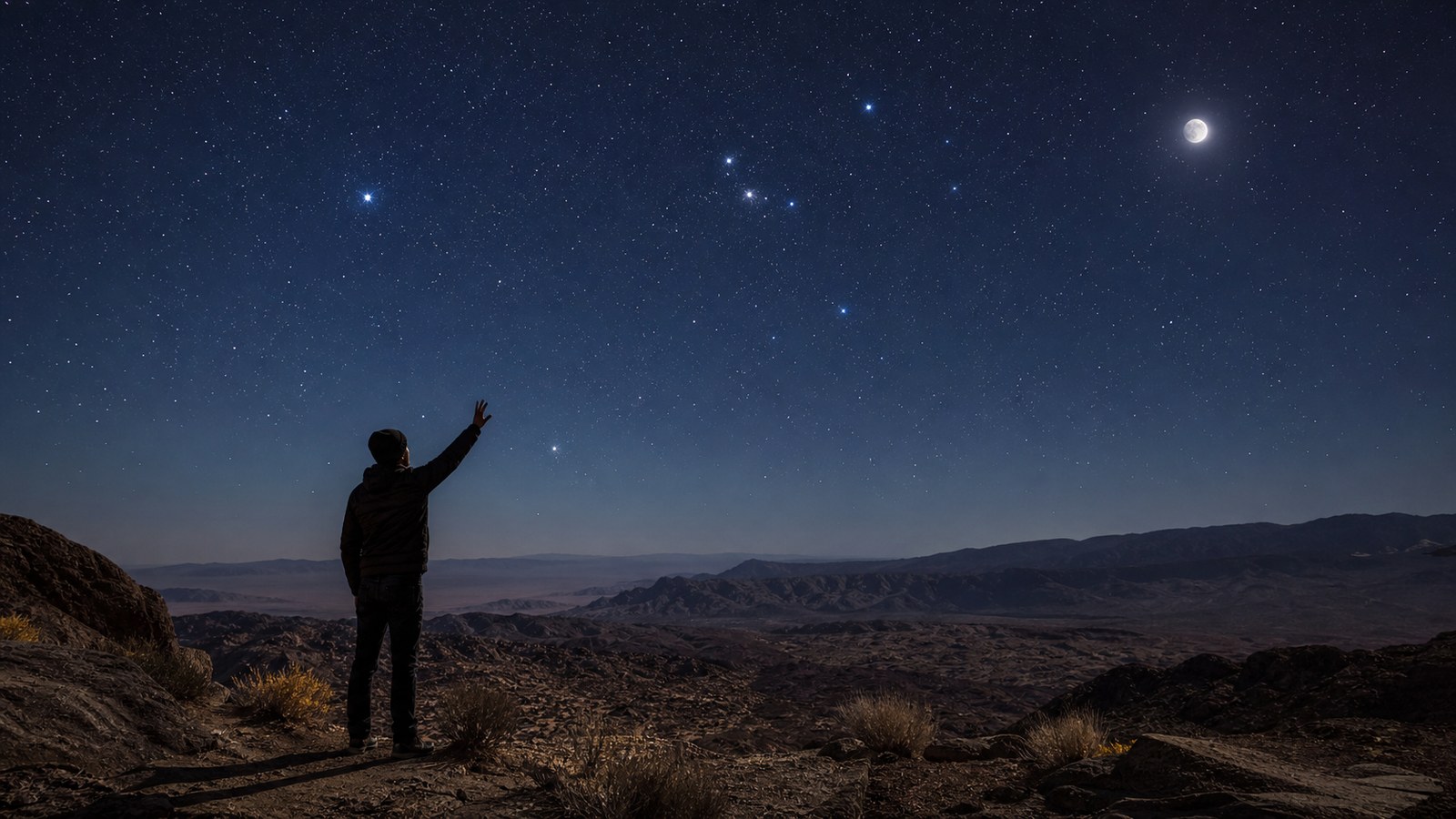
How to Start Stargazing Without a Telescope (Complete Beginner Guide)

A telescope reveals small and faint details, but it is not the entrance ticket to astronomy. The unaided eye excels at broad structures, motion, brightness changes, and relationships that cannot fit inside an eyepiece. Learning those large-scale patterns first creates the spatial intuition that later makes binoculars and telescopes easier to use.
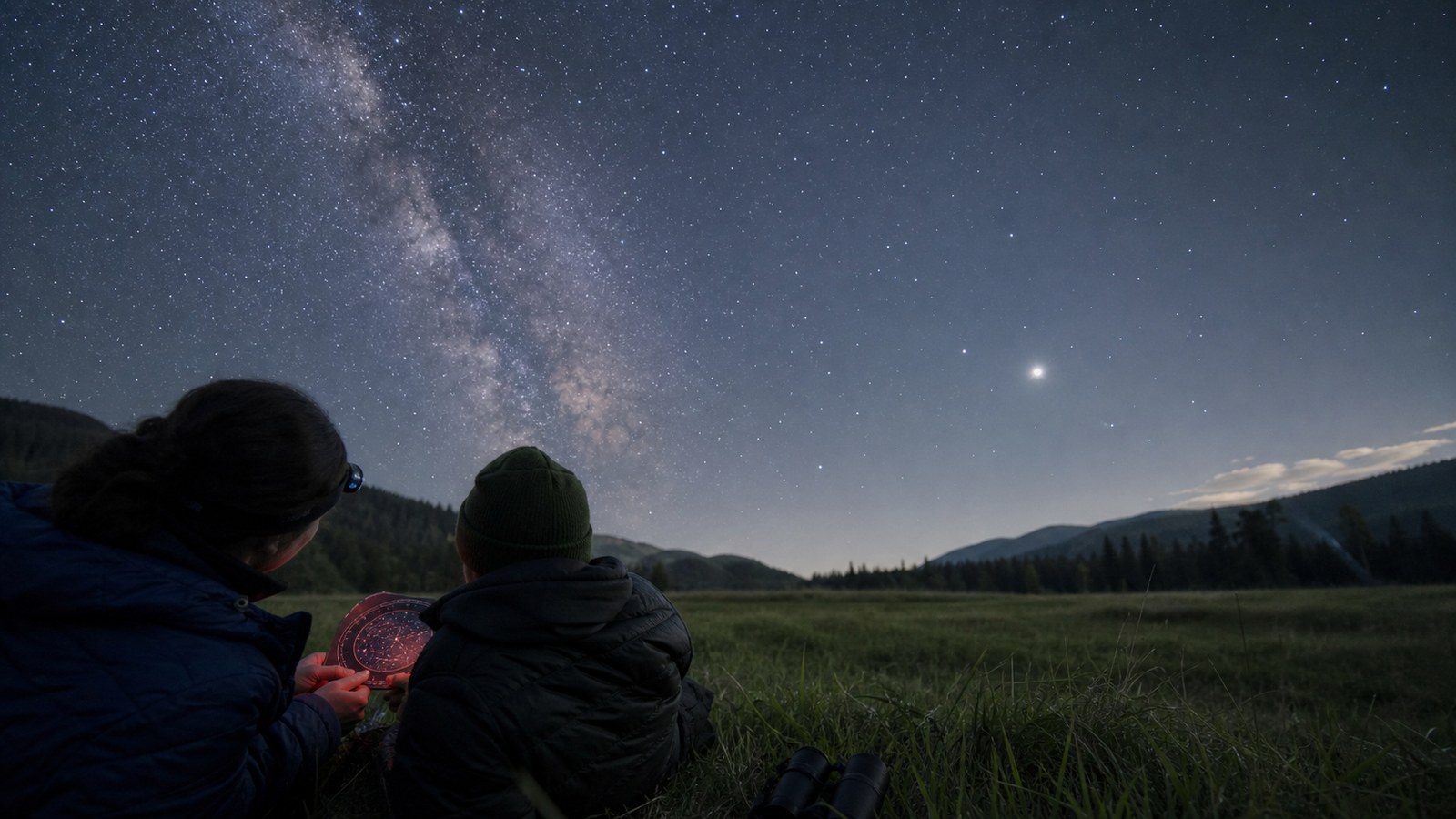
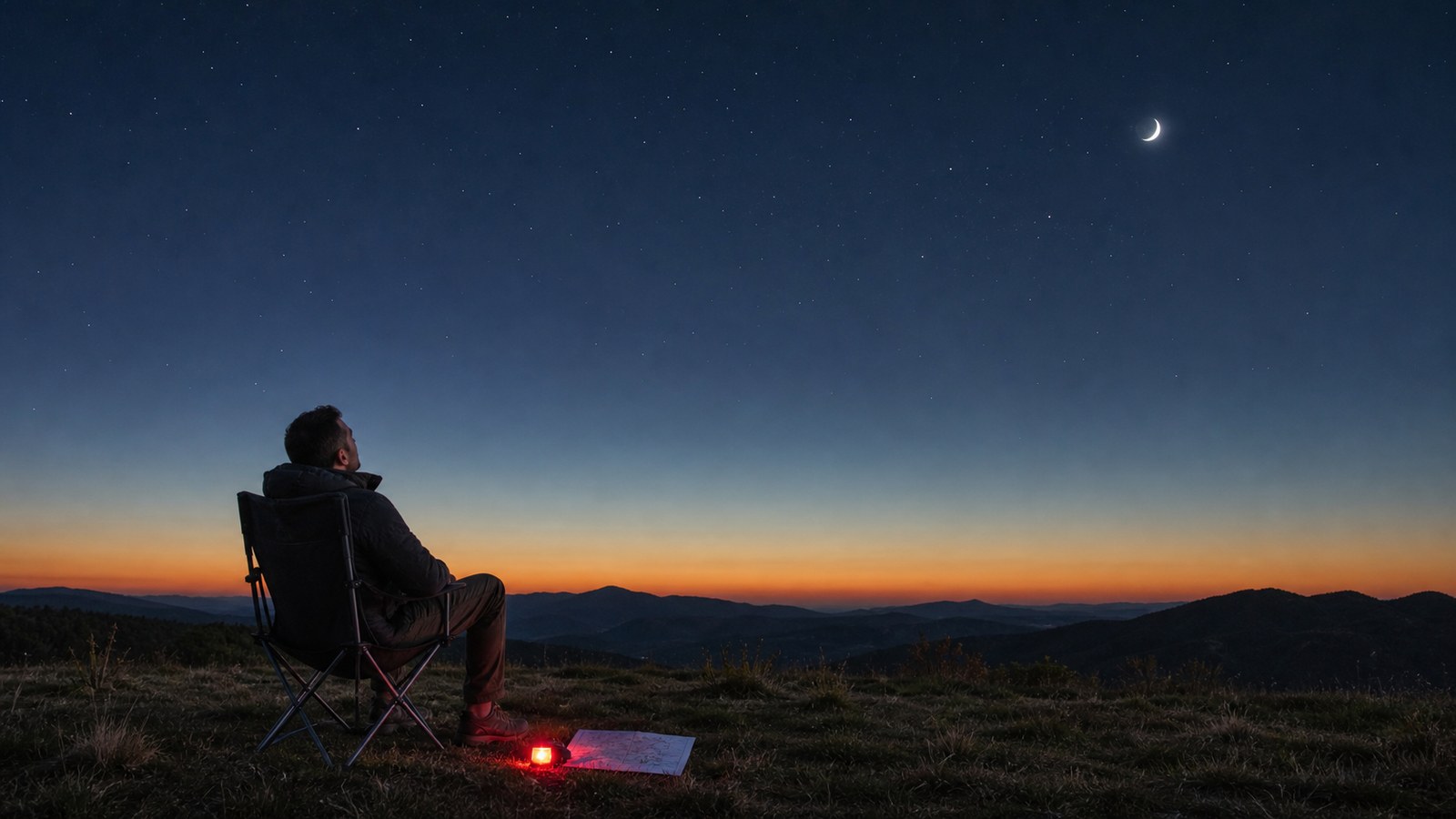
Stargazing for Beginners: Everything You Need to Know to Get Started

Stargazing becomes much easier once the sky is treated as a moving system rather than a poster of fixed constellations. Earth turns, Earth orbits, the Moon brightens and fades, weather changes transparency, and nearby lights alter contrast. Understanding those interacting conditions helps a beginner make sensible choices before buying equipment or traveling far from home.

Beginner Stargazing Guide: How to Start Exploring the Night Sky Tonight

A useful first evening under the stars is not a race to identify everything overhead. It is a controlled introduction to darkness, direction, scale, and patient looking. With a comfortable location and a few deliberate habits, the sky quickly changes from an undifferentiated scatter of light into a place you can navigate.