Unlocking the Secrets of the Sun’s Composition
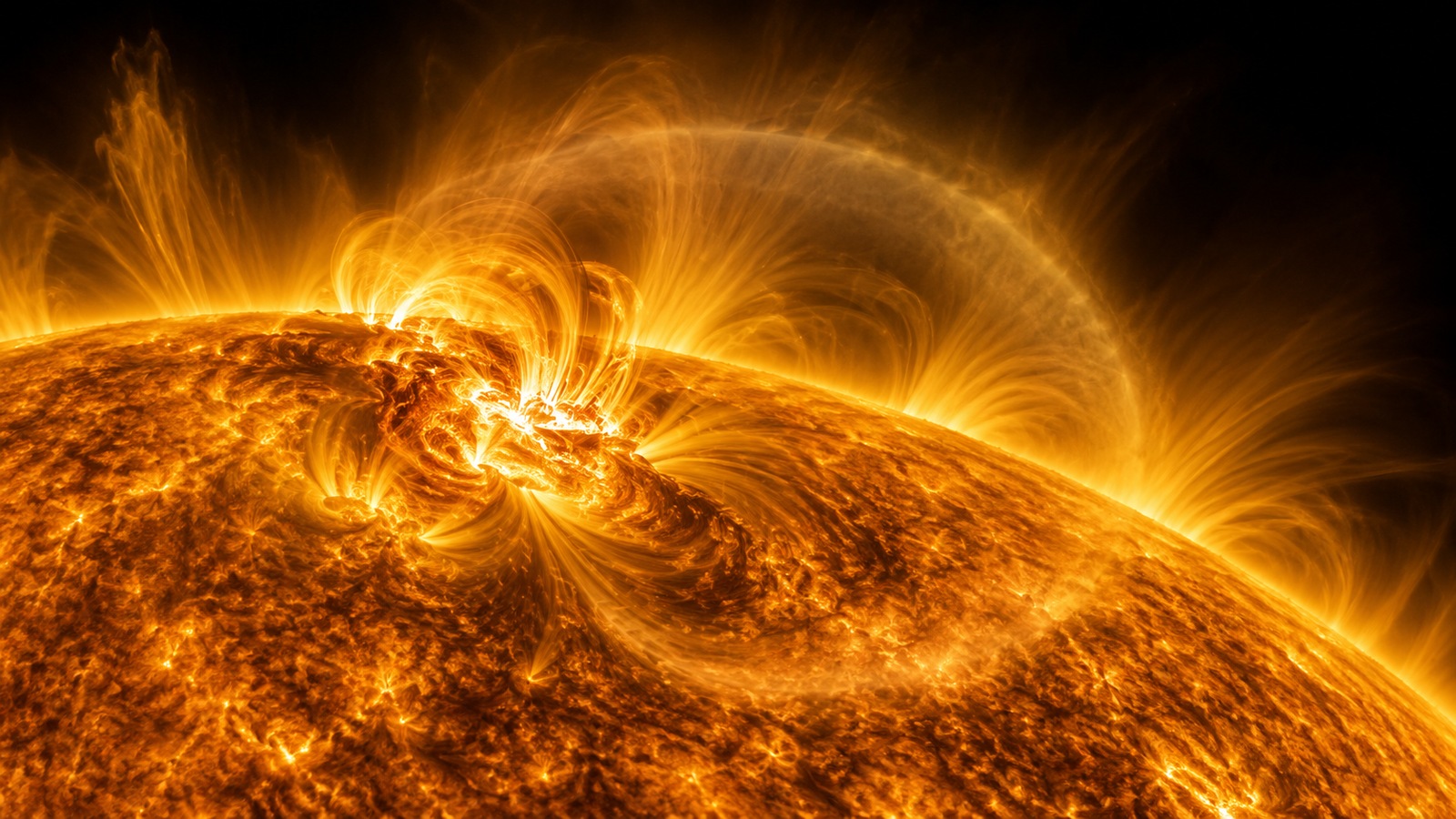
The Sun, scientifically known as Sol and classified as a G-type main-sequence star (G2V), is more than just the glowing orb that lights our days and warms our planet. At its core, the Sun is a colossal ball of plasma made up of elements that trace back to the very birth of the universe. To ask “What is the Sun made of?” is to peel back layers of cosmic history, for its ingredients not only fuel its power but also provide a record of the universe’s earliest building blocks. Understanding the Sun’s makeup helps scientists unlock the mysteries of stellar life cycles, the origins of elements, and the unique conditions that make our solar system possible.
When we peer into the Sun’s fiery heart, we discover that it is overwhelmingly dominated by hydrogen and helium, but these are not its only ingredients. A small fraction of heavier elements, forged in the hearts of older stars long before the Sun was born, play essential roles in its behavior and in the formation of the planets. The Sun is not only a star; it is a living time capsule of the cosmos, carrying with it the story of creation, destruction, and renewal.
The Sun as a Stellar Laboratory
Astronomers often describe the Sun as a laboratory in the sky. Unlike distant stars, whose light arrives faint and fractured, the Sun’s proximity allows us to study its spectrum in exquisite detail. By examining sunlight through spectroscopy—splitting light into its component wavelengths—scientists identify the “fingerprints” of elements present within it. These fingerprints reveal that the Sun, like many stars, is dominated by hydrogen and helium but also contains traces of heavier elements that play critical roles in shaping its behavior. This analysis has transformed the Sun from a mere celestial object into a window into the cosmos. By knowing its composition, we also understand more about the origins of matter in the universe, since the Sun reflects the same fundamental processes that forged elements after the Big Bang and within ancient stars that came before it. Each spectral line is a signature of the cosmic past, showing us that the Sun is not isolated in its story but part of a grander chain of stellar evolution.
Hydrogen: The Sun’s Primary Ingredient
Hydrogen is the lifeblood of the Sun, making up roughly 74 percent of its total mass. In its plasma state, hydrogen atoms are stripped of their electrons, allowing nuclei to collide and fuse in the Sun’s core. This process of nuclear fusion transforms hydrogen into helium while releasing massive amounts of energy in the form of light and heat. Without hydrogen’s abundance, the Sun would be unable to sustain itself, and the Earth would never bask in its warmth.
The dominance of hydrogen is no coincidence. Hydrogen is the simplest and most abundant element in the universe, born in the first minutes after the Big Bang. The Sun inherited its hydrogen from the primordial gas clouds that collapsed to form our solar system, and it has been steadily converting it into helium ever since. Every sunrise we experience is fueled by the ongoing transformation of hydrogen into helium deep in the Sun’s core, a process that connects us directly to the earliest seconds of cosmic history.
Helium: The Sun’s Silent Partner
Second only to hydrogen, helium makes up about 24 percent of the Sun’s mass. While hydrogen is the active fuel of fusion, helium represents both the product of that process and a stabilizing presence within the Sun. Each second, hundreds of millions of tons of hydrogen nuclei fuse into helium nuclei, releasing the energy that radiates outward through the solar layers. Without helium’s steady accumulation, the Sun would lack the balance it needs to shine so consistently. Helium’s role is critical in maintaining equilibrium. As the Sun continues to generate helium in its core, the buildup subtly alters the star’s structure. Over time, the core becomes denser, changing how fusion occurs and how energy is transported outward. Eventually, when hydrogen runs low, helium itself will become the fuel in the next phase of the Sun’s life, demonstrating how today’s byproduct becomes tomorrow’s energy source. For billions of years, helium has been silently shaping the Sun’s destiny.
Heavier Elements: The Remaining Two Percent
Though hydrogen and helium account for nearly all of the Sun’s mass, the remaining two percent is made of heavier elements—known to astronomers as “metals,” even though this includes elements like carbon, nitrogen, oxygen, and iron. This tiny fraction has outsized importance, as these elements shape the Sun’s magnetic activity, solar wind, and opacity, influencing how energy flows through its layers. Even a small shift in this metallic content can change how the Sun behaves over billions of years.
Carbon, nitrogen, and oxygen are particularly important, as they play roles in fusion processes beyond the dominant proton-proton chain. Trace amounts of iron and other metals provide insight into the galactic neighborhood where the Sun was born. These elements originated in older stars that lived, exploded, and scattered their enriched material into space, later incorporated into the solar nebula. Thus, the Sun is not only a star but also a cosmic heirloom, carrying the legacy of countless stellar ancestors whose lives made our solar system possible.
Plasma: The Fourth State of Matter
The Sun is not solid, liquid, or even an ordinary gas. It exists in the state of plasma, where atoms are stripped of their electrons and particles flow freely in a soup of charged energy. Plasma allows the Sun’s material to conduct electricity and generate powerful magnetic fields that give rise to sunspots, solar flares, and coronal mass ejections. In this way, plasma is the key to the Sun’s restless personality. Understanding plasma is essential to understanding why the Sun behaves the way it does. Unlike a calm ball of gas, the Sun’s plasma constantly churns, twists, and reconnects under magnetic forces. This activity not only affects the star itself but also shapes space weather that can reach Earth, influencing satellites, power grids, and even communications. Plasma is what makes the Sun a living, dynamic star rather than a static ball of fire in the sky.
Layers and Their Chemical Roles
Each layer of the Sun interacts with its elements in unique ways. In the core, hydrogen and helium dominate as fusion reactions occur under extreme heat and pressure. Moving outward, the radiative zone acts as a bottleneck, where energy takes thousands of years to slowly pass through dense plasma. In the convective zone, elements are carried upward in boiling motions, mixing material and transporting energy more rapidly, creating the surface turbulence we can observe.
At the photosphere, the visible surface, the Sun’s spectrum allows scientists to measure the presence of elements like iron, sodium, and calcium, which produce distinctive absorption lines. Beyond the photosphere, the chromosphere and corona display elements in excited states, emitting light at specific wavelengths. Together, these layers reveal that the Sun’s elements are not evenly distributed but behave differently depending on temperature, density, and magnetic influence. Each layer is like a chapter in the Sun’s story, providing insights into both its stability and its explosive power.
The Role of Neutrinos in Understanding Composition
One of the most fascinating ways scientists study the Sun’s interior is by detecting neutrinos, nearly massless particles produced in fusion reactions. These elusive particles pass through matter almost without interaction, allowing them to escape directly from the core. By measuring solar neutrinos on Earth, scientists confirm not only the rate of fusion but also the types of elements and reactions at work deep inside.
For decades, experiments detected fewer neutrinos than predicted, leading to the famous “solar neutrino problem.” This puzzle was solved by discovering that neutrinos change “flavors” as they travel, confirming both the accuracy of solar models and fundamental properties of particle physics. The study of neutrinos demonstrates how even the smallest particles can unlock insights into the Sun’s elemental makeup. In essence, neutrinos are messengers from the Sun’s heart, carrying secrets across light-years of space.
Comparing the Sun to Other Stars
The Sun’s composition is not unique but fits the pattern observed in many stars of similar type. Stars across the galaxy are primarily made of hydrogen and helium, with varying levels of heavier elements depending on their age and origin. Astronomers use the term “metallicity” to describe the proportion of elements heavier than helium in a star, and our Sun’s metallicity is moderate, placing it among the younger, more chemically enriched stars.
Our Sun’s metallicity suggests it formed in a region enriched by previous generations of stars. Compared to older, metal-poor stars, it contains more oxygen, carbon, and iron, indicating that the solar nebula was seeded with material from earlier supernovae. This enrichment made it possible for rocky planets like Earth to form, as heavy elements provide the raw materials for solid surfaces, atmospheres, and even life itself. Without this legacy of metals, our solar system might never have developed worlds capable of sustaining life.
The Sun’s Connection to the Big Bang
Tracing the Sun’s elements back in time reveals their cosmic origins. Hydrogen and helium were created in the first few minutes after the Big Bang, while heavier elements were forged inside ancient stars through nuclear fusion and scattered into space when those stars exploded. The Sun is therefore both a product of primordial creation and a repository of stellar recycling.In this sense, the Sun embodies the story of the universe itself. Its composition links us directly to the earliest moments of cosmic history, when matter first emerged, and to the stellar processes that produced the diversity of elements. Every element in the Sun tells part of this larger narrative, connecting Earth and humanity to the very origins of the cosmos. When we study the Sun, we are also studying our own ancestry written in light and fire.
The Solar Wind and Its Ingredients
The Sun does not keep its material entirely to itself. Through the solar wind, a continuous stream of charged particles flows outward, carrying hydrogen, helium, and trace amounts of heavier ions across the solar system. These winds shape planetary atmospheres, carve out the boundaries of the heliosphere, and even influence cosmic rays entering from interstellar space. In many ways, the solar wind is the Sun’s breath, constantly flowing and shaping the environment beyond its surface.
The composition of the solar wind reflects the Sun’s outer layers, but it also provides a natural laboratory for studying plasma and its interaction with magnetic fields. Instruments aboard spacecraft such as the Parker Solar Probe and Solar and Heliospheric Observatory (SOHO) measure these particles directly, offering detailed insights into the Sun’s elemental outflow. By sampling the solar wind, humanity can touch the material of the Sun without ever leaving Earth’s orbit.
The Sun and the Chemistry of Life
While the Sun is dominated by hydrogen and helium, the trace elements it contains are crucial for life as we know it. Carbon, nitrogen, oxygen, and iron—all present in the Sun—are also found in Earth’s atmosphere, crust, and biosphere. Without these elements being present in the solar nebula, planets like Earth could not have developed the chemistry necessary for life. The Sun’s composition is therefore deeply tied to our very existence.
This connection highlights the intimate relationship between the Sun’s composition and our own. Every atom of oxygen we breathe and carbon in our bodies originated in earlier stars that enriched the Sun’s birthplace. By studying the Sun’s elements, we are also studying our own origins, for we are literally made of the same stardust. To know what the Sun is made of is to know what we are made of.
The Future Evolution of Elements in the Sun
As the Sun ages, its composition will change. Currently, it steadily converts hydrogen into helium, gradually increasing the proportion of helium in its core. In about five billion years, when hydrogen runs low, helium fusion will begin, producing carbon and oxygen. The Sun will swell into a red giant, eventually shedding its outer layers and leaving behind a white dwarf composed mainly of carbon and oxygen.
This transformation demonstrates that the Sun is not static but part of an ongoing cycle of element creation and distribution. The elements produced in its later life stages will enrich the interstellar medium, seeding the formation of future stars and planets. Just as our Sun carries the legacy of stars before it, it will pass on its own elemental gifts to generations yet to come. In this way, the Sun is not just a star but also a future ancestor of stars and systems yet to be born.
Tools and Techniques of Discovery
Understanding what the Sun is made of requires a blend of advanced techniques. Spectroscopy reveals absorption and emission lines of elements, neutrino detectors confirm fusion reactions, and spacecraft sample the solar wind. Together, these tools create a detailed picture of the Sun’s composition, from its core to its outermost corona. Without them, the Sun’s secrets would remain hidden in its blinding brilliance. These methods also highlight the ingenuity of science. With instruments on Earth and in space, humanity can study the heart of a star 93 million miles away, extracting knowledge about its elements with remarkable precision. Every new discovery deepens our understanding of how stars form, live, and ultimately transform the cosmos. The story of the Sun’s elements is as much about human curiosity as it is about the star itself.
Why the Sun’s Composition Matters
Knowing what the Sun is made of is not simply a matter of curiosity. It informs models of stellar evolution, planetary formation, and the search for life beyond Earth. By comparing the Sun to other stars, astronomers estimate the likelihood of habitable worlds elsewhere in the galaxy. The Sun’s chemistry provides a template for identifying stars that may host Earth-like planets and offers a guide in the search for extraterrestrial life. For humanity, understanding the Sun also means understanding our place in the universe. Its elements are our elements, its processes the same that forged the atoms in our bodies. To study the Sun’s makeup is to look into a mirror, reflecting not only the composition of a star but the shared heritage of life and matter across the cosmos. In the end, the Sun is not just the center of our solar system; it is a symbol of our connection to the wider universe.
Space Products Reviews
Blast off with Lyra Street’s ultimate guide to the Top 10 Best Space Products Reviews! From high-powered telescopes to stellar star maps and astronomy gear, we explore the most impressive cosmic tools available today. Dive into detailed reviews and an easy-to-navigate comparison chart to find the perfect gear for your stargazing adventures or space-inspired lifestyle.