Exploring the Sun’s Outer Atmosphere
The Sun, scientifically named Sol and classified as a G-type main-sequence star (G2V), is more than just the bright disk we see in the sky. Its outer atmosphere is layered and complex, revealing hidden details about how our star generates energy, releases heat, and influences the solar system. Two of its most intriguing regions are the chromosphere and the corona. These layers lie above the visible surface, the photosphere, and while both play crucial roles in solar dynamics, they differ dramatically in appearance, temperature, and behavior.
When astronomers ask what sets the chromosphere apart from the corona, they are asking about more than layers of gas. They are probing the secrets of solar energy transfer, magnetic forces, and plasma behavior that influence not only the Sun itself but also the conditions on Earth. Understanding these two regions helps us unlock mysteries about why the Sun shines the way it does and how it affects our planet every single day.
The Photosphere: The Stage Beneath
Before exploring the chromosphere and corona, it is important to understand the photosphere, the layer just below them. The photosphere is what we see as the Sun’s surface, though in reality it is a thin region about 500 kilometers thick. Its temperature averages around 5,500 degrees Celsius, producing the light that illuminates our world. It acts as the stage upon which the higher layers rise and fall, and its granulated surface reflects the turbulent motions of the convective zone below.
The chromosphere and corona exist above this photosphere, extending outward into space. While invisible to the naked eye during most of the year, both can be revealed under special conditions, particularly during total solar eclipses. From the seething photosphere upward, the Sun transforms into a world of dynamic plasma, glowing gases, and magnetic fields. The photosphere sets the foundation, but the chromosphere and corona are where the Sun’s atmosphere reveals its most dramatic differences.
What Is the Chromosphere?
The chromosphere, whose name comes from the Greek word “chroma” meaning color, is a thin but fascinating layer of the Sun’s atmosphere. It lies just above the photosphere and extends upward for roughly 2,000 kilometers. Its defining feature is its reddish glow, visible during solar eclipses when the Moon blocks the photosphere but not the outer layers. This crimson color is due to strong emission from hydrogen atoms, particularly in the H-alpha spectral line.
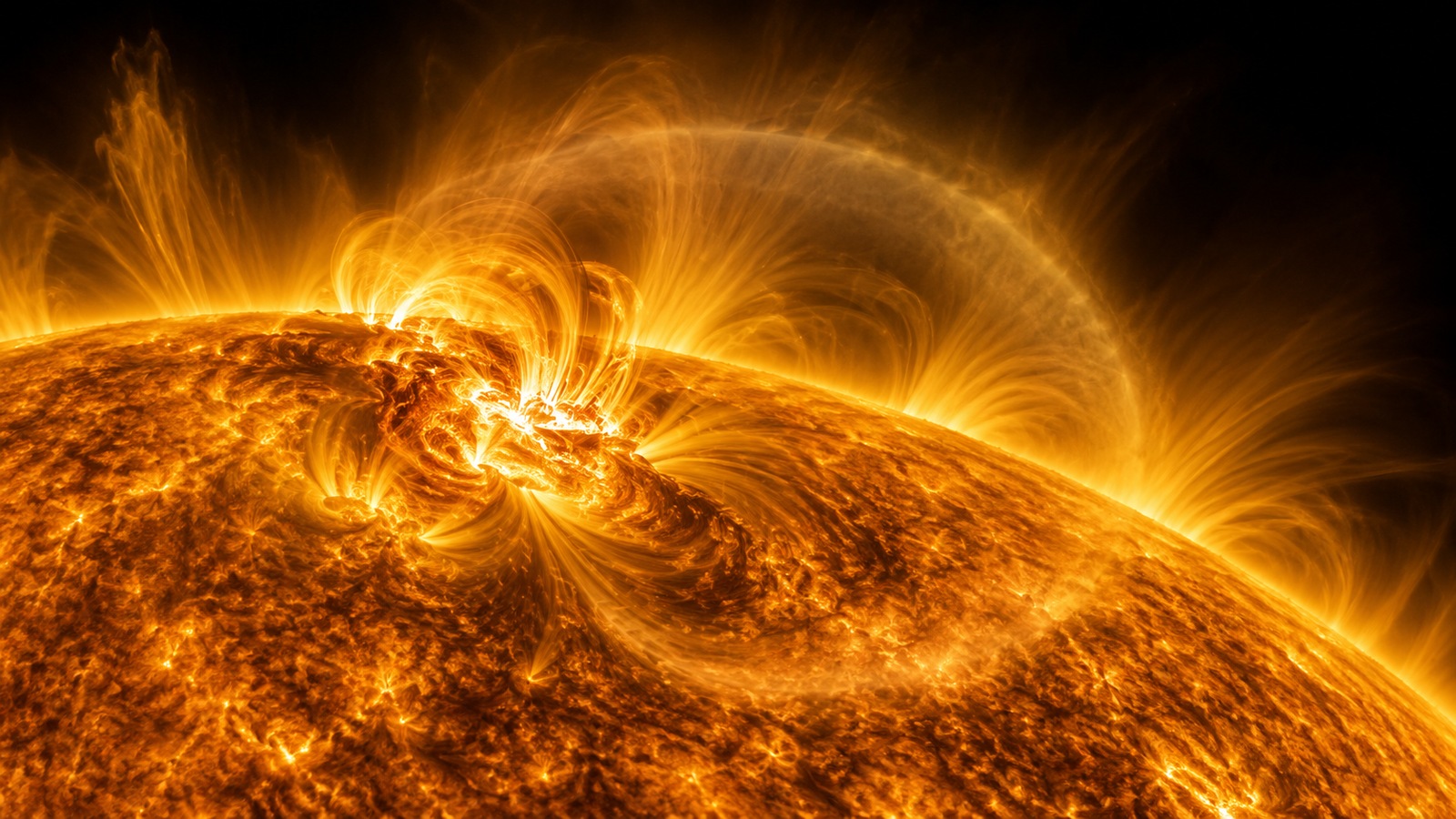
Temperatures in the chromosphere range from about 6,000 degrees Celsius at its base to nearly 20,000 degrees at its upper edges. This temperature rise is unexpected because one might assume that heat decreases as you move away from the hot photosphere. The increase suggests that magnetic forces and shock waves transport energy upward. The chromosphere is a dynamic environment filled with spicules—jet-like eruptions of plasma—and filaments stretching across the surface, showing that the Sun’s atmosphere is far from calm.
What Is the Corona?
The corona, meaning “crown” in Latin, is the Sun’s outermost atmosphere, stretching millions of kilometers into space. It appears as a delicate halo of pearly white light surrounding the Sun during eclipses, contrasting sharply with the crimson glow of the chromosphere beneath it. Despite its thinness, the corona reaches astonishing temperatures of 1 to 3 million degrees Celsius, making it one of the most puzzling features of solar physics.
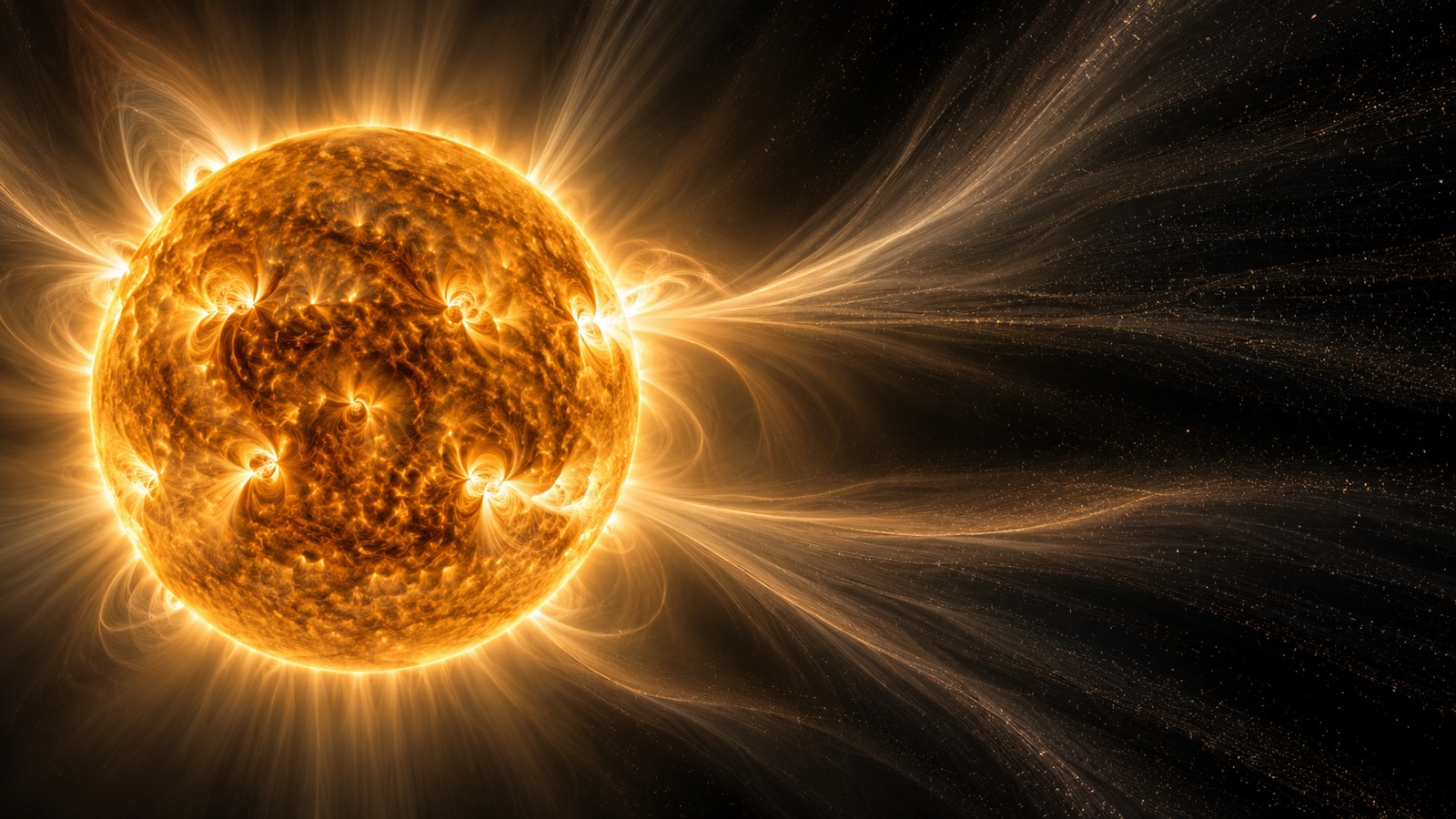
The corona is shaped by magnetic fields that channel plasma into loops, streamers, and bursts. It is also the source of the solar wind, a continuous outflow of charged particles that extends across the solar system. Though faint compared to the photosphere’s dazzling brightness, the corona plays a powerful role in influencing space weather and shaping Earth’s magnetosphere. Its heat and activity remain among the most studied mysteries in astronomy, with ongoing missions attempting to uncover its secrets.
Comparing the Chromosphere and Corona
Though the chromosphere and corona are both layers of the Sun’s atmosphere, their differences are striking. The chromosphere is relatively thin, dense compared to the corona, and characterized by its reddish glow and spicule activity. The corona, by contrast, is vast, tenuous, and incredibly hot, glowing in ultraviolet and X-ray wavelengths that require specialized instruments to study. Their contrasting temperatures are perhaps the most surprising difference. The chromosphere begins at about 6,000 degrees and rises to around 20,000, while the corona leaps to millions of degrees. The reasons for this dramatic rise remain one of solar physics’ greatest puzzles. Theories suggest magnetic reconnection and waves of energy funnel heat into the outer atmosphere, but the details remain elusive. Despite their differences, the two layers work together as part of the Sun’s atmospheric system, transferring energy and particles outward.
How We Study the Chromosphere
Observing the chromosphere requires specialized techniques, since its faint red glow is normally washed out by the bright photosphere. Astronomers often use filters tuned to hydrogen’s H-alpha line, allowing them to isolate features such as spicules, filaments, and prominences. Ground-based solar telescopes equipped with spectrographs provide detailed images of the chromosphere’s dynamic motions.
Space-based observatories like NASA’s Solar Dynamics Observatory (SDO) and Japan’s Hinode mission extend these studies, capturing high-resolution images across multiple wavelengths. By studying the chromosphere daily, scientists learn how energy travels upward, how magnetic fields shape plasma, and how eruptions begin. Without these insights, our understanding of the solar atmosphere would remain incomplete, and our ability to predict solar activity would be limited.
How We Study the Corona
The corona presents different observational challenges. Its faintness makes it nearly invisible against the photosphere’s brilliance, which is why total solar eclipses were historically the only opportunities to view it. Today, astronomers use coronagraphs, instruments that artificially block the Sun’s disk, creating an artificial eclipse to reveal the corona.
Spacecraft like the Solar and Heliospheric Observatory (SOHO) and the Parker Solar Probe have revolutionized our knowledge of the corona. These missions observe its structures in extreme ultraviolet and X-ray wavelengths, revealing loops, streamers, and ejections. By studying the corona, scientists hope to solve the mystery of coronal heating and to better predict solar storms. The corona is not merely a passive halo—it is a dynamic, fiery crown with daily consequences for Earth.
The Mystery of Temperature Differences
One of the most baffling differences between the chromosphere and corona is the rise in temperature. Moving outward from the Sun, one would expect the atmosphere to cool. Yet after the chromosphere, the temperature skyrockets into the millions in the corona. This paradox, known as the “coronal heating problem,” has puzzled scientists for decades.
Two leading theories attempt to explain it. One suggests that magnetic reconnection—where magnetic field lines twist and snap—releases bursts of energy that heat the corona. The other focuses on Alfvén waves, oscillations in plasma that may carry energy upward from the lower layers. Both mechanisms may work together, but direct measurements remain challenging. Missions like Parker Solar Probe are designed to fly closer to the Sun than ever before, offering unprecedented data to unlock this mystery.
Daily Effects on Earth
Though the chromosphere and corona seem distant, their effects reach Earth daily. The corona, as the source of the solar wind, influences Earth’s magnetic field and drives space weather. Solar storms originating in the corona can cause geomagnetic disturbances, disrupting satellites, power grids, and communications. Auroras, the northern and southern lights, are among the most visible consequences of these interactions. The chromosphere, while less directly impactful, is the birthplace of many solar eruptions. By studying its activity, scientists can better predict when flares or coronal mass ejections may occur. Each day, the dynamic interplay of chromosphere and corona shapes the space environment we live in, proving that these layers are not abstract concepts but tangible forces in our lives.
Solar Eclipses: Windows Into Both Layers
Total solar eclipses provide a unique opportunity to observe both the chromosphere and corona. For a few brief minutes, as the Moon covers the photosphere, the reddish rim of the chromosphere becomes visible, followed by the pearly halo of the corona. These moments offer natural laboratories for astronomers and breathtaking spectacles for the public.
Throughout history, eclipses revealed the existence of these outer layers. Ancient observers marveled at the strange halo surrounding the Sun, unaware it was the corona. Today, eclipses remain critical, allowing scientists to test instruments, calibrate models, and confirm findings from space missions. Each eclipse is a reminder that the Sun is layered, complex, and full of surprises.
The Role of Magnetic Fields
Magnetic fields are the hidden architects behind much of the behavior in both the chromosphere and corona. In the chromosphere, they shape spicules and prominences, guiding plasma along invisible lines of force. In the corona, they dominate, structuring loops and streamers and fueling explosive events. These magnetic fields are generated by the Sun’s dynamo, the movement of plasma deep in the convective zone. By influencing both the chromosphere and corona, they connect the Sun’s outer layers into a single dynamic system. Understanding these magnetic forces is crucial, as they link the daily activity of the Sun to the space weather that affects Earth. Without magnetism, the chromosphere and corona would not display their spectacular and sometimes violent behaviors.
Why the Chromosphere and Corona Matter
Studying the chromosphere and corona is not just about solar science; it is about protecting technology and life on Earth. Satellites, astronauts, and even power grids are vulnerable to solar activity that originates in these layers. By understanding their differences and dynamics, scientists can forecast solar storms and mitigate risks. Moreover, these studies deepen our understanding of stars in general. By unraveling the mysteries of the Sun’s outer atmosphere, astronomers gain insights into the behavior of other stars across the galaxy. The chromosphere and corona are laboratories of stellar physics, teaching us how energy, magnetism, and plasma interact. Their importance stretches far beyond our solar system, linking us to the broader cosmos.
The Future of Solar Exploration
The coming decades promise groundbreaking discoveries about the chromosphere and corona. Missions like NASA’s Parker Solar Probe and ESA’s Solar Orbiter are flying closer to the Sun than ever before, sending back detailed measurements of plasma, magnetic fields, and particles. These missions will help solve the mysteries of coronal heating, solar wind acceleration, and energy transfer between layers.
Ground-based observatories such as the Daniel K. Inouye Solar Telescope (DKIST) are also revolutionizing our view of the chromosphere, capturing its features in unprecedented detail. With these tools, scientists are entering a golden age of solar exploration. The differences between chromosphere and corona will no longer be abstract descriptions but detailed processes understood at the most fundamental levels.
Seeing the Sun as a Whole
While it is tempting to separate the chromosphere and corona, they are part of a continuous system. The photosphere provides the foundation, the chromosphere acts as a gateway, and the corona forms the outermost crown. Each layer plays a role in transferring energy outward and shaping the Sun’s influence across the solar system. By studying their differences, we appreciate the Sun’s complexity. By studying their connections, we see the Sun as a unified engine of light, heat, and magnetism. The chromosphere and corona are not rivals but partners in the story of a star that sustains life on Earth. Their daily dance reminds us that even familiar objects in the sky hold endless mysteries waiting to be explored.
Space Products Reviews
Blast off with Lyra Street’s ultimate guide to the Top 10 Best Space Products Reviews! From high-powered telescopes to stellar star maps and astronomy gear, we explore the most impressive cosmic tools available today. Dive into detailed reviews and an easy-to-navigate comparison chart to find the perfect gear for your stargazing adventures or space-inspired lifestyle.