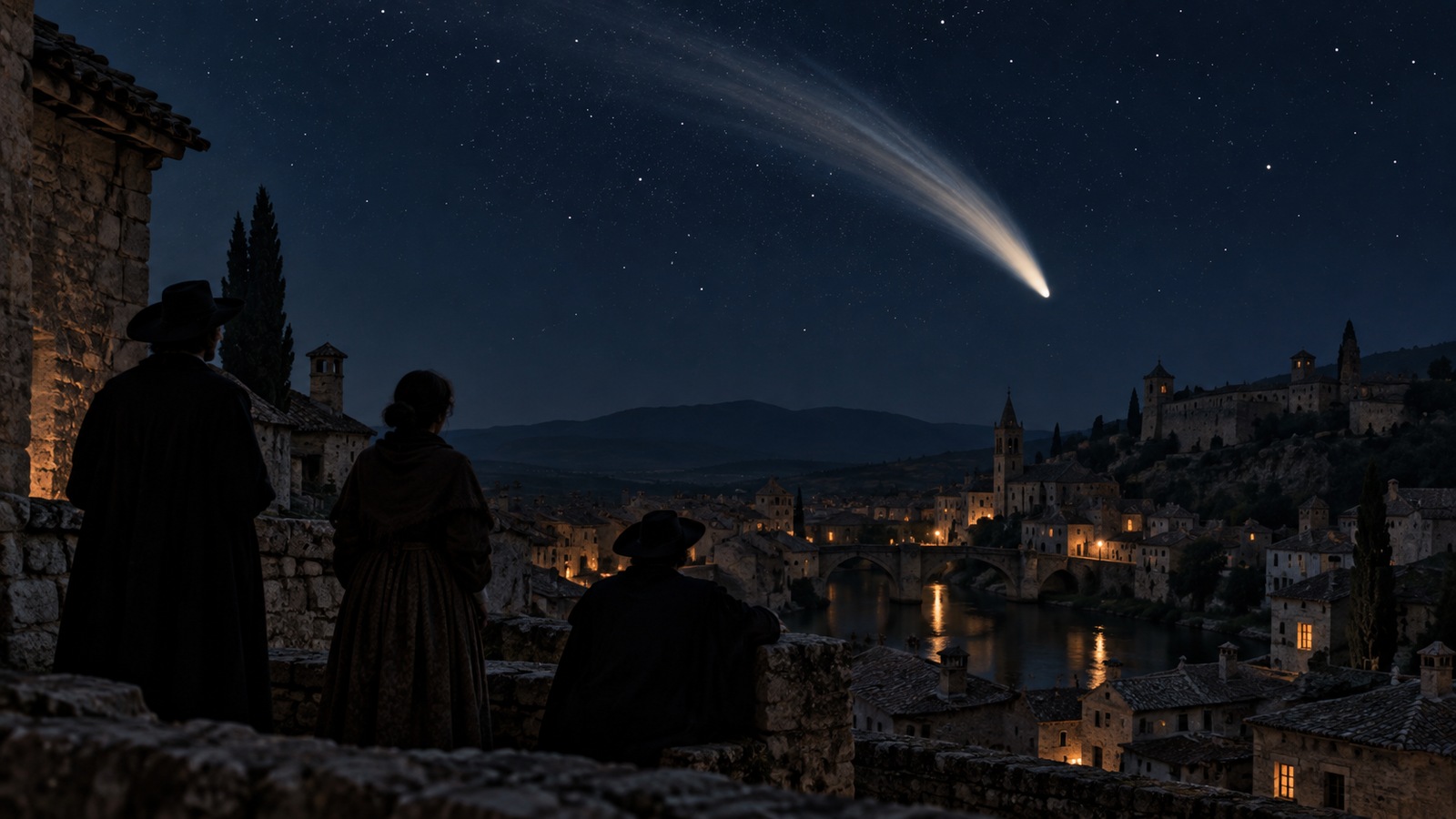
When you look up at the night sky, the stars seem steady and eternal—but hidden among them are countless wandering rocks racing through space. These cosmic travelers are called asteroids, or by their scientific name, minor planets. Though they may seem insignificant compared to worlds like Mars or Jupiter, asteroids hold some of the most important clues to the early history of our solar system. Each one is a frozen time capsule from billions of years ago—a rocky relic that helps astronomers understand how planets like Earth came to be. In this guide, we’ll dive into the fascinating world of asteroids: where they came from, what they’re made of, how they move, and why scientists are studying them more closely than ever before.
The Birth of Asteroids: Leftovers from Planetary Construction
About 4.6 billion years ago, our solar system was a swirling disk of gas, dust, and rock called the solar nebula. As gravity pulled matter together, the Sun formed at the center, while clumps of material began sticking together farther out. These clumps grew into planetesimals—building blocks of planets. Most of these planetesimals collided and merged to form planets like Earth, but not all of them were so lucky. In a region between Mars and Jupiter, the immense gravitational pull of Jupiter kept these rocks from forming into a full planet. Those leftover pieces became what we now call asteroids—ancient fragments from the dawn of the solar system. Because they’ve changed very little over billions of years, asteroids act as a window into the past. Studying them helps scientists reconstruct the violent, chaotic early years of our solar system’s formation.
The Asteroid Belt: Our Solar System’s Rocky Highway
Most asteroids reside in the asteroid belt, a vast region of space between Mars and Jupiter. Imagine it as a cosmic highway filled with millions of rocky bodies orbiting the Sun. Contrary to the popular image of asteroids crowding together like in science fiction movies, they’re actually spaced far apart. The average distance between two asteroids in the belt can be millions of kilometers—enough room to navigate through without hitting anything. The asteroid belt itself contains a fascinating variety of objects. Some are tiny pebbles just a few meters across, while others are massive enough to be considered dwarf planets. The largest of all is Ceres, which spans nearly 590 miles (940 kilometers) across—large enough to have its own gravity and a nearly spherical shape. Other giants like Vesta, Pallas, and Hygiea also dominate this region. Scientists believe that if all the material in the asteroid belt were combined into one body, it would still be smaller than Earth’s Moon. This highlights how dispersed and fragmented these objects truly are.
What Are Asteroids Made Of?
Not all asteroids are created equal. Their composition depends largely on where in the solar system they formed. Astronomers classify them into several main types based on their makeup:
C-Type (Carbonaceous) Asteroids
These are the most common, making up about 75% of all known asteroids. They contain large amounts of carbon, as well as clay and silicate rocks. C-type asteroids are very dark in color and reflect little sunlight. Because they formed farther from the Sun, they’ve preserved many of the original materials from the solar nebula, including water-bearing minerals and organic compounds—key ingredients for life.
S-Type (Silicaceous) Asteroids
S-type asteroids are composed mostly of silicate minerals and nickel-iron. They’re brighter and more reflective than their carbon-rich cousins. These asteroids likely formed closer to the Sun, where temperatures were higher, burning off volatile materials like water and leaving behind rocky, metallic cores.
M-Type (Metallic) Asteroids
These are primarily made of metals like iron and nickel. They may be remnants of the cores of ancient, shattered protoplanets—objects that were once on their way to becoming full-sized planets before catastrophic collisions tore them apart.
Each of these types provides a unique scientific story, offering clues about the temperatures, materials, and processes that shaped the early solar system.
The Shapes and Sizes of Asteroids
Asteroids come in all shapes and sizes, from tiny dust-sized grains to massive worlds hundreds of miles wide. Most are irregularly shaped, resembling potatoes, dog bones, or even peanuts. That’s because they’re too small to have enough gravity to pull themselves into a sphere.
Small asteroids often have rough, cratered surfaces caused by countless impacts over billions of years. Some rotate rapidly—spinning once every few hours—while others tumble unpredictably through space.
Then there are binary and even triple asteroid systems, where two or more asteroids orbit each other in a delicate gravitational dance. NASA’s 2022 DART mission famously targeted one such system, crashing a spacecraft into the smaller asteroid Dimorphos to test whether humans could change an asteroid’s trajectory—a potential defense against future impact threats.
Beyond the Belt: Near-Earth and Trojan Asteroids
While most asteroids live in the main belt, not all stay there. Over time, gravitational nudges from Jupiter and other planets can send some wandering toward Earth’s neighborhood. These are known as Near-Earth Asteroids (NEAs). They’re particularly interesting—and sometimes worrisome—because they occasionally cross our planet’s orbit. Astronomers track thousands of these objects closely. While large impacts are extremely rare, even a small asteroid a few dozen meters wide could cause serious regional damage if it struck Earth. The 2013 Chelyabinsk meteor, which exploded over Russia, was caused by an asteroid only about 20 meters in diameter. On the other end of the solar system, Trojan asteroids share orbits with planets—especially Jupiter. They cluster in two large groups that lead and trail the planet along its orbit, trapped by its immense gravity. Some other planets, including Mars and even Earth, have smaller populations of Trojan companions as well.
How Scientists Discover and Track Asteroids
The first asteroid, Ceres, was discovered in 1801 by Italian astronomer Giuseppe Piazzi. Since then, advances in telescopes, space probes, and computer modeling have revolutionized asteroid detection. Today, automated surveys like Pan-STARRS, Catalina Sky Survey, and ATLAS continuously scan the skies, finding thousands of new asteroids each year.
Once detected, astronomers measure an asteroid’s brightness, orbit, and spectrum to determine its size, shape, and composition. They track these orbits carefully to predict future paths—particularly for any that come close to Earth.
The data is compiled in a global catalog maintained by NASA’s Center for Near Earth Object Studies (CNEOS), which monitors potential impact risks. Fortunately, no large asteroid currently poses a threat to Earth in the foreseeable future, though scientists remain vigilant.
When Asteroids Hit: Cosmic Collisions and Impact Craters
Earth bears the scars of past asteroid impacts. One of the most famous examples is the Chicxulub crater in Mexico’s Yucatán Peninsula—formed 66 million years ago when a massive asteroid struck the planet. That collision unleashed catastrophic climate changes and is widely believed to have caused the extinction of the dinosaurs.
Though such large impacts are rare, smaller strikes happen more often. Most burn up harmlessly in the atmosphere, creating the brilliant streaks of light we call meteors or “shooting stars.” When fragments survive and reach the ground, they’re known as meteorites.
Meteorites are invaluable to science. Because they come directly from asteroids, they allow researchers to study space rocks up close without leaving Earth. Some meteorites even contain tiny amounts of organic molecules, suggesting that asteroids might have played a role in delivering the ingredients for life to our young planet.
Space Missions to Asteroids: Exploring Ancient Worlds
In recent decades, space agencies have sent multiple missions to visit and even sample asteroids directly. Each mission provides new insights into how these objects formed and evolved.
NASA’s Dawn Mission
Launched in 2007, Dawn visited both Vesta and Ceres—two of the largest objects in the asteroid belt. It revealed Vesta’s volcanic history and Ceres’s mysterious bright spots, which turned out to be deposits of salt from subsurface water—evidence that even tiny worlds can be geologically active.
Hayabusa and Hayabusa2
Japan’s space agency, JAXA, made history with its Hayabusa missions, which returned samples from the asteroids Itokawa (in 2010) and Ryugu (in 2020). These missions provided the first direct material from an asteroid to be studied in laboratories on Earth.
NASA’s OSIRIS-REx
Perhaps the most ambitious mission to date, OSIRIS-REx visited the near-Earth asteroid Bennu, a carbon-rich body believed to hold ancient organic material. In 2023, it successfully returned samples to Earth—rock and dust that could reveal secrets about how life’s building blocks formed. These missions mark a new era in asteroid science—one where we’re not just observing from afar, but bringing pieces of other worlds home for analysis.
Could Asteroids Be the Key to Future Space Exploration?
Beyond their scientific value, asteroids might one day fuel humanity’s expansion into space. Many contain valuable materials, including metals like nickel, cobalt, and platinum—resources that are rare and costly on Earth. This has sparked growing interest in asteroid mining, a concept once confined to science fiction.
By extracting materials directly in space, future missions could build spacecraft or fuel depots without hauling everything from Earth’s deep gravity well. Water-rich asteroids could even be mined for hydrogen and oxygen—the essential components of rocket fuel.
Companies and agencies alike are exploring this possibility, though the technical and economic challenges remain immense. Still, asteroids may hold the raw materials that make large-scale human space exploration sustainable in the decades to come.
Planetary Defense: Protecting Earth from Potential Impacts
While most asteroids are harmless wanderers, a few come close enough to warrant concern. That’s why space agencies around the world are developing strategies to detect and deflect potential threats—a field known as planetary defense.
NASA’s DART mission (Double Asteroid Redirection Test) was humanity’s first real test of this concept. In 2022, DART deliberately crashed into Dimorphos, a small moonlet orbiting the asteroid Didymos. The impact successfully altered Dimorphos’s orbit, proving that with enough warning, we could nudge a dangerous asteroid off a collision course with Earth.
Future systems like NEO Surveyor, a planned infrared space telescope, will help identify potentially hazardous asteroids long before they become a problem. The ultimate goal is early detection and gentle deflection—preventing disaster not by destruction, but by precision navigation.
Myths, Misconceptions, and the Public Fascination with Asteroids
Asteroids have long captured human imagination. In ancient times, they were mistaken for stars that moved—the word “asteroid” literally means “star-like.” In modern times, movies like Armageddon and Don’t Look Up have dramatized the idea of planetary collisions, sometimes blurring science with fiction. While Hollywood often exaggerates the danger, it’s true that asteroid impacts have shaped the history of life on Earth. But rather than living in fear, scientists emphasize knowledge and preparation. Thanks to ongoing observation programs, we now know the orbits of nearly all large near-Earth asteroids—and none are on a collision course anytime soon. Asteroids have also inspired artists, writers, and futurists. From Jules Verne’s Off on a Comet to the asteroid mining colonies imagined in modern science fiction, these wandering rocks continue to serve as symbols of exploration and resilience.
Why Asteroids Matter More Than Ever
Asteroids may be small, but their importance is cosmic. They’re ancient storytellers, carrying evidence of how our solar system was born. They may explain how Earth got its water, how life began, and what materials will sustain our future among the stars. In the decades ahead, we’ll likely see more missions to these mysterious objects—not only for science, but for survival and opportunity. By understanding asteroids, we’re learning not just about space rocks, but about ourselves: where we came from, what we’re made of, and how we might shape our destiny beyond Earth.
The Cosmic Significance of Space Rocks
So, what are asteroids? In the simplest sense, they’re rocky remnants of a time before planets—a population of ancient travelers orbiting the Sun. In a deeper sense, they’re the storytellers of our cosmic origins. Their scientific name, minor planets, reminds us that they’re not so minor after all. Each one carries a piece of the grand puzzle of the universe.
From Ceres to Bennu, from the asteroid belt to Earth’s own skies, these space rocks continue to fascinate, challenge, and teach us. As our technology grows, so does our ability to explore them—not just as hazards or resources, but as timeless messengers from the dawn of creation.
The next time you see a meteor streak across the night sky, take a moment to imagine the journey that tiny fragment has made—from the depths of space, across billions of years, to this fleeting, brilliant moment on Earth. In that instant, you’re witnessing a piece of the universe’s oldest story: the story of the asteroids.