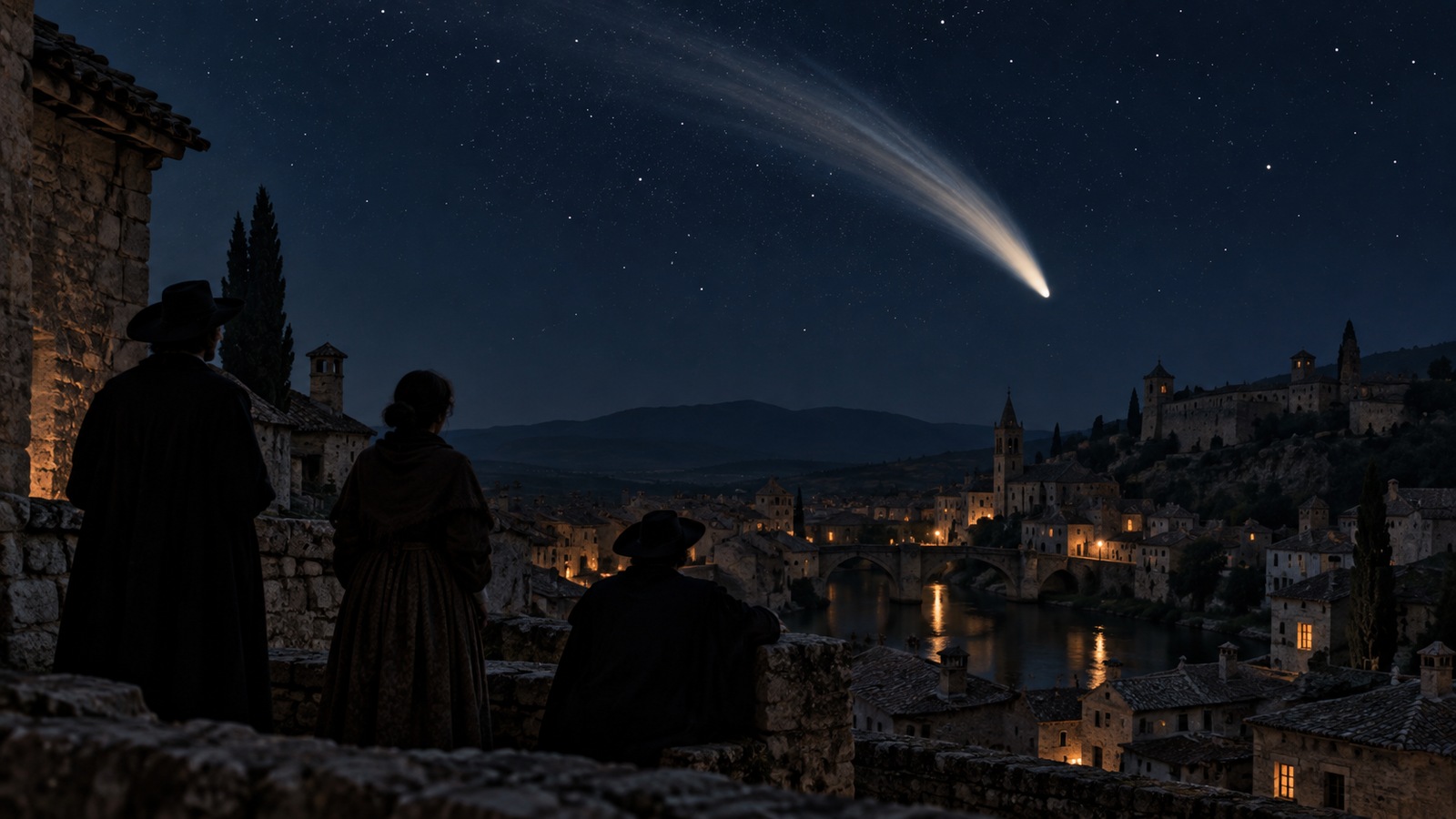
In the silent expanse between Mars and Jupiter lies a vast region filled with cosmic rubble — remnants of an ancient story that shaped our solar system. These are asteroids, or planetesimal remnants, rocky bodies that may hold the keys to our planet’s origin. Known scientifically as minor planets or planetoids, asteroids are far more than space debris; they are time capsules preserving the chemistry, structure, and chaos of the solar system’s birth. For centuries, astronomers have looked to these rocky wanderers with fascination. Could they be the raw materials from which the planets once grew — leftovers from a construction project that never quite finished? The answer, as we’ll see, is both complex and profoundly illuminating.
The Birth of the Solar System: From Dust to Worlds
To understand asteroids, we must travel back over 4.6 billion years, to the time when our Sun was forming from a vast cloud of gas and dust — the solar nebula. Gravity began pulling particles together into clumps, creating small, solid bodies known as planetesimals. These were the building blocks of planets, the seeds of everything we know today.
As these planetesimals collided and merged, some grew into protoplanets — the precursors to planets like Earth, Mars, and Venus. The process was violent, filled with impacts, heat, and molten rock. Yet not all of these building blocks succeeded in becoming planets.
In the region between Mars and Jupiter, something went wrong — or rather, something massive interfered.
The Role of Jupiter: The Giant’s Gravitational Grip
Jupiter, the solar system’s largest planet, holds enormous gravitational influence. In the early solar system, as it grew from its own planetesimal core into a gas giant, its gravity became strong enough to disrupt nearby objects. In the zone between Mars and Jupiter, this gravitational tug-of-war prevented smaller planetesimals from sticking together. Instead of forming a new planet, they collided too violently, shattering rather than merging. The result? A region filled with countless fragments — what we now call the asteroid belt. BThus, asteroids are, in a very real sense, leftovers from planet formation — the remnants of an ancient planet that never was. They preserve the conditions of the solar system’s infancy, offering scientists a window into its original ingredients.
Asteroids: Relics of the Primordial Solar System
Asteroids come in many shapes, sizes, and compositions, but all share one essential trait — they are ancient. Most are believed to be over 4.5 billion years old, older than any rock on Earth’s surface.
Their structures vary depending on where they formed. Some are metallic, composed largely of nickel and iron, similar to the cores of planets. Others are rocky or carbon-rich, filled with clays, silicates, and organic compounds. This diversity reflects the temperature and chemistry of the region in which they were born.
By studying asteroids, scientists can reconstruct how materials in the solar nebula behaved — what temperatures they experienced, what elements condensed first, and how water and organics were distributed.
Each asteroid, from the smallest pebble to the mightiest giant like (1) Ceres or (4) Vesta, is a geological time capsule — a frozen memory of creation.
The Great Asteroid Families
Though we speak of “the asteroid belt” as a single region, it is more like a crowded archipelago of families — groups of asteroids that share common origins. When large bodies collide, they produce fragments that drift together through space. Over millions of years, these fragments form asteroid families with similar compositions and orbital paths. The Flora family, for example, is composed of bright, stony asteroids, while the Eos family includes darker, carbon-rich members. Studying these families helps astronomers piece together the solar system’s collision history — a saga written in shattered rock. In this sense, asteroid families are like celestial genealogies, tracing the lineage of ancient worlds that might have been.
The Asteroid Belt: A Cosmic Construction Zone
The main asteroid belt lies between 2.1 and 3.3 astronomical units (AU) from the Sun. It contains millions of objects, from boulder-sized fragments to dwarf planets hundreds of kilometers across. Despite its cinematic portrayal in movies, the belt is mostly empty space — vast distances separate individual asteroids, and spacecraft pass through it easily.
Yet this region remains one of the most scientifically valuable in the solar system. The belt is divided into several zones:
- The inner belt, dominated by stony, silicate-rich S-type asteroids.
- The middle belt, containing both stony and carbonaceous types.
- The outer belt, where cold, dark C-type asteroids are more common.
This gradient reflects the ancient temperature variations in the solar nebula. Closer to the Sun, heat drove off volatiles, leaving behind metals and silicates. Farther out, ices and carbon compounds could survive. Thus, the asteroid belt preserves a snapshot of the early solar system’s chemistry from hot to cold.
Ceres: The Almost-Planet
Among the countless asteroids, one stands out as a monarch — Ceres, scientifically known as 1 Ceres. Discovered in 1801, it was initially considered a planet, later downgraded to an asteroid, and finally reclassified in 2006 as a dwarf planet. Ceres is nearly spherical, about 940 kilometers (584 miles) in diameter, and makes up nearly a third of the asteroid belt’s total mass. Its composition includes water ice, carbonates, and clays, suggesting that it retains internal water and may even harbor subsurface brines. In many ways, Ceres is the closest the asteroid belt ever came to forming a true planet. It represents the dividing line between success and failure in the cosmic construction process — a world large enough to become round, but not large enough to clear its orbit or ignite geological renewal.
Vesta: The Survivor of the Protoplanets
Next to Ceres, (4) Vesta is another standout. It’s not spherical like Ceres but is massive enough to have experienced differentiation — meaning it developed a crust, mantle, and core, just like a miniature Earth.
Vesta’s bright surface and basaltic composition reveal that it once had molten rock flowing across it. It nearly became a full-fledged planet before Jupiter’s gravity disrupted its growth.
Meteorites found on Earth called HED meteorites (howardites, eucrites, and diogenites) are believed to have originated from Vesta, giving scientists direct samples of a protoplanet’s surface.
Together, Ceres and Vesta provide a rare dual perspective — one icy and hydrated, the other dry and volcanic — illustrating the diverse outcomes of early planet formation.
The Language of Light: How We Study Asteroids
Before spacecraft could visit these distant worlds, astronomers relied on telescopes and spectroscopy — studying how sunlight reflects off an asteroid’s surface. Different minerals reflect light differently, allowing scientists to infer composition.
This technique revealed the three primary classes of asteroids:
- C-type (carbonaceous): Dark, primitive, and rich in organic material and water-bearing minerals.
- S-type (silicaceous): Brighter, stony, and metal-poor, composed mainly of silicate rocks.
- M-type (metallic): Reflective, containing iron and nickel, possibly remnants of larger bodies whose outer layers were stripped away.
These categories aren’t just labels; they map out the diversity of materials that existed in the early solar system. By comparing asteroids’ spectral fingerprints with meteorites on Earth, scientists can link celestial chemistry with tangible samples in our labs.
Meteorites: Asteroids That Come to Us
When asteroids collide, fragments occasionally fall toward Earth as meteorites — small pieces of rock that survive atmospheric entry. These meteorites are priceless scientific gifts, allowing researchers to analyze ancient material directly.
Some meteorites, known as chondrites, contain tiny spherical grains called chondrules, which condensed from molten droplets in the solar nebula. These are the oldest solid materials in the solar system — older than Earth itself.
Other meteorites, like iron meteorites, originate from the cores of differentiated asteroids that shattered long ago. Together, they tell the story of cosmic evolution — from dust to planetesimal, from planetesimal to protoplanet, and finally, from ruin to relic.
Asteroids and the Origins of Water and Life
One of the most profound questions in planetary science is how Earth obtained its water and organic compounds. The early Earth was too hot for water to condense; yet our planet today is blue and alive. Evidence suggests that asteroids played a crucial role in delivering these ingredients. Carbonaceous chondrite meteorites contain hydrated minerals and amino acids, implying that water and organic molecules formed naturally in space and were transported to Earth via impacts. In this sense, asteroids were not only leftovers from planet formation — they were couriers of life’s raw materials. Without their deliveries, our planet might have remained dry and barren. Thus, every drop of water we drink and every cell in our bodies may trace its origin back to these ancient wanderers.
Missions to the Leftovers: Unlocking the Past
Over the past few decades, humanity has taken bold steps to explore asteroids directly. Robotic missions have revealed them in exquisite detail, transforming them from distant dots into worlds with character and complexity.
NASA’s NEAR Shoemaker visited Eros in 2000, becoming the first spacecraft to land on an asteroid. JAXA’s Hayabusa and Hayabusa2 missions returned samples from Itokawa and Ryugu, while NASA’s OSIRIS-REx successfully collected material from Bennu and delivered it to Earth in 2023.
These samples allow scientists to analyze pristine solar system material untouched for billions of years. They contain organic molecules, hydrated minerals, and isotopic fingerprints that confirm asteroids’ role as planetary leftovers.
Through these missions, we’re reading the solar system’s autobiography, one grain of dust at a time.
Beyond the Belt: Near-Earth and Trojan Asteroids
Not all asteroids dwell in the main belt. Some have migrated inward or outward due to gravitational nudges. Near-Earth asteroids (NEAs), for instance, cross or approach our planet’s orbit. Famous examples include Apophis, Bennu, and Ganymed.
Meanwhile, Trojan asteroids share orbits with giant planets like Jupiter and Neptune, trapped in gravitationally stable regions called Lagrange points. These bodies, preserved in cold darkness, may hold materials even more pristine than main-belt asteroids.
NASA’s Lucy mission, launched in 2021, is en route to study several Jupiter Trojans — objects that might represent the most ancient and untouched relics of solar system formation.
Each type of asteroid offers a unique perspective on the solar system’s architecture, revealing how planetary leftovers were scattered and reshaped by gravitational forces over eons.
The Fine Line Between Asteroids and Comets
While asteroids are primarily rocky, comets are icy. Yet in recent years, the line between the two has blurred. Some asteroids, called active asteroids or main-belt comets, show tails of gas and dust — traditionally a cometary trait. This suggests that even within the asteroid belt, there may be hidden reservoirs of ice. Objects like (7968) Elst-Pizarro challenge our categories, hinting that the early solar system was a complex gradient of rock, ice, and organic matter rather than a simple divide. These hybrid objects reinforce the idea that asteroids preserve the transition zone between rocky inner planets and icy outer ones — the middle ground of planetary construction.
The Sculptors of the Belt
The asteroid belt is not static. Collisions are frequent on geological timescales, constantly reshaping its inhabitants. Large impacts can blast fragments into new orbits, creating meteoroids that occasionally fall to Earth. Over billions of years, this collisional evolution has ground many asteroids into smaller pieces. Some of these fragments, known as rubble-pile asteroids, are loose collections of rock held together only by weak gravity. Bennu and Ryugu, for example, are prime examples — cosmic piles of debris that still bear the scars of ancient cataclysms. These structures tell scientists how material behaves in microgravity environments and how small worlds evolve through continual recycling.
The Economic and Exploratory Value of Asteroids
Beyond their scientific allure, asteroids also represent potential economic opportunity. Many are rich in metals such as platinum, nickel, cobalt, and gold, as well as water ice that could sustain human missions.
The concept of asteroid mining — once the domain of science fiction — is now a serious consideration for space agencies and private companies. Extracting resources from near-Earth asteroids could one day support off-world construction, manufacturing, and even interplanetary fuel stations.
While still in its infancy, this vision aligns with a larger truth: understanding asteroids is not just about studying the past — it’s about planning for the future.
Asteroids as Cosmic Storytellers
Each asteroid is a storyteller. Some whisper tales of molten beginnings; others speak of icy reservoirs or carbon-rich chemistry. Together, they weave the story of how dust became rock, how rock became world, and how worlds became homes. Through them, we glimpse the processes that sculpted not just our solar system, but perhaps countless others across the galaxy. They remind us that creation is messy, unpredictable, and incomplete — that even failure can produce beauty and meaning. If planets are the finished works of cosmic architecture, asteroids are the blueprints — the sketches that reveal how the masterpiece came to be.
Modern Discoveries and the Continuing Mystery
Despite centuries of study, new revelations about asteroids arrive constantly. Spacecraft images have revealed craters filled with strange bright salts, fractured surfaces hiding water, and shadows concealing organics. Some even spin so rapidly that they threaten to tear themselves apart.
Advances in radar and telescope technology now allow astronomers to map these bodies in astonishing detail. Computer simulations model their formation and evolution, helping refine our theories about planet formation.
Every discovery reinforces one central truth: asteroids are not just leftovers — they are living archives, evolving slowly but continually, carrying the fingerprints of creation across billions of years.
The Philosophical Perspective: What Asteroids Teach Us
Asteroids invite reflection not just on science but on existence itself. They are the fragments of a grand process — pieces of worlds that could have been, reminders that not every path leads to completion. Yet in their incompleteness lies their value. Because they never became planets, asteroids never lost their primordial nature. They remain exactly what they were — witnesses to the dawn. When we study them, we’re not just learning about rocks in space. We’re connecting with our own origins — tracing the atoms in our bodies back to the same cosmic dust that once floated between Mars and Jupiter. In a profound sense, we are all made of asteroid dust — the same raw material that the solar system left behind.
From Rubble to Revelation
So, are asteroids leftovers from planet formation? The answer is a resounding yes — but they are more than mere scraps. They are the surviving pages of a cosmic manuscript, each etched with clues about how planets, oceans, and even life itself came to be.
Asteroids bridge the past and present, science and philosophy, creation and continuity. They show us that the solar system’s story isn’t one of perfection but of persistence — that even fragments can endure for billions of years and still have something vital to tell.
The next time a meteor streaks across the sky, think of it not as a fleeting spectacle but as a message from the dawn of time — a tiny, burning whisper from the leftovers that built the world.