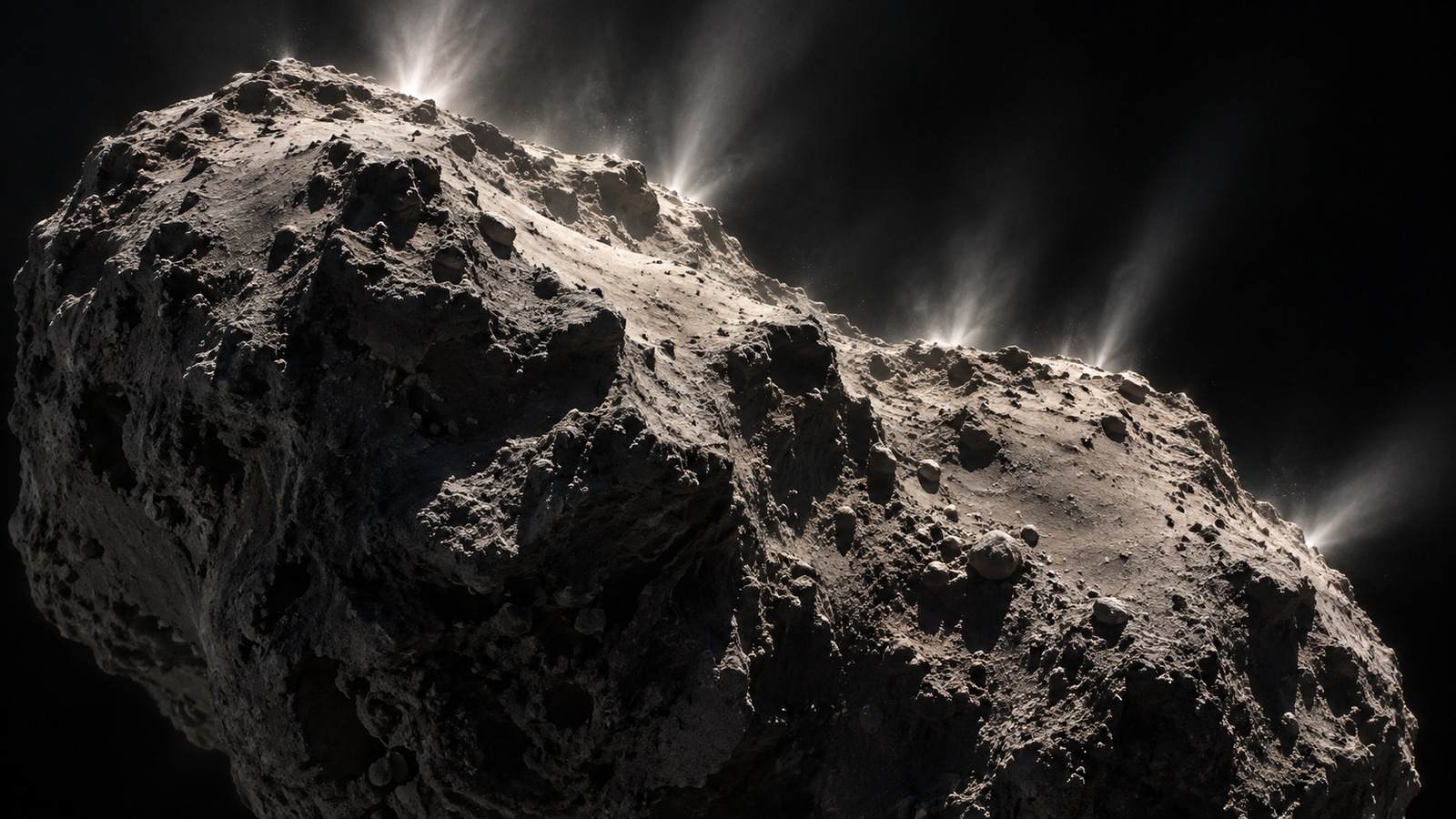
When we gaze up at the night sky, we might imagine stars, planets, and comets streaking by—but scattered throughout our solar system are billions of rocky fragments known as asteroids, or by their scientific name, planetesimals. These cosmic leftovers are relics from the formation of the solar system more than 4.6 billion years ago, and studying what they’re made of reveals a story about how our cosmic neighborhood was born. Asteroids are not just lumps of rock drifting aimlessly through space; they’re geological time capsules. Each one holds clues about the ingredients that built the planets, the chemistry of the early solar system, and even how life’s essential elements reached Earth. But what exactly are they composed of, and why do their materials differ so dramatically? Let’s take a deep dive into the structure, chemistry, and classification of these fascinating celestial bodies.
The Origins of Asteroids: Cosmic Building Blocks
Before understanding what asteroids are made of, it’s important to know where they come from. About 4.6 billion years ago, a vast cloud of gas and dust—called the solar nebula—began to collapse under its own gravity. As it did, most of the material gathered in the center to form the Sun. The remaining gas and dust flattened into a rotating disk, where countless particles began sticking together through static electricity and gravity, forming planetesimals—the first solid bodies in the solar system.
While some of these planetesimals merged to form planets like Earth and Mars, others never quite made it. Gravitational interactions with Jupiter prevented them from coalescing, leaving behind a scattered population of rocky remnants: the asteroids we see today. Essentially, asteroids are the leftover ingredients of planet formation—each one preserving the conditions and chemistry of the early solar system.
The Main Ingredients: Metal, Rock, and Ice
Asteroids are primarily composed of rock (silicate minerals), metal (iron and nickel), and sometimes ice (frozen water and volatiles). The proportions of these ingredients vary depending on where the asteroid formed and what it has experienced since.
In the inner solar system, closer to the Sun, it was too hot for volatile compounds like water and methane to remain solid, so asteroids there are mostly made of rock and metal. Farther from the Sun, beyond the “frost line,” temperatures dropped low enough for ice to form, giving rise to more volatile-rich asteroids.
Let’s explore the three primary types of asteroids—C-type, S-type, and M-type—each with its own chemical fingerprint.
1. C-Type (Carbonaceous) Asteroids: The Primitive Ones
C-type, or carbonaceous asteroids, are the most common type, accounting for about 75 percent of all known asteroids. They’re dark, low-density bodies rich in carbon-based compounds and hydrated minerals—clays and silicates that have chemically combined with water.
These asteroids formed in the outer regions of the asteroid belt, where temperatures were cool enough for water and organic molecules to survive. Their black, charcoal-like surfaces reflect only a small fraction of sunlight, making them appear dark gray or nearly invisible through telescopes.
Composition and Characteristics
C-type asteroids are chemically similar to carbonaceous chondrite meteorites that sometimes fall to Earth. These meteorites contain a mix of:
- Hydrated silicates, including phyllosilicates (clay minerals)
- Carbon compounds, such as amino acids and complex organic molecules
- Magnetite and sulfide minerals
- Water-bearing minerals and sometimes ice in deeper layers
Because they’ve remained largely unchanged since the solar system’s early days, C-type asteroids serve as pristine archives of the original materials from which the planets were built.
Scientific Importance
NASA’s OSIRIS-REx mission to the asteroid Bennu, a C-type asteroid, confirmed the presence of water-bearing minerals and organic carbon compounds. This discovery supports the theory that asteroids like Bennu may have delivered water and the raw ingredients for life to the early Earth billions of years ago.
2. S-Type (Silicaceous) Asteroids: The Rocky Middleweights
S-type, or silicaceous asteroids, make up roughly 17 percent of the asteroid population. They are found mostly in the inner asteroid belt and are composed primarily of silicate minerals (like olivine and pyroxene) and metallic nickel-iron. These asteroids are brighter and more reflective than C-types because of their rocky, stony composition.
Composition and Characteristics
S-type asteroids typically consist of:
- Magnesium silicates (olivine and pyroxene)
- Metallic iron-nickel inclusions
- Small amounts of sulfides and other minor elements
They have undergone partial melting and differentiation, meaning their interiors once got hot enough for metal to separate from rock. As a result, S-type asteroids are thought to represent the mantles and crusts of once-larger bodies that were broken apart by collisions long ago.
Scientific Importance
Because S-type asteroids are richer in rock and metal, they help scientists understand planetary differentiation—how molten planets separated into rocky crusts and metallic cores. Meteorites known as ordinary chondrites and stony-irons likely come from these types of asteroids. Missions like Hayabusa 2, which visited asteroid Itokawa, revealed just how complex these rocky worlds can be—some even show evidence of space weathering and regolith layering similar to the Moon’s surface.
3. M-Type (Metallic) Asteroids: The Iron Giants
M-type, or metallic asteroids, are the rarest of the main classes, comprising only about 8 percent of known asteroids. They are made primarily of nickel and iron, similar to Earth’s core. Some scientists believe they may be the remnants of the metallic cores of ancient protoplanets shattered in colossal impacts.
Composition and Characteristics
These dense, reflective asteroids contain:
- Iron and nickel, sometimes making up 90 percent or more of their mass
- Sulfide minerals, such as troilite (FeS)
- Trace amounts of silicates and phosphides
Their metallic surfaces reflect radar signals strongly, allowing astronomers to study them in detail from Earth. One particularly famous example is 16 Psyche, a massive M-type asteroid roughly 226 kilometers (140 miles) across. NASA’s Psyche mission, launched in 2023, aims to orbit and study this body to learn more about the early processes that formed planetary cores.
Scientific Importance
If M-type asteroids truly are fragments of once-molten planetary cores, they could unlock secrets about how Earth’s own metallic center formed. They also represent potential sources of valuable metals—making them of future economic interest for asteroid mining.
Other Types: The Outliers
While C-, S-, and M-type asteroids make up the bulk of the population, there are other, more specialized varieties:
- D-type asteroids are dark and rich in organics and volatiles, similar to comets, found in the outer belt and near Jupiter’s Trojans.
- V-type asteroids, like 4 Vesta, show volcanic basaltic crusts and are linked to how differentiated protoplanets formed.
- E-type asteroids are bright and composed of enstatite, a silicate mineral formed under highly reduced (oxygen-poor) conditions.
Each of these outliers adds a new piece to the puzzle of how the solar system’s chemistry and temperature gradients shaped planetary formation.
The Chemistry of Asteroids: What’s Inside at the Atomic Level
Beyond their mineral makeup, asteroids tell a chemical story that reaches deep into the periodic table. Scientists analyze meteorites—fragments of asteroids that fall to Earth—to determine their chemical composition. These samples reveal the presence of dozens of elements, including:
- Oxygen, silicon, magnesium, and iron (the four most abundant elements)
- Nickel, sulfur, calcium, and aluminum
- Trace elements such as cobalt, chromium, phosphorus, and titanium
Some carbonaceous chondrites even contain amino acids, nucleobases, and other organic molecules, providing tantalizing evidence that life’s chemical precursors may have formed in space long before Earth existed.
The Role of Water and Ice
While we often think of asteroids as dry, rocky objects, many contain water or hydrated minerals within their structures. Especially in C-type asteroids, the presence of water-bearing clays suggests that chemical reactions between rock and liquid water occurred billions of years ago. In some outer-belt asteroids, frozen water still exists today beneath their surfaces. When sunlight warms these asteroids, the ice can sublimate, creating faint comet-like tails. Such “active asteroids” blur the line between comets and asteroids, demonstrating that the boundary between these two populations is more about location and history than composition. Water-bearing asteroids are of great scientific and practical interest. They may explain how Earth obtained its oceans, and in the future, they could serve as sources of water for space exploration, supporting life and fuel production in orbit or on other planets.
How Scientists Study Asteroid Composition
Understanding what asteroids are made of requires multiple scientific techniques, each providing unique insights.
1. Spectroscopy
By analyzing the light reflected or emitted by an asteroid, scientists can identify specific wavelengths absorbed by minerals. This technique—called spectroscopy—helps determine surface composition from afar. For example, absorption bands at certain infrared wavelengths can reveal the presence of olivine, pyroxene, or hydrated clays.
2. Radar and Thermal Observations
Radar signals bounced off asteroids can reveal surface texture, density, and metal content. Meanwhile, thermal measurements show how quickly the surface heats up or cools down, giving clues about whether it’s covered in dust, rock, or metal.
3. Space Missions and Sample Returns
Perhaps the most powerful method of all comes from direct exploration. Missions like:
- OSIRIS-REx (Bennu) – returned a sample rich in organics and hydrated minerals
- Hayabusa 2 (Ryugu) – revealed dark, primitive material similar to C-type meteorites
- Psyche (16 Psyche) – aims to explore a metallic asteroid for the first time
By bringing samples back to Earth, scientists can conduct high-precision laboratory analyses, confirming theories about mineralogy and isotopic ratios that can’t be measured remotely.
How Asteroids Differ from Meteorites
It’s easy to confuse asteroids and meteorites, but their relationship is simple: meteorites are pieces of asteroids (or other celestial bodies) that have survived the journey through Earth’s atmosphere. By studying these fallen fragments, scientists effectively get to touch asteroids without leaving Earth.
Meteorites are categorized based on their composition—stony, iron, and stony-iron—mirroring the main asteroid classes (S-, M-, and C-types). This one-to-one connection between asteroid types and meteorite classes allows scientists to match specific meteorites to their likely parent bodies in space.
The Asteroid Belt: A Composition Gradient
The main asteroid belt, located between Mars and Jupiter, isn’t a uniform field of debris—it’s a chemical gradient frozen in time. The distribution of asteroid types follows the early solar system’s temperature pattern:
- Inner Belt (closer to Mars): S-type and M-type asteroids dominate; high-temperature materials.
- Middle Belt: Transitional types with mixed silicates and some hydrated minerals.
- Outer Belt (near Jupiter): C-type and D-type asteroids prevail; cooler, carbon- and ice-rich materials.
This compositional diversity tells scientists that the asteroid belt preserves a snapshot of the early solar system’s thermal and chemical zoning—a record of how distance from the Sun shaped the ingredients available for planet formation.
Differentiation and Catastrophic Collisions
Not all asteroids are primitive leftovers. Some experienced internal heating due to radioactive decay (mainly from aluminum-26) soon after they formed. This heat caused partial melting and differentiation, separating heavy metals into a core and lighter silicates into a mantle and crust—much like miniature planets.
Later, catastrophic impacts shattered many of these differentiated bodies, scattering fragments across the asteroid belt. That’s why today we find metallic M-types (core remnants), rocky S-types (mantle material), and basaltic V-types (crust fragments). Every asteroid tells a different story about destruction and rebirth in the solar system’s violent youth.
Asteroids and the Origins of Life
Perhaps the most profound question about asteroids is what role they played in seeding life on Earth. The organic molecules found in carbonaceous chondrites include amino acids, sugars, and complex hydrocarbons—the same building blocks that make up proteins and DNA. Laboratory analyses have shown that some of these molecules exhibit chirality, meaning they twist in preferred directions, much like biological molecules do. When Earth was young, it was constantly bombarded by asteroids and comets. This “Late Heavy Bombardment” period could have delivered not only water but also these organic molecules, providing the ingredients for the first biological reactions. In this way, asteroids may have been both messengers and midwives of life—transporting chemistry across the solar system and jumpstarting biology on our planet.
The Future: Mining and Exploration
Beyond their scientific significance, asteroids are attracting attention for their potential as resources. Some metallic and carbonaceous asteroids contain vast quantities of nickel, iron, platinum-group metals, and water—materials that are both valuable and vital for future space missions.
NASA and private companies envision a future where robotic missions could mine asteroids for water (to make rocket fuel) or extract metals for space manufacturing. Although still in early conceptual stages, such endeavors highlight a remarkable possibility: the same ancient debris that built the planets may one day power humanity’s expansion beyond Earth.
Why Asteroid Composition Matters
Studying what asteroids are made of isn’t just academic curiosity—it’s essential to understanding:
- How planets formed and evolved
- Where Earth’s water and organic molecules originated
- The potential hazards of asteroid impacts
- How to use asteroids as future resources
By mapping their compositions, scientists can trace the solar system’s chemical evolution, assess which asteroids pose a threat to Earth, and identify which ones might support future missions or colonies.
Cosmic Time Capsules of Creation
Asteroids, or planetesimals, are far more than rubble drifting through space. They are the preserved fragments of the earliest chapters of our solar system’s history—rocky archives recording how dust became planets and how chemistry became biology. From the carbon-rich C-types that whisper of life’s origins to the metallic M-types that echo the cores of destroyed worlds, every asteroid tells part of the story of who we are and where we come from.
Next time you see a shooting star, remember: it might be a tiny piece of an ancient asteroid, a speck of matter older than Earth itself, carrying within it the same elements that make up your bones, your breath, and your world. In understanding what asteroids are made of, we’re really uncovering what we are made of too—stardust forged in cosmic fire, still circling the Sun billions of years later.