How Do Stars Get Their Color? From Blue Giants to Red Dwarfs
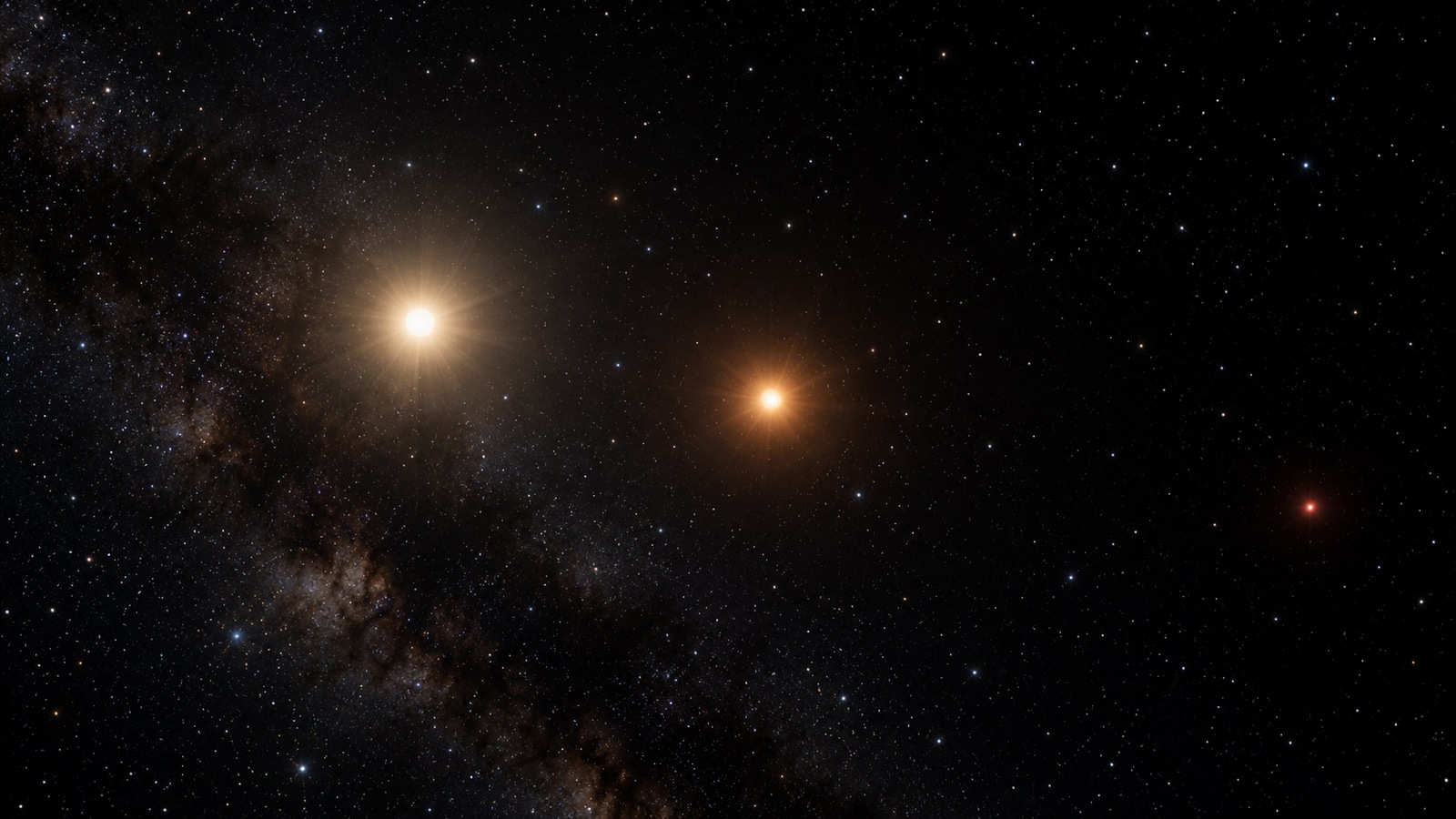
When we gaze at the night sky, we see thousands of stars scattered across the heavens, each one glowing with its own unique brilliance. Some appear white, others red, and some even shimmer with a bluish hue. This isn’t just a trick of human eyesight—it reflects real differences in temperature, mass, and energy. Scientifically, stars are categorized using the Harvard Spectral Classification system, which organizes them into types O, B, A, F, G, K, and M. These letters correspond directly to their surface temperatures and colors. Blue giants burn with staggering intensity, while red dwarfs glow dimly but persistently. Understanding how stars get their color reveals not only the science of light and heat but also the story of stellar lifespans, evolution, and the universe itself.
The Science of Stellar Color
The color of a star is determined primarily by its surface temperature, or effective temperature. Stars radiate energy because of nuclear fusion in their cores, where hydrogen atoms fuse into helium, releasing immense amounts of energy. That energy travels outward, eventually reaching the photosphere, the star’s visible surface layer. The hotter this surface becomes, the more the star emits light at shorter wavelengths, shifting its glow toward blue. Cooler surfaces, by contrast, emit longer wavelengths, giving the star an orange or red hue.
This principle is described by blackbody radiation, a fundamental concept in physics. In a blackbody spectrum, the peak wavelength of emitted light depends on the object’s temperature. Hot objects shine bluer, while cooler ones shine redder. Stars behave as near-perfect blackbodies, so their color is a reliable indicator of their temperature. In this way, a star’s hue is more than an aesthetic feature—it is a thermal fingerprint that reveals the very physics driving its shine.
Why the Kelvin Scale Matters
Astronomers measure stellar temperature using the Kelvin scale, where zero represents absolute zero, the coldest possible state. On this scale, the Sun’s surface temperature is about 5,778 K, which corresponds to the yellowish-white color we see. Blue stars are far hotter, often above 30,000 K, while cool red dwarfs may sit around 2,000 to 3,700 K. Kelvin provides a universal language to describe heat and color in astrophysics. By knowing the temperature, scientists can predict a star’s color, brightness, and lifespan. The correlation is exact enough that even from light-years away, astronomers can categorize a star just by analyzing its spectrum.
The Harvard Spectral Classification
The Harvard system is a cornerstone of stellar classification. It divides stars into categories O, B, A, F, G, K, and M, ordered from the hottest to the coolest. O-type stars glow blue or blue-white and burn at more than 30,000 K. B-type stars, slightly cooler, still blaze with blue-white light. A-type stars appear white, with temperatures around 7,500 to 10,000 K. F-type stars lean toward yellow-white, while G-type stars, like our Sun, appear yellow. K-type stars, cooler still, glow orange, while M-type stars, the most common in the galaxy, burn faint red at less than 3,700 K. This classification doesn’t just describe color—it encapsulates the relationship between mass, temperature, and lifespan. Hotter stars shine brighter but live shorter lives, while cooler stars glow faintly but endure far longer. The letters in the Harvard system are therefore more than labels; they are guides to stellar destiny.
The Sun’s Golden Glow
Our Sun, a G2V star in astronomical terms, glows with a soft golden color. Its surface temperature of roughly 5,778 K gives it the balance of brightness and stability that supports life on Earth. While it may seem white when viewed from space, atmospheric scattering makes it appear yellow from the ground. The Sun’s color is not only a reflection of physics but also a key factor in the habitability of our planet.
Compared to blue giants, the Sun is moderate in every respect—temperature, color, and luminosity. Yet this moderation is precisely what makes it special to us. A hotter star might burn too brightly and end too quickly, while a cooler star might not produce enough heat for Earth-like worlds to thrive. The Sun’s warm hue is the light of stability, shining for billions of years.
Blue Giants and Their Fierce Glow
At the hot end of the spectrum lie the blue giants, the O- and B-type stars. With surface temperatures exceeding 30,000 K, they shine with dazzling blue-white intensity. Their enormous mass creates pressures and temperatures in their cores that fuel rapid nuclear fusion, causing them to radiate energy at extraordinary rates. These stars are rare but highly influential. Their ultraviolet radiation ionizes surrounding gas clouds, creating bright nebulae and triggering new waves of star formation. Yet their brilliance comes at a cost. Because they burn fuel so quickly, blue giants live only a few million years, a fleeting moment in cosmic terms. Their blue glow is the mark of both immense power and brevity.
White Stars and Their Radiance
Between the blazing giants and the softer golden suns lie the A-type stars, glowing with white brilliance. Stars like Sirius, the brightest star in our night sky, belong to this class. With temperatures between 7,500 and 10,000 K, they shine intensely but live shorter lives than the Sun. Their whiteness reflects a balance of wavelengths, radiating across the spectrum without favoring red or blue. These stars are particularly useful to astronomers because their spectra reveal clear patterns that make them ideal for studying stellar atmospheres. Their color tells us that they are hotter and brighter than the Sun, but not so extreme as to live in fleeting bursts of energy like the blue giants.
Yellow Suns and Their Familiar Light
G-type stars, like our Sun, represent a sweet spot in stellar color. Their yellow glow comes from surface temperatures between 5,200 and 6,000 K, producing a steady and life-supporting brightness. These stars are abundant in galaxies and often serve as hosts to planetary systems. Their color, to us, feels familiar and inviting, symbolizing warmth and stability. Yet this yellow light is temporary in cosmic time. As G-type stars age, they swell into red giants, cooling at the surface and shifting their color dramatically. The yellow glow we see today in our Sun is just one chapter in its story, a stage that will eventually give way to red.
Orange Stars and Their Gentle Glow
K-type stars sit just below G-type stars in temperature, glowing with a warm orange hue. With surface temperatures between 3,700 and 5,200 K, they are cooler than the Sun but more abundant. Because they burn fuel more slowly, they live much longer than G-type stars, often for tens of billions of years.
Their gentle orange light may make them promising hosts for habitable planets. Astronomers studying exoplanets often focus on K-type stars, where long lifespans provide stable conditions for life to potentially emerge. Their color signals not only a different kind of star but also a different kind of opportunity in the search for worlds beyond our own.
Red Dwarfs: The Universe’s Workhorses
At the cooler end of the spectrum are the M-type stars, known as red dwarfs. With temperatures below 3,700 K, they glow with a faint red light. Though dim to our eyes, red dwarfs are by far the most common type of star in the galaxy. Their small size and slow fusion make them incredibly long-lived, with lifespans measured in trillions of years.
Red dwarfs may not dominate the night sky because of their faintness, but they dominate in number. Most stars in the Milky Way are red dwarfs, quietly glowing in infrared and red light. Their color is a sign of efficiency and endurance, showing that faint heat can outlast blazing brilliance in the cosmic timeline.
Why Stars Change Color Over Time
A star’s color is not fixed; it changes as the star evolves. When a star like the Sun exhausts its hydrogen fuel, its core contracts while its outer layers expand and cool, shifting its color from yellow to red. This transformation into a red giant is a natural stage of stellar aging. Massive stars experience even more dramatic changes. A hot blue star may end its life as a red supergiant before exploding as a supernova, briefly shining brighter than entire galaxies. In each case, color serves as a marker of a star’s stage in life. The hue we see is not only a measure of temperature but also a clue to the star’s past and future.
The Role of Atmospheres and Dust
While temperature is the primary driver of stellar color, other factors can influence what we see. Interstellar dust, for instance, scatters blue light more effectively than red, causing stars viewed through thick dust to appear redder than they truly are. This effect, known as reddening, is similar to how Earth’s atmosphere makes the Sun look red at sunrise or sunset. Atmospheres can also play a role. A star’s chemical composition affects its spectrum, subtly altering its apparent color. By analyzing these variations, astronomers can learn not only the temperature but also the metallicity, or element content, of a star. This adds another dimension to the story of color, connecting it to both physics and chemistry.
How Astronomers Measure Stellar Color
Astronomers measure stellar color using spectroscopy, a technique that splits light into its component wavelengths. Each element in a star’s atmosphere absorbs light at specific wavelengths, creating absorption lines in the spectrum. By studying these lines, scientists can determine the star’s temperature, composition, and motion. Another method is to use color indices, which compare a star’s brightness through different filters. The difference in brightness between a blue filter and a red filter, for example, provides a quantitative measure of the star’s color and therefore its temperature. These tools transform the colors of the night sky into precise scientific data.
Stellar Color and Life Potential
The color of a star has direct implications for the possibility of life on surrounding planets. Blue stars, while dazzling, live too short to allow life to evolve. Red dwarfs live far longer, but their faintness and frequent flares may challenge habitability. Yellow and orange stars like the Sun and K-types appear to offer the best balance, with long lifespans and steady energy output. Thus, color is more than an aesthetic property. It is a clue to which stars might harbor planets capable of supporting life. In the search for habitable worlds, astronomers look not only for planets but also for the colors of the stars that host them.
Stellar Color Across the Galaxy
The Milky Way is alive with colors, from the faint reds of dwarfs to the searing blues of giants. Star clusters reveal this diversity vividly. In young clusters, blue and white stars dominate, shining brightly but destined to fade quickly. In older clusters, cooler red and orange stars prevail, survivors of billions of years. The mix of colors in a galaxy tells astronomers about its age and star formation history. A galaxy rich in blue stars is still actively forming new suns, while one dominated by red is older and quieter. In this way, stellar colors are not just about individual stars—they paint the life story of entire galaxies.
Why Stellar Color Matters
Color is the universe’s way of telling the story of stars. It reveals their temperatures, masses, lifespans, and even their potential to support life. It connects the physics of nuclear fusion with the beauty of the night sky, linking science with human wonder. When you look up at the stars, the blue, white, yellow, orange, and red points of light you see are not random—they are signatures of stellar heat, history, and destiny. From blue giants that blaze fiercely and briefly to red dwarfs that glow faintly for trillions of years, stellar colors show the spectrum of creation itself.
From Blue Giants to Red Dwarfs
So how do stars get their color? The answer lies in temperature, mass, and time. Hot stars blaze blue, cooler ones glow red, and those in between shine white, yellow, or orange. Their hues shift as they age, tracing arcs of evolution from fiery birth to quiet decline. Every star’s color is a story written in light. It tells us about the conditions in its core, its fuel supply, and its future. When you see the rainbow of stars in the night sky, you are not just witnessing beauty—you are seeing physics, chemistry, and cosmic history unfold across the heavens.
Space Products Reviews
Blast off with Lyra Street’s ultimate guide to the Top 10 Best Space Products Reviews! From high-powered telescopes to stellar star maps and astronomy gear, we explore the most impressive cosmic tools available today. Dive into detailed reviews and an easy-to-navigate comparison chart to find the perfect gear for your stargazing adventures or space-inspired lifestyle.