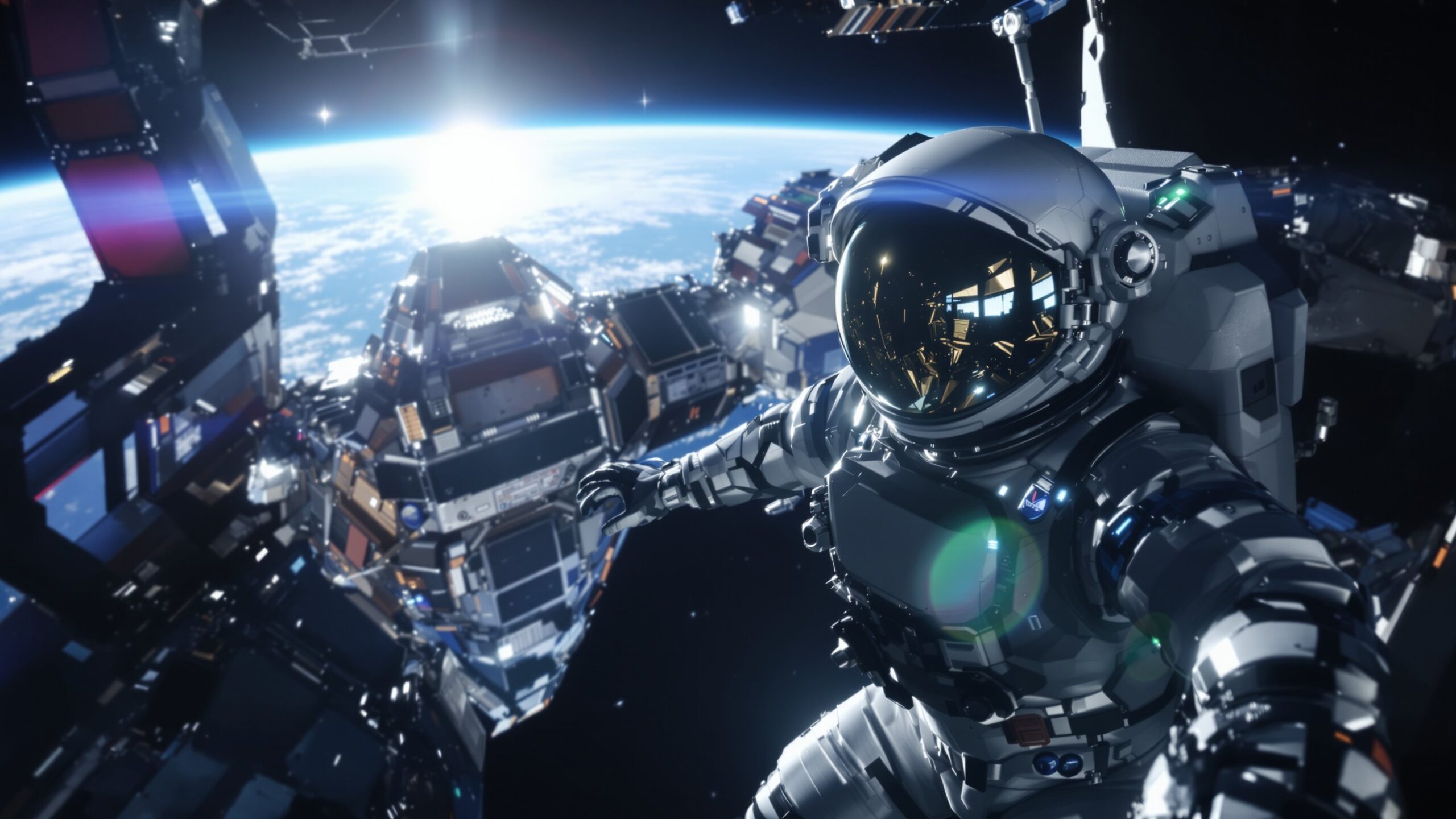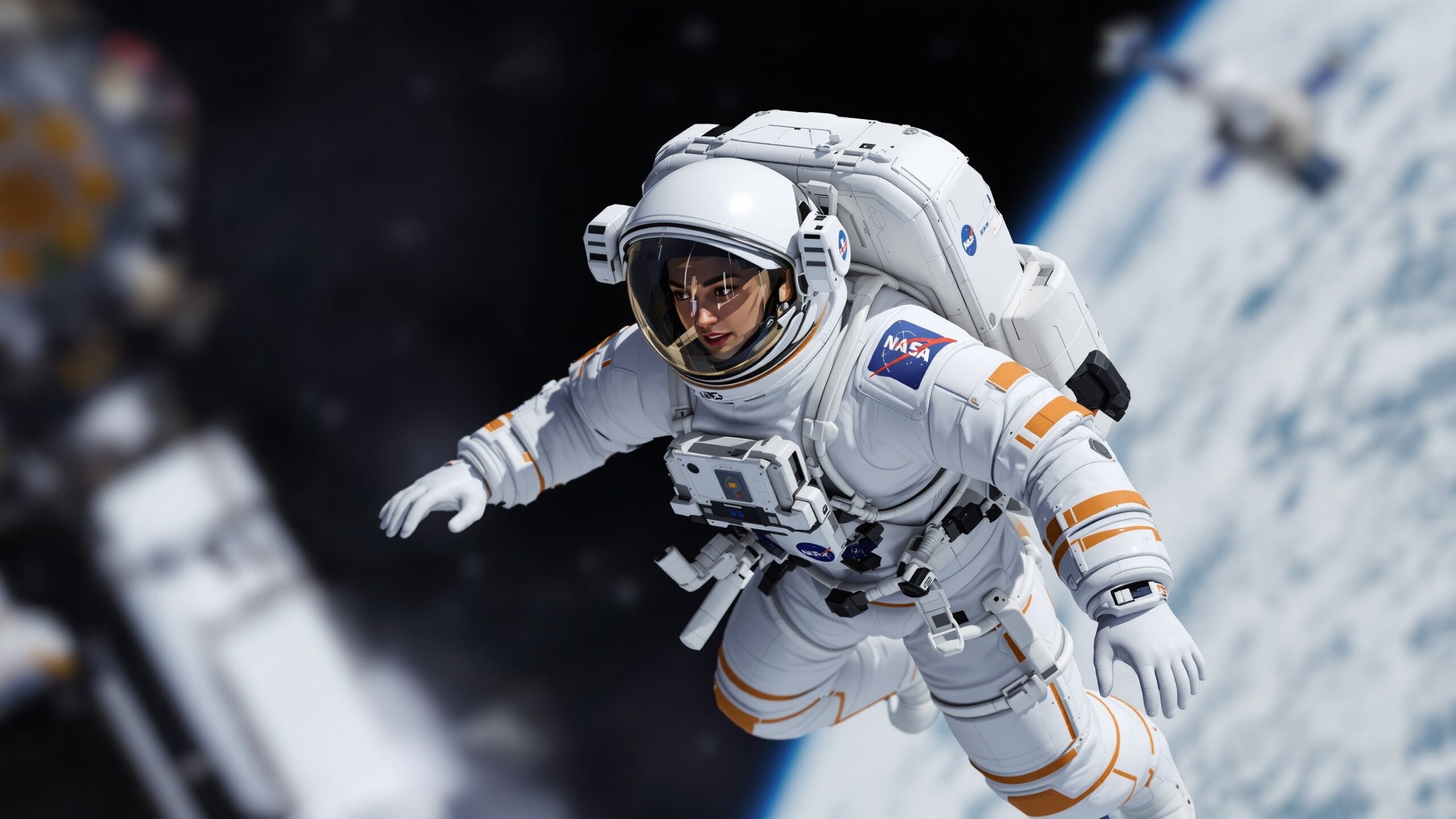
Human beings evolved to live on Earth, protected by a thick atmosphere, breathable air, and temperatures that rarely swing beyond survivable limits. Space offers none of those comforts. In orbit or on the Moon, astronauts face a vacuum that can cause bodily fluids to boil, radiation that can damage cells, and temperature extremes that range from blistering heat to deep cold within minutes. To survive these conditions, astronauts rely on one of the most sophisticated wearable technologies ever created: the Extravehicular Mobility Unit (EMU)—NASA’s technical name for the modern space suit used during spacewalks. A space suit is far more than protective clothing. It is essentially a miniature spacecraft wrapped around the human body. Inside it, astronauts breathe oxygen, regulate their body temperature, communicate with mission control, and move through the vacuum of space while performing delicate tasks. Every seam, valve, cable, and layer plays a role in keeping the astronaut alive. Understanding how these remarkable systems work reveals not only engineering brilliance but also the incredible challenges of living beyond Earth.
Why Astronauts Need Space Suits
Space is fundamentally hostile to human life. Without protection, a person exposed to the vacuum of space would lose consciousness within seconds. The lack of pressure would allow gases in the body to expand, oxygen would rapidly leave the bloodstream, and moisture in tissues could begin to boil—a phenomenon known as ebullism.
Temperature is another danger. In sunlight, surfaces in orbit can reach over 250°F (121°C). In shadow, temperatures can plunge to −250°F (−157°C). There is no atmosphere in space to distribute heat evenly, so astronauts can experience rapid thermal changes.
Radiation also poses a constant threat. Outside Earth’s protective magnetic field and atmosphere, astronauts are exposed to solar radiation and cosmic rays that can damage DNA and increase long-term health risks.
A space suit must therefore perform multiple critical functions simultaneously. It must provide breathable air, maintain safe pressure around the body, regulate temperature, shield against radiation and micrometeoroids, allow mobility, and support communication. Achieving all of this in a wearable system is one of the greatest engineering challenges in human spaceflight.
The Space Suit as a Personal Spacecraft
To understand the complexity of a modern space suit, it helps to think of it not as clothing but as a portable life-support vehicle. During spacewalks, astronauts are essentially outside their spacecraft, floating hundreds of miles above Earth. Their suit becomes their only barrier between life and the harsh environment of space.
Inside the suit, astronauts breathe pure oxygen delivered at carefully controlled pressure. A life-support backpack manages oxygen supply, removes carbon dioxide, controls humidity, and circulates cooling water through the suit. Power systems run electronics and communications equipment, allowing astronauts to stay in constant contact with fellow crew members and mission control.
The suit must also maintain mobility. Astronauts perform complex tasks such as repairing satellites, installing equipment, or assembling sections of space stations. Engineers design joints and bearings into the suit so that astronauts can bend their arms, turn their wrists, and grip tools even while wearing a pressurized garment that naturally resists movement.
Every component of the suit is designed to work together as a unified life-support system, allowing astronauts to survive and work effectively in space for hours at a time.
The Layers of Protection
A modern space suit contains multiple layers, each designed to perform a specific function. These layers work together to provide pressure, insulation, durability, and environmental protection. The innermost layer typically includes the Liquid Cooling and Ventilation Garment (LCVG), which resembles a tight-fitting long-sleeve shirt and pants woven with thin tubes. Cool water flows through these tubes, removing excess heat from the astronaut’s body during physical activity.
Above this cooling layer sits the pressure bladder, which maintains internal suit pressure. Without this layer, the vacuum of space would cause the suit to collapse and the astronaut’s body to expand dangerously. The pressure bladder keeps the internal environment stable and safe.
Next comes the restraint layer, which prevents the pressure bladder from expanding outward like a balloon. This layer provides the suit with its structural strength and helps maintain its shape when pressurized.
The outer layers serve as protection against the harsh environment of space. These include insulation materials that help control temperature, reflective fabrics that shield against solar radiation, and tough materials designed to withstand impacts from tiny micrometeoroids traveling at extremely high speeds. Together, these layers form a durable, flexible shell capable of protecting astronauts from nearly every environmental hazard encountered during a spacewalk.
Maintaining Breathable Air
One of the most important functions of a space suit is providing a continuous supply of oxygen. Inside the Extravehicular Mobility Unit, astronauts breathe pure oxygen at a lower pressure than Earth’s atmosphere.
This oxygen supply is stored in tanks within the Primary Life Support System (PLSS) backpack. The PLSS carefully regulates the flow of oxygen, ensuring astronauts receive enough to breathe comfortably while maintaining the suit’s internal pressure.
As astronauts breathe, they exhale carbon dioxide. If this gas accumulated inside the suit, it would quickly become toxic. The PLSS removes carbon dioxide using specialized filters containing chemicals that absorb the gas. Air circulation fans then move fresh oxygen through the helmet and around the astronaut’s body.
The system also controls humidity. Breathing and perspiration produce moisture that could fog the helmet visor or cause discomfort. Dehumidification components remove this excess moisture, maintaining a dry and breathable environment inside the suit.
These life-support systems allow astronauts to work outside their spacecraft for six to eight hours at a time.
Temperature Control in Space
Despite the cold reputation of space, astronauts can quickly overheat during a spacewalk. Working in a pressurized suit requires significant physical effort, and sunlight can heat surfaces rapidly. To prevent overheating, astronauts wear the previously mentioned Liquid Cooling and Ventilation Garment beneath the suit layers. Cool water circulates through narrow tubes woven throughout the garment, absorbing heat from the astronaut’s body.
The warmed water travels to the PLSS backpack, where the heat is removed using a process called sublimation. In this process, water is allowed to freeze and then transition directly from solid ice into water vapor in the vacuum of space. As the ice sublimates, it removes heat from the circulating water system. This elegant cooling method allows astronauts to maintain a stable body temperature even while working hard in direct sunlight.
Protecting Against Micrometeoroids and Debris
Space may appear empty, but it is filled with tiny particles moving at extraordinary speeds. These particles include natural micrometeoroids as well as fragments of human-made space debris. Even a particle smaller than a grain of sand can cause serious damage if it strikes an astronaut at orbital velocity.
To guard against these threats, the outer layers of a space suit are constructed from durable materials such as Kevlar, Nomex, and Teflon-coated fabrics. These materials resist tearing and can absorb impacts from extremely small particles.
The suit’s outermost layer, known as the Thermal Micrometeoroid Garment, acts as a shield against both physical debris and temperature extremes. While no suit could survive a large impact, this protective layer dramatically reduces the risk posed by the countless tiny particles that exist in Earth’s orbit.
The Helmet: A Window to the Cosmos
The helmet of a space suit provides both visibility and protection. It is made from strong polycarbonate materials designed to withstand impacts and maintain pressure.
The helmet includes a clear visor for visibility as well as a secondary gold-coated visor that protects astronauts from intense sunlight and harmful ultraviolet radiation. The gold coating reflects a large portion of solar energy, preventing overheating and protecting the astronaut’s eyes.
Inside the helmet, airflow systems circulate oxygen and remove carbon dioxide. Small fans ensure that fresh air flows across the astronaut’s face, preventing fogging and maintaining comfortable breathing conditions.
Communication systems are also built into the helmet. A set of microphones and earphones—often called a “Snoopy cap”—allows astronauts to talk with each other and with mission control while working outside their spacecraft.
Mobility in a Pressurized Suit
Moving in a pressurized suit presents unique challenges. When a suit is filled with pressurized gas, it naturally stiffens, resisting bending and movement. Engineers must design special joints to allow astronauts to move efficiently.
Space suits include carefully engineered bearings at the shoulders, elbows, wrists, hips, and knees. These joints allow astronauts to rotate their limbs without fighting against the suit’s internal pressure.
The gloves are particularly complex. Astronauts must be able to grip tools, operate switches, and manipulate delicate equipment while wearing thick protective gloves. Engineers design gloves with flexible joints, textured fingertips, and reinforced materials to balance protection with dexterity.
Despite these innovations, working in a space suit still requires strength and endurance. Astronauts train extensively underwater in giant pools that simulate the conditions of spacewalking.
Power, Data, and Communication
A modern space suit is also an advanced electronic system. Astronauts rely on integrated communication equipment to coordinate with their crew and mission control on Earth. Radio transmitters inside the suit connect to antennas mounted on the spacecraft or station. These systems allow astronauts to speak clearly while performing tasks hundreds of miles above the planet.
The suit also contains sensors that monitor the astronaut’s vital signs. Heart rate, oxygen levels, and other physiological data are transmitted back to mission control, allowing engineers and medical teams to monitor astronaut health in real time. Power for these systems is supplied by rechargeable batteries located in the life-support backpack. These batteries must operate reliably in the extreme conditions of space, providing enough energy for several hours of activity.
Preparing for a Spacewalk
Before stepping outside their spacecraft, astronauts must carefully prepare their suits and bodies. One of the most important steps involves preventing decompression sickness, also known as “the bends.”
Inside spacecraft, the atmosphere contains nitrogen similar to Earth’s air. However, space suits operate at lower pressure and use pure oxygen. If astronauts moved directly from the spacecraft atmosphere into the suit, dissolved nitrogen in their blood could form dangerous bubbles.
To avoid this, astronauts spend time breathing pure oxygen before a spacewalk. This process removes nitrogen from the bloodstream, allowing them to safely transition into the suit’s lower-pressure environment.
After completing suit checks and system tests, astronauts exit the airlock and begin their work outside the spacecraft.
The Evolution of Space Suits
Space suits have evolved dramatically since the early days of human spaceflight. The first suits worn during the Mercury missions in the 1960s were relatively simple pressure garments designed primarily for emergencies inside the spacecraft. As missions became more complex, engineers developed suits capable of supporting full spacewalks. During the Apollo program, astronauts wore specialized suits that allowed them to walk on the Moon’s surface. Modern suits used aboard the International Space Station are far more advanced. They include improved life-support systems, enhanced mobility, and materials designed for long-duration missions. Future space exploration will require even more sophisticated suits. NASA and other space agencies are currently developing next-generation suits for lunar missions and eventual human exploration of Mars.
The Future of Space Suit Technology
Next-generation space suits are being designed with flexibility and durability in mind. Engineers aim to create suits that are easier to move in, more resistant to lunar dust, and capable of supporting longer missions on planetary surfaces. New designs may incorporate advanced materials, improved cooling systems, and enhanced digital displays inside the helmet. Some concepts include heads-up displays that provide astronauts with navigation data and system status information. These future suits will be essential for upcoming missions under programs such as Artemis, which aims to return humans to the Moon and establish a sustainable presence there. As humanity prepares to explore deeper into the solar system, space suit technology will continue evolving—ensuring that astronauts remain safe while pushing the boundaries of exploration.
A Remarkable Engineering Achievement
Astronaut space suits represent one of the most impressive technological achievements in human history. By combining advanced materials, life-support systems, thermal regulation, and communications technology into a wearable system, engineers have created a portable spacecraft capable of sustaining life in the vacuum of space.
Every time astronauts step outside their spacecraft for a spacewalk, they rely entirely on this remarkable technology. Without it, the dream of building space stations, repairing satellites, or exploring other worlds would be impossible.
Space suits allow humans to survive in an environment that was once completely inaccessible. They transform the deadly vacuum of space into a workplace where astronauts can build, repair, and explore. As space exploration continues to expand, these incredible suits will remain one of the most important tools enabling humanity’s journey beyond Earth.