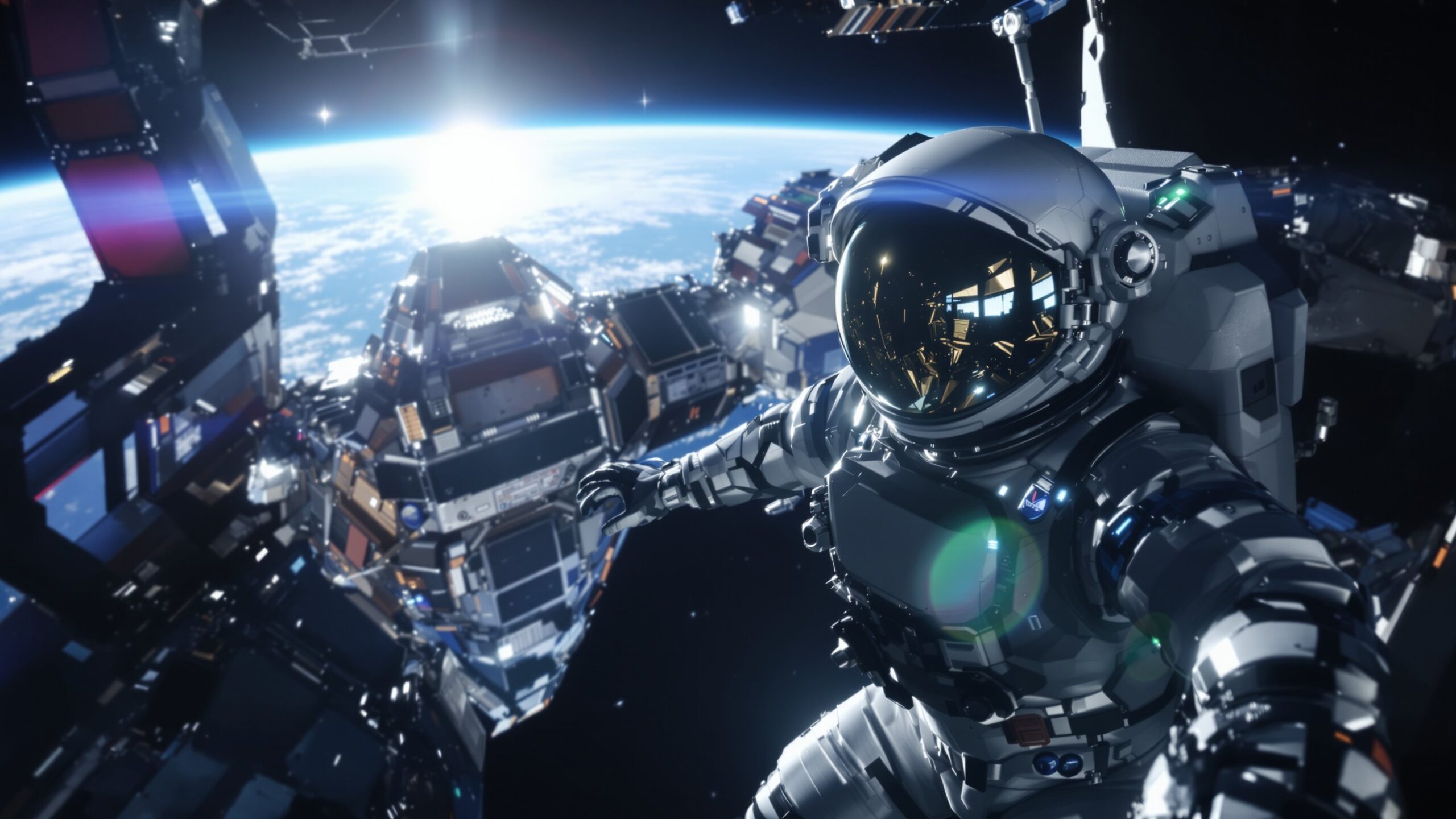
Space exploration is one of humanity’s most daring achievements. Every time astronauts leave the safety of their spacecraft and step into the vacuum of space, they rely on an extraordinary piece of engineering: the space suit. Officially known as an Extravehicular Mobility Unit (EMU)—or in Russian systems, the Orlan EVA suit—these wearable spacecraft allow humans to survive in one of the most hostile environments imaginable. But what would actually happen if a space suit failed in space? The idea often appears in movies as a dramatic and instantaneous catastrophe. In reality, the science is more nuanced, though still extremely dangerous. A space suit provides oxygen, pressure, temperature control, radiation shielding, and protection from micrometeoroids. If any of those systems were to fail, an astronaut could face severe and rapidly escalating risks. However, the human body does not explode or instantly freeze, as is sometimes portrayed. Understanding what truly happens requires exploring the physics of vacuum, the biology of the human body, and the complex engineering behind modern space suits. This article explains what happens during different types of space suit failures, how the body responds to vacuum exposure, and the systems astronauts rely on to survive during spacewalks.
The Critical Role of the Space Suit
A space suit is often described as a “personal spacecraft,” and that description is remarkably accurate. In the vacuum of space, there is no breathable air, almost no pressure, extreme temperatures, and constant radiation exposure. Without protection, the human body cannot survive for long.
The Extravehicular Mobility Unit used by NASA astronauts during spacewalks is a multi-layered system designed to replicate the essential conditions of Earth. Inside the suit, astronauts breathe pure oxygen at a controlled pressure of about 4.3 psi, far lower than Earth’s atmospheric pressure but enough to sustain life. The suit also contains a cooling garment that circulates water through tubes to regulate body temperature, since the vacuum of space makes traditional convection cooling impossible.
Other systems include carbon dioxide removal filters, power supplies, communications equipment, and a rigid helmet that provides visibility and protection. The suit’s outer layers are made of specialized fabrics that resist micrometeoroid impacts, radiation, and extreme temperature fluctuations.
During a spacewalk, astronauts depend completely on the suit’s life-support system. Even a small malfunction can quickly escalate into a life-threatening emergency.
The Reality of Space: A Vacuum Environment
To understand what happens during a suit failure, it helps to understand the environment outside the suit. Space is essentially a vacuum, meaning it contains extremely few particles and almost no pressure. On Earth, atmospheric pressure pushes against our bodies constantly. In space, that pressure disappears. Human bodies are adapted to Earth’s atmosphere. Our lungs rely on pressure differences to exchange oxygen and carbon dioxide, and fluids inside the body are stabilized by surrounding pressure. When that pressure suddenly disappears, physical processes begin to change rapidly. Contrary to popular belief, a human exposed to vacuum does not explode. Skin and connective tissues are strong enough to hold the body together. However, the lack of pressure causes gases inside the body to expand and liquids to begin vaporizing at lower temperatures. These effects create severe physiological stress within seconds.
Immediate Effects of a Suit Breach
If a space suit develops a sudden leak or catastrophic rupture, the first and most immediate problem is rapid depressurization. Air inside the suit would rush outward into the vacuum of space.
If the leak is small, the astronaut may have time to respond. Space suits contain sensors that detect pressure changes and alert astronauts and mission control. The astronaut might seal the leak, activate emergency oxygen reserves, or quickly return to the airlock.
A major rupture, however, would cause pressure to drop rapidly. As pressure falls, oxygen levels decline, making breathing increasingly difficult. Within seconds, the astronaut would experience hypoxia, the condition in which body tissues no longer receive enough oxygen.
Loss of consciousness typically occurs within 10 to 15 seconds of complete vacuum exposure.
What Happens to the Human Body in Vacuum
Exposure to vacuum triggers several physiological effects. One of the first is a phenomenon known as ebullism. Ebullism occurs when body fluids begin to boil due to low pressure. This does not mean the fluids become hot; instead, the boiling point drops dramatically when pressure decreases.
Water in saliva, tears, and soft tissues can begin to vaporize, causing the body to swell. The skin stretches as gases expand inside tissues. Astronauts exposed to vacuum in testing environments have described this swelling as similar to severe bloating.
Despite this swelling, the body does not burst. Skin acts as a natural pressure vessel. However, the expansion can restrict blood circulation and create intense discomfort.
Another effect involves dissolved gases in the bloodstream. As pressure drops, nitrogen dissolved in tissues forms bubbles, similar to decompression sickness experienced by deep-sea divers. These bubbles can damage tissues and disrupt circulation.
The Oxygen Problem
The most immediate threat during a suit failure is oxygen deprivation. Without a steady oxygen supply, the brain begins to suffer damage within minutes.
When pressure drops rapidly, oxygen already present in the lungs escapes quickly. If an astronaut holds their breath during depressurization, the expanding gas could rupture lung tissue. For this reason, astronauts are trained to exhale immediately if a sudden loss of pressure occurs.
Once oxygen levels fall, cognitive function declines rapidly. Vision narrows, reaction time slows, and coordination deteriorates. Loss of consciousness usually occurs before other injuries become fatal. If the astronaut is rescued quickly—within roughly 90 seconds—recovery may still be possible. Beyond that window, irreversible brain damage becomes increasingly likely.
Temperature Misconceptions
Many people imagine that an astronaut exposed to space would instantly freeze. The reality is more complicated. Space itself is extremely cold, but because there is almost no matter to conduct heat away, cooling occurs slowly.
Heat loss in space happens primarily through radiation rather than convection. This means an exposed human body would not freeze instantly. In fact, sunlight in space can cause surfaces to heat up dramatically. During vacuum exposure, temperature changes are not the immediate cause of danger. Oxygen deprivation and pressure loss occur much faster and are far more dangerous.
Radiation Exposure
Another risk of suit failure is radiation exposure. Earth’s atmosphere and magnetic field shield us from much of the Sun’s harmful radiation. In orbit, astronauts rely on spacecraft and suit materials for partial protection. If a suit were compromised, radiation exposure would increase. However, radiation damage typically occurs over longer time scales. During a short emergency exposure lasting seconds or minutes, radiation would not be the primary threat. Long-term exposure, such as during deep-space missions, poses much greater risks, including increased cancer probability and potential damage to the central nervous system.
Micrometeoroids and Physical Hazards
Space is not completely empty. Tiny particles called micrometeoroids travel through space at extremely high velocities. Even microscopic debris can damage equipment if it strikes at tens of thousands of miles per hour. Space suits include protective layers designed to absorb these impacts. If a micrometeoroid punctures a suit, it could create a small leak. Fortunately, the multi-layer construction of modern suits significantly reduces the likelihood of catastrophic penetration. Engineers design suits with redundancy and damage tolerance in mind. Small punctures may cause gradual pressure loss rather than instant failure, giving astronauts time to respond.
Types of Space Suit Failures
Not all suit failures involve dramatic ruptures. In reality, many potential problems involve system malfunctions.
One possible issue is oxygen supply failure. If the oxygen tank stops delivering air, the astronaut would have only minutes before oxygen levels become dangerous. Backup systems and redundant valves are designed to prevent this situation.
Another risk involves carbon dioxide removal. Astronauts exhale carbon dioxide, which must be filtered continuously. If filters fail, carbon dioxide levels inside the suit would rise, eventually causing headaches, dizziness, and loss of consciousness.
Cooling system failures also pose significant danger. Space suits rely on liquid cooling garments to remove body heat. Without cooling, astronauts could quickly overheat during physical activity in the vacuum of space.
Real Incidents During Spacewalks
Although catastrophic suit failures have never occurred during a NASA spacewalk, astronauts have experienced serious close calls. One notable incident happened in 2013 during a spacewalk on the International Space Station. Astronaut Luca Parmitano experienced water leaking into his helmet from the suit’s cooling system. The water began accumulating around his face, making it difficult to breathe and see.
The situation quickly became dangerous as the water covered his ears and nose. Parmitano had to navigate back to the airlock while partially blinded. Fortunately, he returned safely, but the incident highlighted how even minor technical failures can become life-threatening in space. The investigation revealed that a clogged filter caused the cooling system to malfunction, allowing water to flow into the helmet.
Emergency Procedures for Astronauts
Astronauts train extensively for suit emergencies. During preparation for space missions, they practice responding to leaks, pressure loss, and system failures in large underwater training facilities that simulate the conditions of microgravity.
If a problem occurs during a spacewalk, the astronaut’s first action is typically to notify mission control and their crewmates. The astronaut may activate emergency oxygen systems, isolate the affected component, or return immediately to the spacecraft.
Spacewalks are carefully choreographed to keep astronauts within reachable distance of the airlock or robotic arms whenever possible. Safety tethers ensure astronauts remain connected to the spacecraft at all times. These procedures significantly reduce the risk that a suit failure would lead to fatal exposure.
Engineering Redundancy and Safety Design
Modern space suits are designed with multiple layers of redundancy. Engineers assume that individual components may fail and design backup systems accordingly. The life-support backpack contains primary and secondary oxygen supplies. Pressure regulation valves have redundant controls. Sensors continuously monitor suit pressure, temperature, and oxygen levels.
Even the suit’s structural layers provide redundancy. Multiple fabrics and insulation layers protect against punctures, while reinforced joints allow mobility without sacrificing durability.
NASA’s newer exploration suits, including those being developed for future lunar missions under the Artemis program, incorporate advanced materials and improved mobility. These next-generation suits aim to enhance safety while enabling astronauts to work more efficiently on planetary surfaces.
Could an Astronaut Survive a Suit Failure?
Survival depends largely on how quickly the astronaut can return to a pressurized environment. If exposure to vacuum lasts only a few seconds, recovery is possible.
Experiments and accidental decompression events have shown that humans can survive brief exposure to vacuum if oxygen is restored quickly. Some test subjects in high-altitude chamber experiments lost consciousness but recovered fully once pressure was restored.
However, longer exposures become increasingly dangerous. Brain damage can begin within minutes, and the cumulative effects of decompression, swelling, and oxygen deprivation become more severe. In most scenarios, the key factor is time. The faster the astronaut can re-enter a pressurized environment, the greater the chance of survival.
Why Space Suit Safety Matters for Future Missions
As humanity prepares for missions beyond low Earth orbit, space suit reliability will become even more critical. Future astronauts may perform long-duration surface operations on the Moon or Mars, where rapid rescue may not always be possible. New suit designs aim to improve mobility, durability, and life-support capabilities. Engineers are exploring self-healing materials, advanced radiation protection, and improved pressure management systems. These innovations are essential for enabling astronauts to work safely in environments where failure could have serious consequences.
The Thin Barrier Between Life and Space
A space suit represents one of the most remarkable examples of human engineering. Inside its layers, astronauts carry a miniature life-support system that shields them from vacuum, radiation, and extreme temperatures.
If that protective barrier fails, the consequences can unfold quickly. Rapid depressurization, oxygen loss, and the physiological effects of vacuum exposure create a race against time. Yet thanks to rigorous engineering, extensive training, and redundant safety systems, astronauts are well prepared to handle emergencies.
Understanding what happens during a space suit failure highlights both the dangers of space exploration and the ingenuity required to overcome them. Every successful spacewalk is a testament to decades of research, testing, and innovation designed to keep astronauts alive in one of the most unforgiving environments in the universe.
As human exploration continues to push farther into space, the reliability of these wearable spacecraft will remain a critical factor in ensuring that astronauts can safely explore worlds beyond Earth.