A Moon of Mystery and Possibility
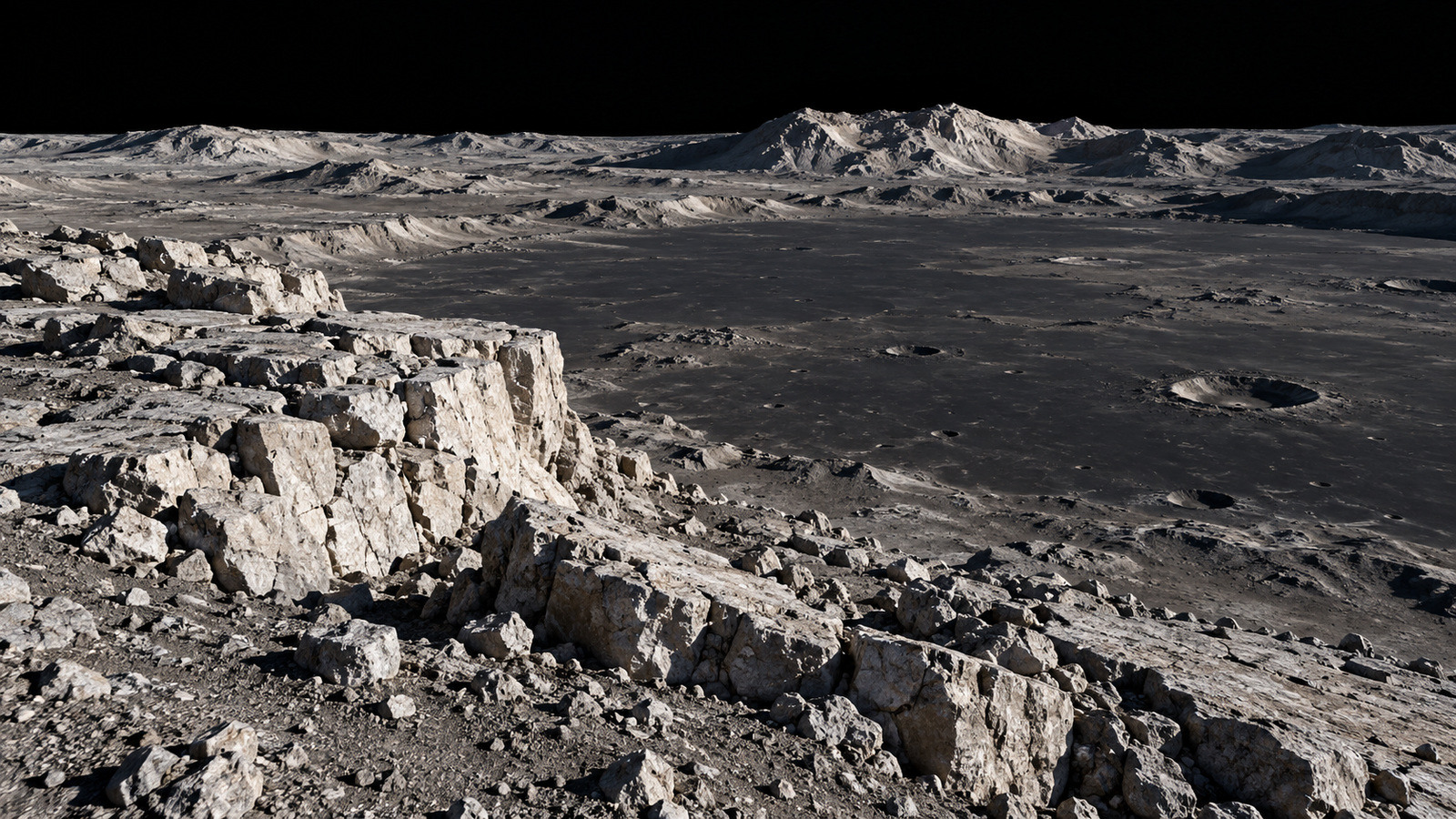
Europa, one of Jupiter’s largest moons, has captured the imagination of scientists and the public alike for decades. Officially known as Jupiter II, Europa is slightly smaller than Earth’s Moon but vastly different in composition and potential. While Luna is dry, rocky, and airless, Europa hides beneath its icy crust what may be one of the most promising places in the solar system to search for alien life. Its smooth, frozen surface, crisscrossed with fractures and ridges, hints at a vast ocean below—a hidden world that could harbor conditions suitable for life.
The question of whether Europa could support life is one of the most exciting pursuits in planetary science. From robotic spacecraft that have flown past it to future missions preparing to dive deeper into its secrets, Europa stands as a beacon of possibility. To explore this icy world is to confront fundamental questions: What makes a place habitable? Could organisms exist beneath kilometers of ice? And if they do, what would that mean for our understanding of life in the universe?
A Moon Among Giants
Europa is the sixth-largest moon in the solar system and one of the four Galilean moons, discovered by Galileo Galilei in 1610. Alongside Io, Ganymede, and Callisto, Europa orbits Jupiter in a dance of gravitational resonance that shapes its destiny. It lies about 670,000 kilometers from Jupiter, completing an orbit in just over three and a half days. Like Earth’s Moon, Europa is tidally locked, always showing the same face to Jupiter.
At first glance, Europa appears unassuming compared to its fiery neighbor Io or its giant sibling Ganymede. Yet beneath its icy exterior lies a world of immense intrigue. Europa’s relatively smooth surface makes it one of the most striking objects in the solar system, lacking the dense crater fields seen on most moons. This smoothness suggests geological activity, which in turn implies the presence of a subsurface ocean. That possibility transforms Europa from a frozen moon into a potential cradle of life.
The Ice Shell: Surface Secrets
Europa’s surface is composed primarily of water ice. Its dazzling white appearance reflects sunlight, making it one of the brightest objects in the solar system. But beneath that icy veneer lies a world of complexity. The surface is scarred with long cracks, ridges, and chaotic terrain—areas where ice plates have broken apart, rotated, and refrozen. These features suggest that the surface is constantly reshaped by forces from within.
The thickness of the ice shell remains uncertain. Estimates range from a few kilometers to tens of kilometers. If the ice is thinner in certain regions, it may be possible for material from the subsurface ocean to exchange with the surface. This process could allow chemical nutrients to circulate, creating environments where life could exist. In this way, Europa’s ice shell is not just a barrier—it may also be a bridge between the ocean below and the cosmos above.
The Hidden Ocean
Beneath Europa’s icy surface lies what many scientists believe to be a global ocean of liquid water. Evidence for this ocean comes from multiple sources. Magnetic field measurements taken by NASA’s Galileo spacecraft suggest the presence of a conductive layer beneath the ice, consistent with a salty ocean. The flexing of Europa’s surface, caused by Jupiter’s gravity, also points to a liquid layer that allows the ice to move and shift. This hidden ocean could be up to 100 kilometers deep, containing more than twice the amount of water found on Earth. The sheer scale of this ocean makes Europa one of the most water-rich worlds in the solar system. Water alone does not guarantee life, but it is one of the most essential ingredients. The presence of such a vast ocean immediately places Europa high on the list of habitable environments beyond Earth.
Tidal Heating: Energy Beneath the Ice
Life as we know it requires energy. On Earth, the Sun provides most of that energy, but in Europa’s case, the key lies in tidal heating. As Europa orbits Jupiter, it experiences immense gravitational forces. The tug-of-war between Jupiter and neighboring moons like Io and Ganymede causes Europa’s orbit to remain slightly elliptical, leading to constant flexing of its interior. This flexing generates heat through friction, preventing the subsurface ocean from freezing solid. Tidal heating may also drive hydrothermal activity at the seafloor, similar to what occurs in Earth’s oceans. On our planet, hydrothermal vents teem with life despite the absence of sunlight, drawing energy from chemical reactions. If similar vents exist on Europa’s ocean floor, they could provide energy and nutrients for life. This mechanism makes Europa especially promising as a potential habitat.
Chemistry for Life
Water and energy are essential, but life also requires the right chemistry. Europa’s surface and ocean may provide the necessary ingredients. Observations suggest that salts and possibly organic molecules are present on the surface, deposited by material welling up from the ocean below. Radiation from Jupiter’s powerful magnetosphere bombards the surface, breaking apart molecules and creating oxidants that could mix into the ocean.
If these chemicals are cycled between the surface and the ocean, they could create a rich chemical environment. On Earth, life thrives wherever energy and chemistry intersect, from deep-sea vents to Antarctic subglacial lakes. The combination of water, energy, and chemistry makes Europa one of the most compelling places to search for extraterrestrial organisms.
The Possibility of Life
Could life actually exist beneath Europa’s icy crust? While we cannot know for certain without exploring the ocean directly, analogs on Earth suggest it is possible. Microbes thrive in some of the harshest environments on our planet, including deep-sea hydrothermal vents, acidic hot springs, and beneath kilometers of Antarctic ice. These organisms demonstrate that life can adapt to extreme conditions.
If life exists on Europa, it is likely microbial and adapted to darkness, pressure, and chemical energy. Such life would not need sunlight but could rely on hydrothermal vents or chemical gradients. Even simple microbial life on Europa would be a profound discovery, proving that life can arise independently in multiple places in the same solar system. This would dramatically increase the likelihood that the universe is teeming with life.
Europa Compared to Other Ocean Worlds
Europa is not the only ocean world in the solar system, but it remains one of the most intriguing. Enceladus, a small moon of Saturn, also harbors a subsurface ocean and even sprays plumes of water vapor into space. Titan, Saturn’s largest moon, has methane lakes on its surface and possibly a water ocean beneath its crust. Ganymede and Callisto may also contain buried oceans. What sets Europa apart is the combination of size, energy, and surface activity. Its ocean is global and likely deep, its tidal heating provides sustained energy, and its fractured ice shell suggests active exchange between the surface and ocean. These factors make Europa a uniquely promising target in the search for extraterrestrial life, a natural laboratory for astrobiology.
Exploration So Far
Our understanding of Europa has been built largely by robotic spacecraft. The Galileo mission, launched in 1989, provided the first detailed images and data, revealing its fractured surface and hinting at a subsurface ocean. More recent observations from the Hubble Space Telescope have detected possible plumes of water vapor erupting from Europa’s surface, further evidence of ocean activity.
No spacecraft has yet landed on Europa, but flybys from past missions have revolutionized our understanding. Each pass revealed new details, from magnetic field variations to surface composition. These findings confirm that Europa is not a dead, frozen world but a dynamic place with enormous potential.
The Europa Clipper Mission
In the coming decade, Europa will be the focus of unprecedented exploration. NASA’s Europa Clipper mission, scheduled to launch in the 2020s, aims to conduct dozens of close flybys of the moon. Equipped with advanced instruments, the spacecraft will map the surface, analyze its composition, and search for signs of active plumes.
Europa Clipper will not land but will provide critical data to guide future missions. By studying the thickness of the ice, the salinity of the ocean, and the chemistry of the surface, it will bring us closer to answering the question of whether Europa could harbor life. This mission represents humanity’s boldest step yet toward unlocking the secrets beneath the ice.
Future Missions and Dreams
Beyond Europa Clipper, scientists envision missions that could one day land on Europa’s surface or even penetrate its icy crust. Concepts for cryobots—machines that could melt through the ice—and submersibles to explore the ocean remain in the realm of science fiction for now, but they are the long-term dream of planetary exploration. International interest is also growing. The European Space Agency’s JUICE mission (Jupiter Icy Moons Explorer) will study Europa along with Ganymede and Callisto, further expanding our understanding of these icy worlds. Each new mission brings us closer to the moment when humanity might finally peer into Europa’s ocean and search directly for life.
Challenges of Exploration
Exploring Europa is not easy. Its surface is bombarded by intense radiation from Jupiter’s magnetosphere, creating hazardous conditions for spacecraft. Landing safely on the fractured, icy terrain would be technologically challenging. Penetrating the ice shell to reach the ocean is even more daunting, requiring machines capable of withstanding extreme cold, pressure, and isolation.
Despite these challenges, the potential rewards are enormous. Discovering even microbial life on Europa would reshape our understanding of biology and our place in the universe. The challenges highlight the need for careful planning, international cooperation, and technological innovation, but they do not diminish the excitement of the quest.
Europa in Human Imagination
Europa has not only inspired scientists but also captured the imagination of writers, filmmakers, and artists. From Arthur C. Clarke’s novel 2010: Odyssey Two, which portrayed Europa as a world where life was beginning, to countless documentaries and speculative essays, Europa has become a symbol of the search for alien life. This cultural impact reflects a deeper truth: Europa embodies humanity’s curiosity about whether we are alone. Its icy surface, concealing a hidden ocean, mirrors our desire to look beneath appearances and seek answers to profound questions. Europa is both a scientific target and a canvas for imagination, bridging fact and wonder.
What Europa Could Teach Us
If Europa does harbor life, the implications are staggering. It would demonstrate that life is not unique to Earth, that it can arise in environments vastly different from our own. Even if Europa proves sterile, studying its ocean and geology will teach us about planetary processes, the nature of habitability, and the possibilities for life elsewhere. Europa reminds us that Earth is not the only world shaped by water, energy, and chemistry. By exploring it, we expand the definition of habitable environments and open the door to finding life in unexpected places. Whether alive or lifeless, Europa has lessons to teach us about the resilience of nature and the diversity of worlds in the cosmos.
A Future of Discovery
As technology advances and missions prepare to launch, the coming decades promise to be a golden age of exploration for Europa. With its hidden ocean, tidal heating, and potential chemistry for life, Europa stands at the center of one of humanity’s greatest quests. Could this icy moon, orbiting a distant giant, harbor alien life? We cannot yet answer that question, but every new discovery brings us closer. To explore Europa is to journey into the unknown, to push the boundaries of science, and to seek answers to questions as old as humanity itself. Whether life waits beneath its ice or not, Europa will continue to inspire us, reminding us that the universe is full of mysteries yet to be uncovered.
Space Products Reviews
Blast off with Lyra Street’s ultimate guide to the Top 10 Best Space Products Reviews! From high-powered telescopes to stellar star maps and astronomy gear, we explore the most impressive cosmic tools available today. Dive into detailed reviews and an easy-to-navigate comparison chart to find the perfect gear for your stargazing adventures or space-inspired lifestyle.