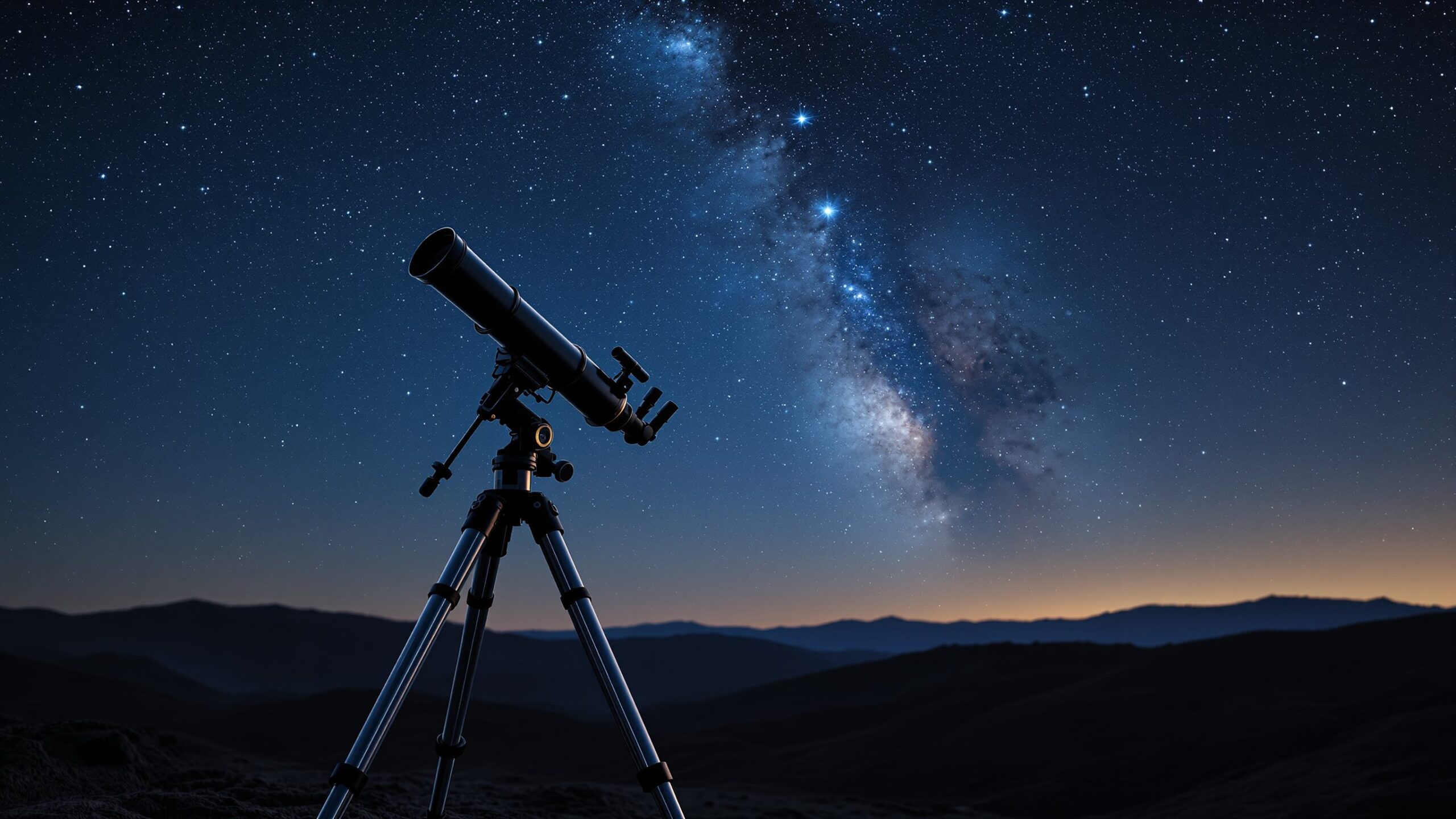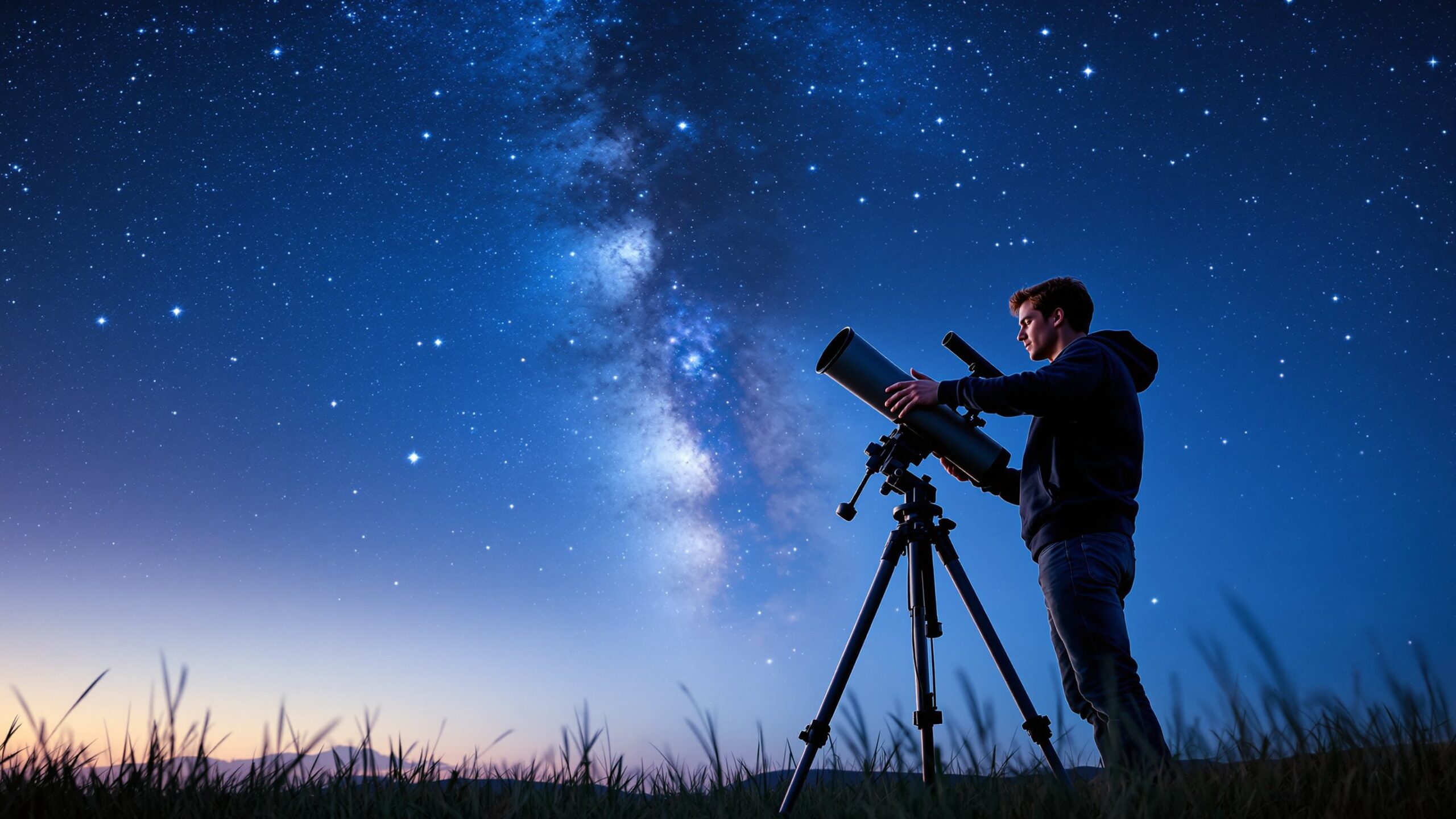
The fascination with the night sky has captivated humanity for millennia, from ancient observers tracking the motion of stars to modern astronomers exploring distant galaxies. Today, beginners stepping into astronomy are engaging—often unknowingly—with the science of astronomia, derived from the Greek roots astron (star) and nomos (law), meaning “the laws of the stars.” This scientific discipline blends observation, physics, and curiosity, and one of the most powerful tools for entering this world is a well-chosen beginner telescope. In 2026, telescopes designed for newcomers are better than ever. Advances in optics, smart alignment technology, and user-friendly mounts have made it easier to see the Moon’s craters, Jupiter’s moons, Saturn’s rings, and even distant nebulae—all without needing years of technical expertise. However, the wide range of choices can feel overwhelming. Understanding what makes a telescope “beginner-friendly” is the key to making a confident, satisfying purchase.
What Makes a Telescope Beginner-Friendly?
Choosing your first telescope is less about buying the most powerful instrument and more about finding one that you will actually use. Ease of setup, stability, and clarity often matter more than raw magnification. One of the most important specifications is aperture, which refers to the diameter of the telescope’s main lens or mirror. A larger aperture gathers more light, revealing fainter objects and sharper details. For example, a 5-inch (130 mm) aperture can already show features like Jupiter’s moons and Saturn’s rings clearly .
Equally important is the mount. A stable mount prevents shaky images and frustration. Beginners often benefit from simple alt-azimuth mounts, which move up-down and left-right, or Dobsonian mounts, known for their stability and ease of use. Computerized mounts, sometimes called GoTo systems, can automatically locate celestial objects, making them ideal for those who want quick results without learning the entire night sky.
Portability is another major factor. A telescope that is too heavy or complicated may sit unused, while a lightweight “grab-and-go” model encourages frequent stargazing. As many experienced astronomers point out, the best telescope is the one you actually use regularly .
Types of Telescopes for Beginners
Understanding the main telescope designs helps narrow your options. Each type has its strengths and trade-offs, especially for beginners.
Refractor telescopes use lenses to gather and focus light. They are typically low-maintenance and easy to use, making them excellent for beginners. They are especially good for viewing the Moon and planets but can become expensive at larger sizes.
Reflector telescopes use mirrors instead of lenses. Newtonian reflectors, often mounted on Dobsonian bases, provide excellent value and large apertures at relatively low cost. These are ideal for viewing deep-sky objects like galaxies and nebulae.
Catadioptric telescopes, such as Maksutov-Cassegrain designs, combine lenses and mirrors. These are compact and powerful, often delivering sharp planetary views. However, they can be more expensive and have narrower fields of view.
Each type offers a different experience, and the right choice depends on your goals, budget, and observing preferences.
Best Beginner Telescope Categories in 2026
Rather than focusing on a single “best” telescope, it’s more helpful to understand the categories that dominate beginner recommendations in 2026. Each category serves a slightly different type of user.
Dobsonian Reflectors: Best Value and Performance
Dobsonian telescopes continue to dominate beginner recommendations because they offer large apertures at affordable prices. Models like the Orion SkyQuest XT6 have long been considered excellent entry points. With a 6-inch mirror, they provide bright, detailed views of planets and deep-sky objects while remaining simple to operate. They are also known for being easy to set up and maintain, making them highly beginner-friendly . The trade-off is that Dobsonians are bulkier than other designs and require manual tracking. However, many beginners quickly adapt and even prefer the hands-on experience.
Computerized Telescopes: Best for Ease of Use
Computerized telescopes, such as the Celestron NexStar series, are designed to remove the guesswork from stargazing. Using built-in databases and alignment systems, these telescopes can automatically locate thousands of celestial objects.
The Celestron NexStar 4SE, for example, uses a GoTo system that can quickly identify and track objects, making it easy for beginners to get started . It is also known for being quick to set up and user-friendly . However, smaller computerized models may have limited aperture, which can restrict views of faint objects. They are often best suited for observing the Moon and planets rather than deep-sky exploration .
Refractor Telescopes: Best for Simplicity
Refractors remain one of the most accessible telescope types for beginners. Models like the Celestron Inspire 100AZ are praised for their simplicity, ease of setup, and complete accessory packages, making them ideal for first-time users .
These telescopes require little maintenance and provide crisp images, particularly for bright objects. Their main limitation is that larger refractors can become expensive, and smaller ones may not gather enough light for deep-sky viewing.
Smart Telescopes: The New Beginner Trend
One of the most exciting developments in 2026 is the rise of smart telescopes. These devices integrate cameras, smartphone control, and automated tracking into a single system. Some models even allow users to view objects in real time through a phone or tablet. Smart telescopes are particularly appealing to beginners who prefer a tech-driven experience. They can simplify astrophotography and make stargazing more accessible, though they often come at a higher price point.
Key Features to Look For
When evaluating beginner telescopes, several features consistently stand out as essential.
Aperture remains the most important factor for image quality. Larger apertures collect more light, allowing you to see fainter and more detailed objects.
Mount stability is critical. Even the best optics are useless if the image shakes every time you touch the telescope.
Ease of setup can make or break your experience. Telescopes with quick assembly and intuitive controls are far more likely to be used regularly.
Optical quality determines how sharp and clear your views will be. High-quality mirrors or lenses can significantly enhance your experience, even in smaller telescopes.
Accessories, such as eyepieces and finderscopes, also matter. Some beginner telescopes include everything you need, while others may require additional purchases.
What You Can Actually See
One of the most common questions beginners ask is: what can I really see with a telescope? Even modest beginner telescopes can reveal incredible sights. The Moon becomes a detailed landscape of craters and mountains. Jupiter appears as a striped disk with its four largest moons visible. Saturn’s rings are unmistakable, even in small telescopes.
With slightly larger apertures, you can observe deep-sky objects such as the Orion Nebula, the Andromeda Galaxy, and star clusters like the Pleiades. A 5-inch telescope, for instance, can already show a wide range of celestial targets, including bright nebulae and galaxies . However, it’s important to set realistic expectations. Images will not look like long-exposure astrophotography seen online. Instead, they appear more subtle and require patience and dark skies to fully appreciate.
Common Beginner Mistakes to Avoid
Many beginners make the mistake of focusing on magnification. In reality, magnification is far less important than aperture and optical quality. High magnification without sufficient light results in blurry, dim images.
Another common mistake is underestimating the importance of the mount. A shaky mount can ruin the observing experience, even with excellent optics.
Some beginners also choose overly complex telescopes, thinking they will “grow into them.” In practice, simpler telescopes often lead to more frequent use and faster learning.
Finally, light pollution can significantly impact what you see. Even the best telescope cannot overcome heavily lit skies. Traveling to darker locations can dramatically improve your observations.
The Role of Technology in Modern Stargazing
Technology has transformed beginner astronomy in recent years. Smartphone apps can identify stars and constellations instantly, while computerized mounts can locate objects with precision. Some telescopes now integrate directly with mobile devices, guiding users step-by-step through the alignment process. This has lowered the barrier to entry and made astronomy more accessible than ever.
At the same time, traditional manual telescopes remain popular because they encourage a deeper understanding of the night sky. Many beginners find that learning to navigate the stars manually enhances their appreciation of astronomy.
Budget Considerations
Beginner telescopes are available across a wide price range. Entry-level models can cost under $200, while more advanced beginner setups may reach $600 or more. Dobsonian telescopes typically offer the best value, providing large apertures at relatively low prices. Computerized telescopes tend to be more expensive due to their advanced features.
It’s often better to invest in a slightly higher-quality telescope than to choose the cheapest option available. A well-built telescope will provide better views, last longer, and keep you engaged in the hobby. How to Choose the Right Telescope for You
The best telescope for you depends on your goals and preferences. If you want the most detailed views for the lowest price, a Dobsonian reflector is an excellent choice. If you prefer convenience and automation, a computerized telescope may be the better option.
For those who value simplicity and portability, a refractor telescope is hard to beat. And for tech enthusiasts, smart telescopes offer a modern, app-driven approach to stargazing. Consider where you will use the telescope, how often you plan to observe, and what objects interest you most. These factors will guide you toward the right choice.
Starting Your Astronomy Journey
Astronomy is one of the few sciences that allows anyone to participate directly. With a beginner telescope, you are not just learning about the universe—you are observing it in real time. In 2026, the best beginner telescopes combine ease of use, solid performance, and thoughtful design. Whether you choose a simple Dobsonian, a computerized GoTo model, or a modern smart telescope, the key is to start exploring. The night sky is vast, beautiful, and constantly changing. With the right telescope, it becomes not just something to look at, but something to experience.