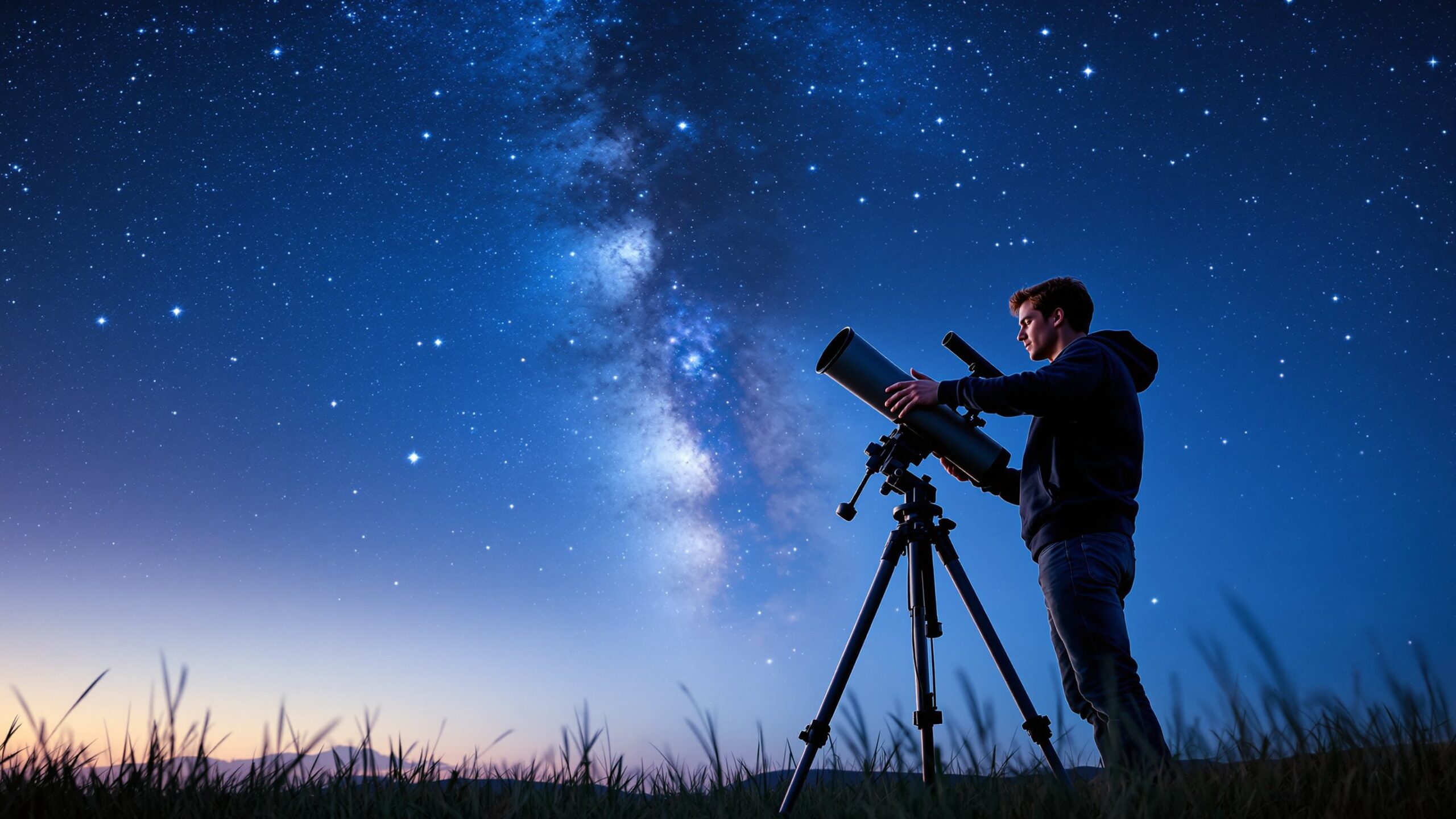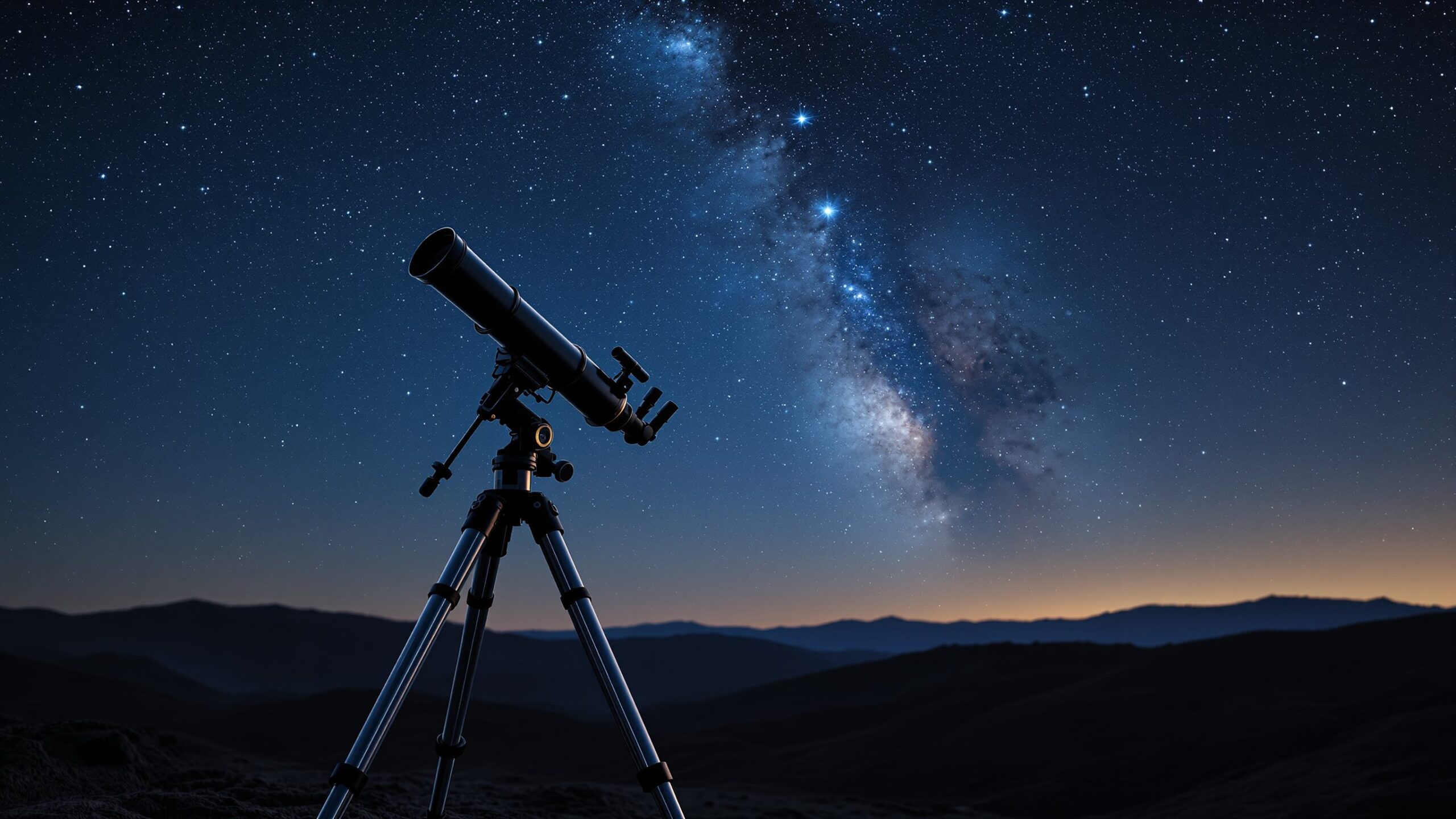
The desire to explore the night sky is as old as humanity itself, and today’s telescopes bring the wonders of the universe closer than ever before. From the glowing craters of the Moon to the shimmering rings of Saturn and the faint glow of distant galaxies, a telescope transforms curiosity into discovery. Scientifically, the act of observing celestial objects falls under astronomy, derived from the Greek words astron (star) and nomos (law), meaning the study of the laws of the stars. Within this vast discipline, telescopes serve as our primary tools for gathering light and revealing detail invisible to the naked eye. Choosing the right telescope can feel overwhelming, especially with the wide range of models, features, and technical terms. Aperture sizes, focal lengths, mounts, and optical designs can quickly turn excitement into confusion. Yet the process doesn’t need to be intimidating. With the right understanding, selecting a telescope becomes an empowering experience—one that aligns your goals, budget, and observing style with the perfect instrument. This comprehensive guide is designed to walk you through everything you need to know, from the fundamental science behind telescopes to the practical decisions that determine your viewing experience. Whether you’re a complete beginner or someone upgrading your first scope, you’ll find clarity, confidence, and inspiration in the journey ahead.
Understanding How Telescopes Work
At its core, a telescope is a light-gathering device. The more light it collects, the more detail you can see. While magnification often gets the spotlight in marketing materials, it is actually the telescope’s aperture—the diameter of its main optical element—that determines how powerful it truly is. Larger apertures allow you to see fainter objects and finer details, especially when observing deep-sky targets like nebulae and galaxies.
Telescopes work by collecting light and focusing it into a sharp image. This process relies on either lenses, mirrors, or a combination of both. The focal length of the telescope determines how that light is brought to focus, influencing magnification and field of view. A longer focal length generally provides higher magnification but a narrower view, while a shorter focal length offers a wider field, ideal for scanning star clusters or large celestial structures.
Another key concept is resolution, which refers to the telescope’s ability to distinguish fine detail. A higher resolution means you can see sharper features, such as the bands of Jupiter or the separation between close double stars. Resolution improves with aperture, making it one of the most critical factors in telescope performance.
Understanding these principles provides a solid foundation for evaluating different telescope types and deciding which one best suits your observing goals.
The Three Main Types of Telescopes
Telescopes generally fall into three primary categories: refractors, reflectors, and compound (or catadioptric) telescopes. Each type offers unique advantages and trade-offs, making them suitable for different kinds of users and observing preferences.
Refractor telescopes use lenses to bend and focus light. They are known for their crisp, high-contrast images and low maintenance requirements. Because they have sealed tubes, they are less prone to dust and rarely need adjustment. Refractors are particularly well-suited for observing the Moon, planets, and bright stars. However, they can become expensive as aperture increases, and larger models may be bulky.
Reflector telescopes, often associated with the classic Newtonian design, use mirrors instead of lenses. These telescopes offer excellent value for money because mirrors are less expensive to manufacture than large lenses. As a result, reflectors typically provide larger apertures at lower costs, making them ideal for deep-sky observing. They do require occasional maintenance, such as mirror alignment, but their performance potential is significant.
Compound telescopes combine lenses and mirrors to create a compact and versatile design. Popular examples include Schmidt-Cassegrain and Maksutov-Cassegrain telescopes. These models offer a balance between portability and performance, making them attractive for observers who want flexibility. They are capable of both planetary and deep-sky viewing, though they tend to be more expensive than basic reflectors.
Each type has its own personality, and the best choice depends on how and where you plan to use your telescope.
Aperture: The Most Important Feature
When choosing a telescope, aperture should be your primary consideration. It directly affects how much light your telescope gathers and how much detail you can see. A larger aperture means brighter images and the ability to observe fainter objects.
For beginners, an aperture of at least 70–90 millimeters for refractors or 114–130 millimeters for reflectors is often recommended. These sizes provide a noticeable improvement over binoculars while remaining manageable in terms of cost and portability. As aperture increases, so does performance, but so does size and weight.
A common misconception is that magnification defines a telescope’s power. In reality, magnification is limited by the telescope’s aperture and optical quality. Pushing magnification too high results in blurry, dim images. A well-balanced telescope prioritizes light-gathering ability over extreme magnification claims.
Aperture also plays a crucial role in resolving fine detail. For example, a larger telescope can reveal the Cassini Division in Saturn’s rings or subtle cloud bands on Jupiter. For deep-sky objects, increased aperture allows you to see galaxies, nebulae, and star clusters with greater clarity and brightness.
Mounts and Stability: The Unsung Hero
While optics often take center stage, the mount is just as important as the telescope itself. A stable mount ensures smooth movement and steady viewing, which is essential for enjoying the night sky.
There are two main types of mounts: alt-azimuth and equatorial. Alt-azimuth mounts move up and down (altitude) and side to side (azimuth), making them intuitive and easy to use. They are ideal for beginners and casual observers. Dobsonian mounts, a popular subtype of alt-azimuth mounts, are especially favored for their simplicity and affordability.
Equatorial mounts are designed to track the motion of the sky by aligning with Earth’s axis. This allows for smoother tracking of celestial objects as they move across the sky. While they require more setup and understanding, they are valuable for astrophotography and extended observations. Stability cannot be overstated. A shaky mount can ruin the viewing experience, making it difficult to focus and follow objects. Investing in a solid mount often makes a bigger difference than upgrading optics alone.
Choosing the Right Telescope for Your Goals
Your ideal telescope depends on what you want to observe. If your primary interest is the Moon and planets, a telescope with high optical quality and moderate aperture will provide stunning detail. Refractors and compound telescopes excel in this area.
If you are drawn to deep-sky objects such as galaxies and nebulae, a larger aperture reflector is often the best choice. These telescopes gather more light, making faint objects visible and more detailed. For those who want a balance between planetary and deep-sky observing, compound telescopes offer versatility in a compact form. They are especially appealing for users who need portability without sacrificing performance.
Beginners often benefit from simplicity. A telescope that is easy to set up and use will encourage more frequent observing. Complicated systems can become frustrating, especially when you are still learning the night sky.
Portability and Practical Considerations
A telescope that is too heavy or difficult to transport may end up unused. Portability is a key factor that is often overlooked during the buying process. Consider where you will store your telescope and how far you will need to carry it. If you plan to observe from your backyard, a larger telescope may be practical. However, if you intend to travel to darker skies, a more compact and lightweight model will be easier to manage. Many observers find that a smaller, more portable telescope gets used more often than a larger, cumbersome one. Setup time is another important consideration. Some telescopes can be ready in minutes, while others require careful alignment and calibration. Choosing a telescope that fits your lifestyle will enhance your overall experience.
Accessories That Enhance Your Experience
While the telescope itself is the centerpiece, accessories can significantly improve your observations. Eyepieces, for example, determine magnification and field of view. Having a range of eyepieces allows you to adapt to different objects and observing conditions.
A finder scope or red dot finder helps you locate objects in the sky more easily. Without one, pointing your telescope accurately can be challenging, especially for beginners.
Filters can enhance contrast and reveal details that might otherwise be difficult to see. For example, a lunar filter reduces glare when observing the Moon, while nebula filters can improve visibility of certain deep-sky objects.
Comfort is also important. A stable observing chair and a clear star chart or mobile app can make your sessions more enjoyable and productive.
Understanding Light Pollution and Viewing Conditions
Your location plays a major role in what you can see through a telescope. Light pollution from cities can wash out faint objects, making deep-sky observing more challenging. However, even in urban areas, you can still enjoy views of the Moon, planets, and bright stars.
Traveling to darker locations can dramatically improve your experience. Under a dark sky, a modest telescope can reveal breathtaking details that are impossible to see in a city environment.
Atmospheric conditions, known as seeing, also affect your observations. Turbulence in the atmosphere can blur images, especially at high magnifications. Patience and timing are key, as conditions can change from night to night.
Budget: Finding the Best Value
Telescopes are available at a wide range of price points, from budget-friendly beginner models to advanced instruments costing thousands of dollars. The key is to find a telescope that offers the best value for your needs. For beginners, it is often better to invest in a telescope with a larger aperture rather than spending money on advanced features. A simple, well-built telescope will provide more satisfying views than a complex system with limited optical performance.
Avoid telescopes that promise extremely high magnification at low prices. These claims are often misleading and can result in disappointing performance. Focus on reputable brands and models with positive reviews. As your interest in astronomy grows, you can always upgrade your equipment. Starting with a reliable, easy-to-use telescope is the best way to build confidence and enjoyment.
Common Mistakes to Avoid
Many first-time buyers fall into similar traps when choosing a telescope. One of the most common mistakes is prioritizing magnification over aperture. This can lead to poor image quality and frustration.
Another mistake is choosing a telescope that is too complex. Advanced features can be appealing, but they may not be necessary for beginners. A straightforward, user-friendly telescope will provide a more enjoyable experience.
Ignoring the importance of the mount is another common oversight. Even the best optics cannot compensate for a shaky or unstable mount.
Finally, some buyers underestimate the importance of learning the night sky. A telescope is a tool, but knowing where to look and what to expect enhances the experience significantly.
The Joy of Discovery
Owning a telescope is about more than just observing celestial objects—it is about experiencing a deeper connection to the universe. Each night offers a new opportunity to explore, learn, and be inspired. From the first glimpse of the Moon’s rugged surface to the discovery of distant galaxies, the journey of astronomy is both personal and universal. It invites you to slow down, look up, and appreciate the vastness of space. Choosing the right telescope is the first step in this journey. With the knowledge and guidance provided in this guide, you are well-equipped to make an informed decision and begin your adventure among the stars.
Finding Your Perfect Telescope
The perfect telescope is not necessarily the most expensive or the most advanced—it is the one that fits your needs, interests, and lifestyle. By understanding the key factors such as aperture, optical design, mount type, and portability, you can confidently select a telescope that will bring you years of enjoyment.
Astronomy is a lifelong pursuit, and your telescope is your gateway to the cosmos. Whether you are observing from your backyard or traveling to remote dark-sky locations, the right telescope will open up a universe of possibilities. Take your time, do your research, and choose a telescope that excites you. The night sky is waiting.