High above Earth, orbiting at roughly 400 kilometers (about 250 miles), the International Space Station (ISS)—formally known as the International Space Station orbital laboratory—serves as one of humanity’s most remarkable scientific achievements. It is not just a spacecraft, nor simply a research lab; it is a continuously inhabited, multinational outpost in low Earth orbit where astronauts live and work for months at a time. Life aboard the ISS is unlike anything on Earth. The station circles the planet at about 28,000 kilometers per hour, completing an orbit every 90 minutes. That means astronauts witness around 16 sunrises and sunsets every single day. In this environment, gravity as we know it disappears, replaced by a condition called microgravity, where objects and people float freely. Everyday routines—from sleeping and eating to exercising and working—must be reimagined in this extraordinary setting. Understanding what life is like on the ISS offers a fascinating glimpse into the future of human space exploration, where long-duration missions to the Moon, Mars, and beyond may become the norm.
The Environment: Living in Microgravity
The defining feature of life on the ISS is microgravity. While gravity still exists in orbit, the station and everything inside it are in a constant state of free fall around Earth. This creates the sensation of weightlessness.
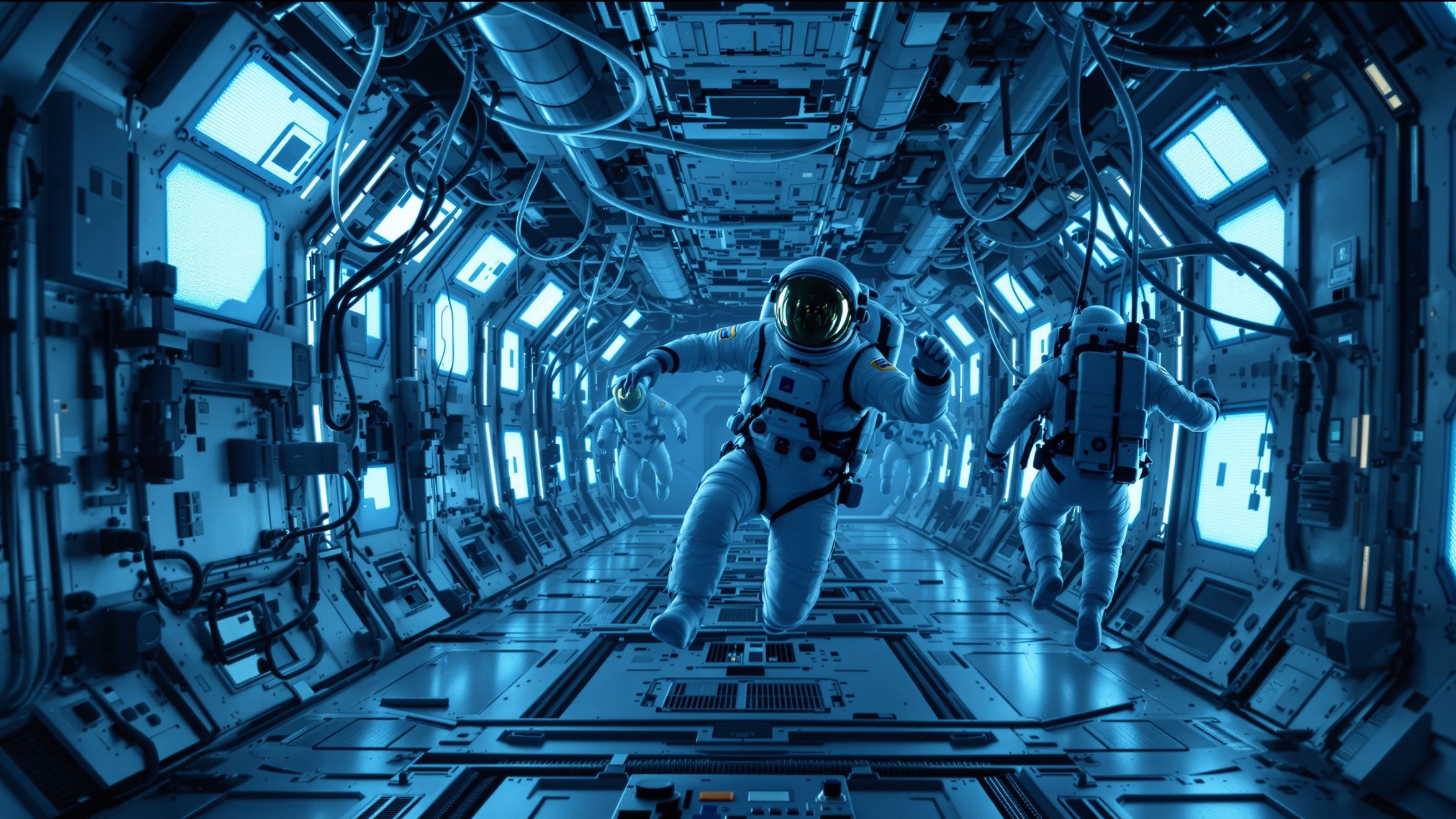
For astronauts, this means there is no “up” or “down.” Floors, walls, and ceilings are interchangeable. Movement becomes a matter of pushing gently off surfaces and gliding through modules. Over time, astronauts develop a new spatial awareness, navigating the station in three dimensions with ease.
However, microgravity also introduces challenges. Without gravity pulling fluids downward, bodily fluids shift toward the head, causing what astronauts often describe as a “puffy face” and “bird legs.” The inner ear, which helps control balance on Earth, becomes confused, leading to temporary space motion sickness during the first few days.
Objects behave differently too. Liquids form floating spheres, crumbs drift through the air, and even simple tasks like pouring a drink require special equipment. Velcro, bungee cords, and magnetic tools become essential for keeping items in place.
Daily Life: A Structured Routine in Space
Despite the extraordinary environment, life on the ISS follows a carefully planned schedule. Astronauts typically work about 10 to 12 hours per day, balancing scientific research, station maintenance, exercise, and communication with mission control.
A typical day begins with a wake-up call from mission control, often accompanied by music chosen for the crew. After morning hygiene routines—adapted for microgravity—astronauts review their daily tasks. These tasks can range from conducting experiments and repairing equipment to capturing Earth observations and preparing cargo for visiting spacecraft.
Meals are scheduled, as is time for exercise, which is critical in space. Astronauts also have some personal time to relax, take photos, or connect with family via video calls. The station operates on Coordinated Universal Time (UTC), ensuring consistency across international teams. Every minute is accounted for, reflecting the complexity and importance of maintaining a functioning laboratory in orbit.
Sleeping in Space: Rest Without Gravity
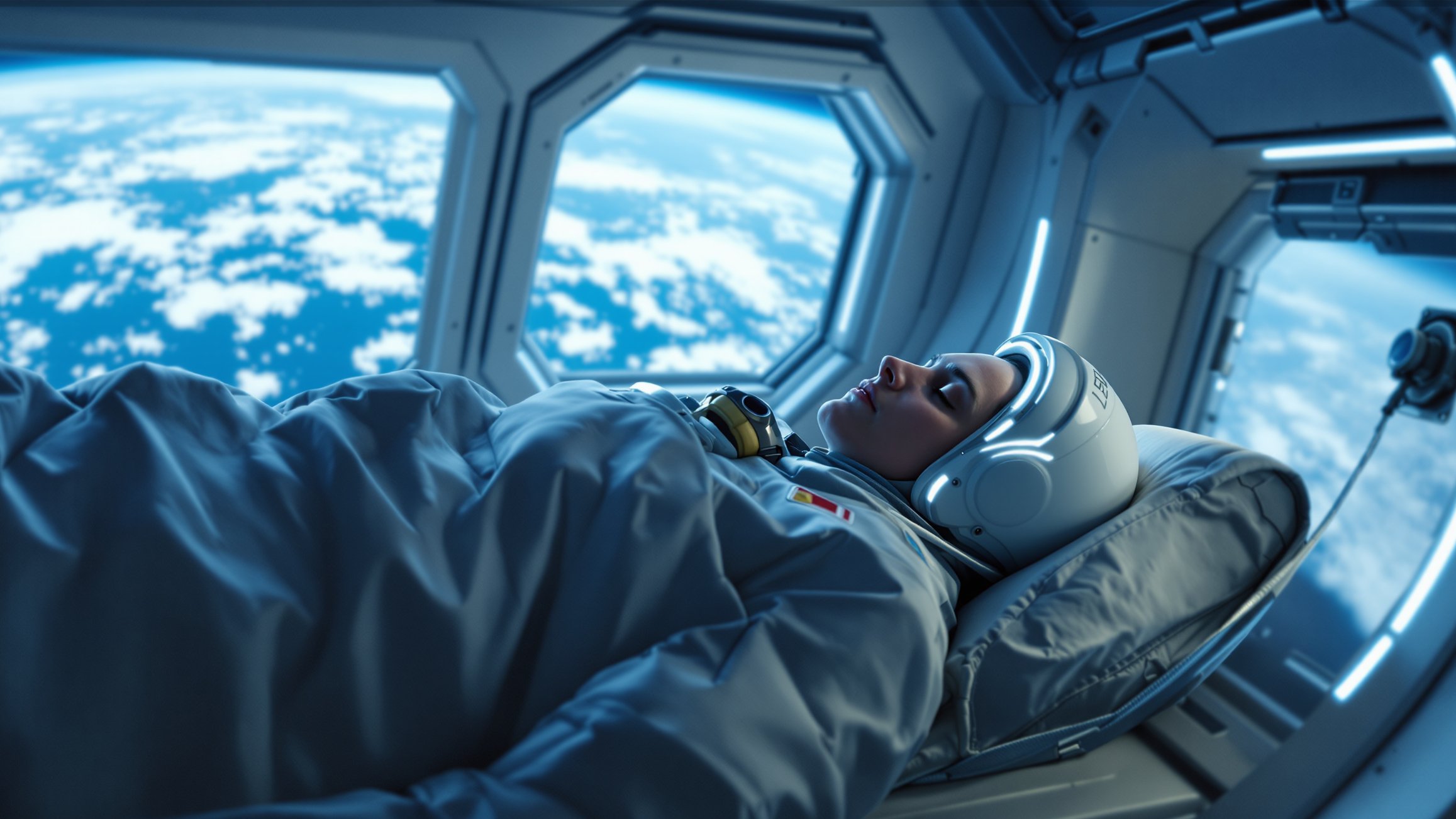
Sleeping on the ISS is a unique experience. Without gravity, there is no need for a bed in the traditional sense. Instead, astronauts sleep in small, phone-booth-sized crew quarters, where they secure themselves in sleeping bags attached to the wall.
Because there is no up or down, astronauts can sleep in any orientation—vertical, horizontal, or even upside down. The body quickly adapts, and many astronauts report that sleeping in microgravity can be surprisingly comfortable.
However, maintaining a consistent sleep cycle can be challenging. With 16 sunrises and sunsets each day, natural light cues are unreliable. To compensate, the station uses artificial lighting systems designed to mimic Earth’s day-night cycle, helping regulate circadian rhythms.
Noise from equipment and ventilation systems is constant, so earplugs are often used. Despite these challenges, astronauts typically aim for about 7 to 8 hours of sleep per night.
Eating and Drinking: Food in Zero Gravity
Meals on the ISS are both familiar and distinctly different. Astronauts eat a variety of foods, including rehydrated meals, thermostabilized dishes, and some fresh items delivered by resupply missions.
Without gravity, food must be carefully packaged to prevent crumbs and liquids from floating away, which could damage equipment or be inhaled. Tortillas are often used instead of bread because they produce fewer crumbs.
Drinks are consumed from sealed pouches with straws. Liquids behave differently in microgravity, forming floating blobs if not contained. Even something as simple as salt and pepper must be dissolved in liquid form.
Despite these constraints, astronauts often describe meals as an important social activity. Crew members gather to eat together, sharing food from different cultures, reflecting the international nature of the ISS.
Hygiene and Health: Staying Clean in Space
Personal hygiene on the ISS requires ingenuity. Without running water, showers are not possible. Instead, astronauts use rinseless wipes, no-rinse shampoos, and small amounts of water dispensed from pouches.
Brushing teeth is similar to Earth, but astronauts may swallow toothpaste or spit it into a towel. Even washing hands involves carefully controlled water use to prevent floating droplets.
Health is a top priority in space. Microgravity causes muscles to weaken and bones to lose density over time. To counteract this, astronauts follow strict exercise routines using specialized equipment, including treadmills with harnesses, stationary bikes, and resistance machines.
Medical monitoring is continuous. Astronauts track their health, conduct self-examinations, and consult with doctors on Earth. The ISS also serves as a platform for studying how the human body adapts to space, providing valuable data for future missions.
Exercise: Fighting the Effects of Space on the Body
Exercise is not optional on the ISS—it is essential. In microgravity, muscles and bones are not subjected to the same forces as on Earth, leading to rapid deconditioning if left unchecked. Astronauts spend about two hours each day exercising. Equipment like the Advanced Resistive Exercise Device (ARED) simulates weightlifting, while treadmills and stationary bikes help maintain cardiovascular fitness. These workouts are carefully planned and monitored. Without them, astronauts could lose significant muscle mass and bone density, making it difficult to function upon returning to Earth. Exercise also supports mental well-being, providing a sense of routine and stress relief in an otherwise highly controlled environment.
Work and Science: A Laboratory in Orbit
The ISS is first and foremost a research laboratory. Astronauts conduct hundreds of experiments across a wide range of scientific fields, including biology, physics, astronomy, and Earth science.
Microgravity allows scientists to study phenomena that are difficult or impossible to observe on Earth. For example, fluid dynamics behave differently without gravity, and biological processes can be examined in new ways.
Research conducted on the ISS has contributed to advancements in medicine, materials science, and technology. Experiments have explored everything from protein crystal growth to plant cultivation in space.
Astronauts also perform maintenance tasks to keep the station running smoothly. The ISS is a complex system requiring constant attention, from repairing equipment to upgrading modules.
Communication: Staying Connected to Earth
Despite being hundreds of kilometers above Earth, astronauts remain closely connected to life below. Communication with mission control is constant, ensuring that operations run smoothly.
Crew members also have opportunities to communicate with family and friends through video calls and emails. This connection is vital for maintaining morale during long missions.
Astronauts often participate in educational outreach, speaking with students and sharing their experiences. Social media has also become a powerful tool, allowing the public to follow life aboard the ISS in real time.
Looking down at Earth from orbit provides a profound perspective. Many astronauts describe a sense of unity and interconnectedness, often referred to as the “overview effect.”
Spacewalks: Working Outside the Station
One of the most dramatic aspects of life on the ISS is the spacewalk, or extravehicular activity (EVA). During a spacewalk, astronauts leave the safety of the station to perform repairs, install new equipment, or conduct experiments. Spacewalks require extensive preparation and training. Astronauts wear specialized suits that provide life support, temperature regulation, and protection from the harsh environment of space.
Outside the station, astronauts experience the vastness of space firsthand. With Earth below and the blackness of space surrounding them, spacewalks are both awe-inspiring and demanding. Safety is paramount. Astronauts are tethered to the station at all times, and every movement is carefully planned and monitored.
Mental and Emotional Life: Adapting to Isolation
Living on the ISS is as much a psychological challenge as a physical one. Astronauts spend months away from family, confined to a relatively small space with a limited number of people.
To cope with isolation, astronauts maintain routines, stay connected with loved ones, and engage in recreational activities. They may watch movies, read books, listen to music, or take photographs of Earth.
Teamwork is essential. Crew members must communicate effectively, resolve conflicts, and support one another. Training emphasizes not only technical skills but also interpersonal dynamics.
The unique environment can also be deeply inspiring. Viewing Earth from space often fosters a renewed appreciation for the planet and humanity’s place within it.
Safety and Risk: Living in a Hostile Environment
Space is inherently dangerous. The ISS must protect its crew from extreme temperatures, radiation, and micrometeoroids.
The station is equipped with shielding and redundant systems to ensure safety. Emergency procedures are in place for scenarios such as fire, depressurization, or toxic leaks.
Astronauts train extensively for these situations, practicing responses until they become second nature. Despite the risks, the ISS has maintained an impressive safety record over decades of operation.
Living in such an environment requires constant vigilance, but it also demonstrates the incredible capabilities of human engineering and collaboration.
The View: Earth from Orbit
Perhaps one of the most extraordinary aspects of life on the ISS is the view. From orbit, astronauts can see continents, oceans, weather systems, and city lights in stunning detail.
The station’s large windows, particularly in the Cupola module, provide panoramic views of Earth. Astronauts often spend time observing and photographing the planet, capturing images that inspire people around the world.
The experience of seeing Earth as a single, fragile sphere floating in space is transformative. It reinforces the importance of protecting our planet and highlights the interconnectedness of all life on Earth.
International Collaboration: A Global Effort
The ISS is a symbol of international cooperation. It is a joint project involving space agencies from the United States, Russia, Europe, Japan, and Canada. Astronauts from different countries live and work together, sharing knowledge and resources. This collaboration extends to scientific research, technology development, and mission planning. The success of the ISS demonstrates what humanity can achieve when nations work together toward a common goal. It serves as a model for future exploration efforts, including missions to the Moon and Mars.
Preparing for the Future: Beyond the ISS
Life on the ISS is not just about the present—it is a stepping stone to the future of space exploration. The knowledge gained from living and working in microgravity informs plans for long-duration missions beyond Earth orbit.
As space agencies and private companies look toward establishing a sustained human presence on the Moon and eventually Mars, the lessons learned from the ISS will be invaluable.
From understanding how the human body adapts to space to developing technologies for life support and habitation, the ISS continues to pave the way for humanity’s next great adventures.
A Life Unlike Any Other
Life on the International Space Station is a blend of routine and wonder, discipline and discovery. It challenges astronauts physically, mentally, and emotionally, while offering unparalleled opportunities for scientific research and exploration. From floating through modules and conducting groundbreaking experiments to gazing down at Earth from orbit, the experience is both extraordinary and deeply human. It represents the pinnacle of what we can achieve through innovation, collaboration, and curiosity. As humanity continues to reach for the stars, the ISS stands as a testament to our ability to live and thrive beyond our home planet—and a glimpse of what life in space may one day become.