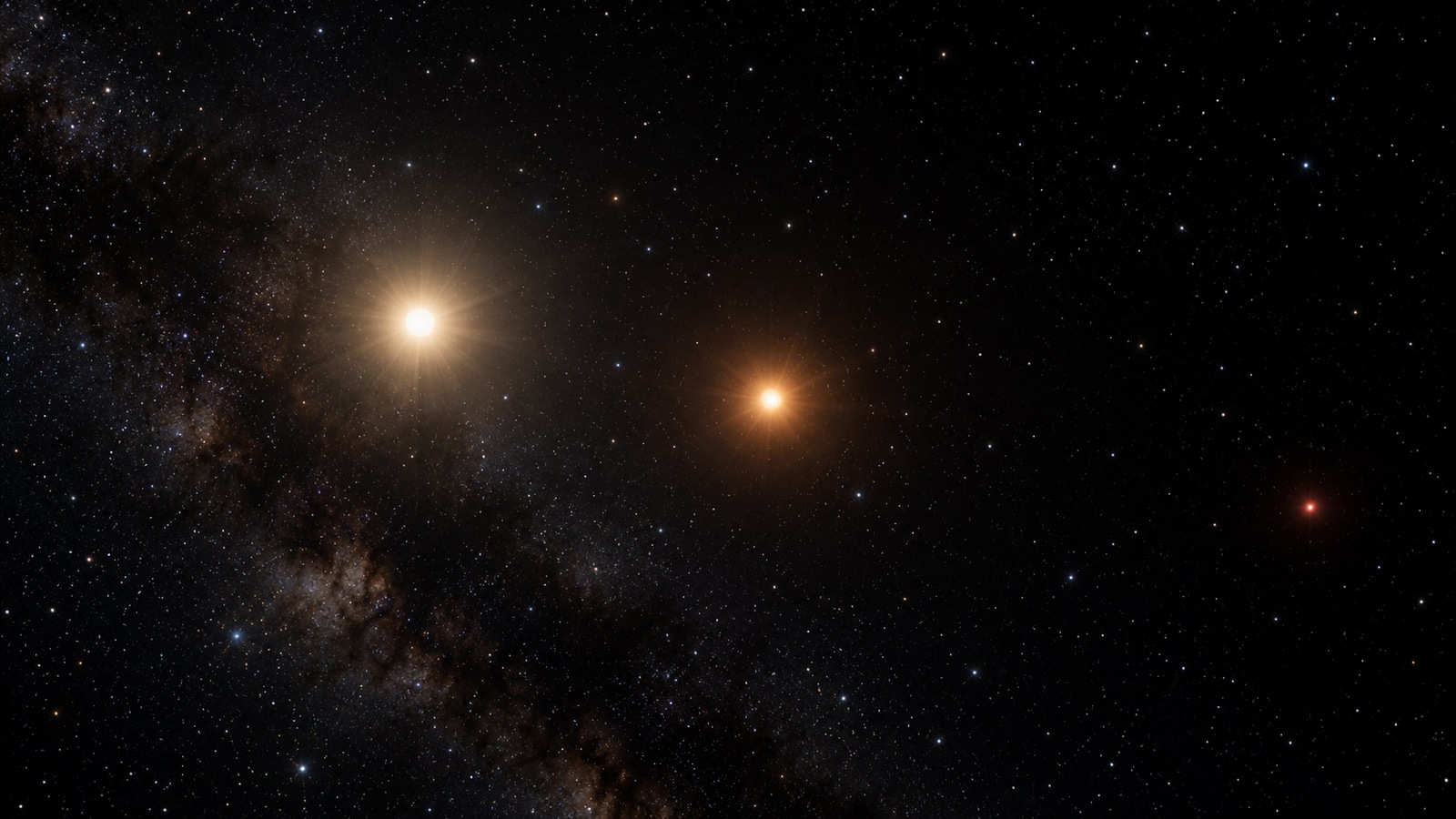
Defining a Star in the Universe
Stars are the fundamental building blocks of the universe, brilliant beacons of energy scattered across galaxies. Scientifically, a star is defined as a massive, luminous sphere of plasma held together by gravity, undergoing nuclear fusion in its core. This process transforms hydrogen into helium and releases vast amounts of energy, which radiates outward as light and heat. Without stars, galaxies would be dark collections of dust and gas, and planets like Earth would never exist.
What makes stars so remarkable is that they are not static but dynamic cosmic powerhouses. They are born, they evolve, and eventually, they die—sometimes in spectacular explosions that seed the universe with the very elements needed for life. Whether we look at our Sun, scientifically known as Sol, or at distant supergiants like Betelgeuse, stars offer both familiarity and mystery, shaping the structure of the cosmos and fueling its ongoing evolution.
The Birth of a Star
The life of a star begins in vast, cold clouds of gas and dust known as molecular clouds or stellar nurseries. Within these regions, gravity starts to pull matter together into denser clumps. As the material collapses, it heats up, forming a protostar—a young object not yet hot enough to ignite nuclear fusion.
Over millions of years, the core of the protostar becomes denser and hotter until it reaches about 10 million degrees Celsius. At this threshold, hydrogen atoms fuse into helium, releasing energy in the form of photons. This marks the birth of a true star. The outward pressure from fusion balances the inward pull of gravity, creating a state of equilibrium that allows the star to shine steadily for millions to billions of years.
Main Sequence Stars: The Long Middle Age
Most stars spend the majority of their lifetimes on what astronomers call the main sequence, a stable phase where hydrogen fusion occurs in the core. The position of a star on the main sequence depends largely on its mass. Smaller stars, like red dwarfs, burn hydrogen slowly, allowing them to live for trillions of years. Medium-sized stars, like our Sun, remain stable for about 10 billion years. More massive stars consume their fuel at a furious pace, shining intensely but living only a few million years. During this long middle age, stars provide steady energy to their surroundings, supporting planetary systems and, in the case of our solar system, the evolution of life itself.
The Variety of Stars
Stars come in a remarkable range of sizes, colors, and luminosities. The smallest stars, called red dwarfs, may be less than half the Sun’s mass and shine faintly with a reddish hue. Giants and supergiants, like Betelgeuse or Rigel, dwarf the Sun in size and brightness, glowing with incredible intensity. The color of a star reflects its temperature. Blue stars are the hottest, exceeding 30,000 degrees Celsius, while cooler red stars may be just a few thousand degrees. White, yellow, and orange stars fall in between, creating the dazzling spectrum visible in the night sky. Each type of star tells a different story about mass, temperature, and life cycle, enriching the diversity of the universe.
The Sun: Our Closest Star
For us on Earth, the Sun is the most important star of all. It is a G-type main sequence star, about 4.6 billion years old and roughly halfway through its life. Its energy output sustains our planet’s climate, drives photosynthesis, and makes life possible. Studying the Sun provides crucial insights into stellar behavior. Sunspots, solar flares, and coronal mass ejections reveal the dynamic magnetic environment of our star. The solar wind streams outward, shaping planetary magnetospheres and influencing space weather. Because it is so close, the Sun serves as a natural laboratory for understanding how stars function, evolve, and interact with their surroundings.
Giants, Supergiants, and Hypergiants
When massive stars evolve, they swell into giant or supergiant phases. These stars are among the most luminous objects in the universe. Betelgeuse, a red supergiant in Orion, is so large that if placed at the center of our solar system, its surface would extend beyond the orbit of Mars. Hypergiants take this to an extreme, shining millions of times brighter than the Sun. Their lives are short and violent, often ending in dramatic supernova explosions. These colossal stars illustrate the upper limits of stellar mass and energy, reminding us of the diversity and dynamism of stellar evolution.
The Death of a Star
A star’s death depends on its mass. Low-mass stars like red dwarfs quietly fade, eventually cooling into white dwarfs and then black dwarfs, though the universe is not old enough for any black dwarfs to exist yet. Medium stars like our Sun swell into red giants, shedding outer layers to form planetary nebulae, leaving behind white dwarfs as remnants.
Massive stars end their lives far more explosively. When they exhaust their nuclear fuel, their cores collapse, triggering supernova explosions that briefly outshine entire galaxies. What remains can be either a neutron star or, if the mass is high enough, a black hole. These dramatic deaths recycle heavy elements—carbon, oxygen, iron, and beyond—into space, seeding future stars, planets, and even life.
Supernovae: Cosmic Recycling Events
Supernovae are among the most spectacular events in the universe. When a massive star collapses, the rebound and shockwave expel its outer layers into space at incredible speeds. The explosion produces elements heavier than iron, which are dispersed into interstellar clouds. This cosmic recycling is essential. The iron in your blood, the calcium in your bones, and the gold in jewelry all originated in the heart of a star and were spread across the galaxy by supernovae. Stars are not just cosmic powerhouses—they are factories of the elements that make up everything around us.
Star Clusters and Stellar Families
Stars rarely form in isolation. Most are born in clusters within molecular clouds. These stellar families can remain bound together by gravity or gradually drift apart over millions of years. Open clusters, like the Pleiades, contain hundreds of young stars. Globular clusters, by contrast, contain hundreds of thousands of stars packed densely in spherical shapes, orbiting the galactic center. Studying star clusters provides astronomers with a natural laboratory to compare stars of similar age but different masses. By examining these groups, scientists refine models of stellar evolution and learn how stars influence one another in their early environments.
The Milky Way’s Sea of Stars
Our galaxy, the Milky Way, contains about 200 to 400 billion stars. These stars are distributed across the galactic disk, bulge, and halo, each region with unique characteristics. The spiral arms of the Milky Way are rich in young, blue stars, while the bulge contains older, redder populations.
Stars orbit the galactic center under the influence of both visible matter and dark matter. Together, they create the luminous band we see stretching across the night sky. When we study stars in the Milky Way, we are not only learning about individual objects but also unraveling the story of how our galaxy formed and evolved.
Binary and Multiple Star Systems
Many stars do not live alone. Binary systems, where two stars orbit a common center of mass, are common. In some cases, the stars exchange material, influencing each other’s evolution. Multiple star systems with three or more stars also exist, creating complex orbital dances. These systems are important for astrophysics because they allow astronomers to directly measure stellar masses and study interactions. They also create unique phenomena, such as eclipsing binaries where stars periodically block each other’s light, offering valuable data about stellar sizes and properties.
Variable Stars and Stellar Pulsations
Not all stars shine with steady brightness. Variable stars change in luminosity over time due to internal pulsations, eclipses, or eruptions. Cepheid variables, for example, pulsate regularly, and their brightness changes provide a reliable method for measuring cosmic distances. Studying variable stars has been crucial for understanding the scale of the universe. Henrietta Swan Leavitt’s work on Cepheids in the early 20th century enabled astronomers like Edwin Hubble to measure the expansion of the universe. Variable stars remain essential tools in modern cosmology.
Exotic Stellar Remnants
When stars die, they leave behind exotic remnants. White dwarfs are dense, Earth-sized objects with masses similar to the Sun. Neutron stars are even more extreme, compressing more than the Sun’s mass into a sphere just a few kilometers across. Some neutron stars become pulsars, emitting beams of radiation that sweep across space like cosmic lighthouses.
The most extreme remnants are black holes, formed when massive stars collapse completely. These objects have gravity so strong that not even light can escape. Each type of remnant provides a glimpse into matter under extraordinary conditions, pushing physics to its limits.
How We Study Stars
Astronomers study stars through the light they emit. Spectroscopy allows scientists to analyze starlight and determine composition, temperature, and velocity. Photometry measures changes in brightness, while astrometry tracks positions and motions. Combined, these techniques build a detailed picture of stellar properties and evolution.
Space telescopes like Hubble, Chandra, and James Webb, along with ground-based observatories, give astronomers the tools to study stars across the electromagnetic spectrum. From radio waves to gamma rays, each wavelength reveals different aspects of stellar behavior. The result is a comprehensive view of these cosmic powerhouses.
Stars and the Search for Life
Stars are not just astronomical objects; they are essential to the search for life. The habitable zone around a star is the region where conditions allow liquid water to exist on a planet’s surface. The type of star determines the size and stability of this zone. Red dwarfs, though abundant, produce frequent flares that could strip planetary atmospheres. Sun-like stars offer stable environments but live only about 10 billion years. The nature of a host star shapes the possibilities for life, making stellar studies central to astrobiology.
Stars as Cosmic Timekeepers
Stars also act as timekeepers of the universe. By studying stellar populations, astronomers can estimate the ages of galaxies. The oldest stars reveal information about the early universe, while the youngest show ongoing star formation. Globular clusters contain some of the oldest stars, dating back more than 12 billion years, offering clues about how galaxies assembled after the Big Bang. Each star, in its life and death, is a marker of cosmic history.
The Endless Cycle of Stellar Life
The story of stars is one of cycles. Gas clouds collapse into stars, stars create elements through fusion, and supernovae spread those elements back into space. New generations of stars form from this enriched material, leading to planets and, eventually, life. Stars are not isolated phenomena but integral players in the universe’s grand narrative. They build the chemical foundations of galaxies, planets, and living organisms. Their cycles remind us that the cosmos is ever-changing, with each star contributing to a larger story.
The Human Connection to Stars
For millennia, humans have looked to the stars for guidance, inspiration, and wonder. Ancient civilizations used them to navigate oceans, mark seasons, and create myths. Today, we see stars not just as points of light but as powerful engines shaping the universe. The atoms in our bodies were forged in stars, linking us physically to the cosmos. When Carl Sagan said, “We are made of star stuff,” he was summarizing a profound scientific truth: stars are not distant and irrelevant—they are our origin story.
The Continuing Mystery of Stars
Despite centuries of study, stars continue to surprise us. New observations reveal unexpected behaviors, from the dimming of Betelgeuse to mysterious fast radio bursts linked to magnetars. As telescopes grow more powerful, we are discovering exoplanets orbiting stars, probing the first stars born after the Big Bang, and searching for clues about the universe’s ultimate fate. Stars remain the most visible symbols of the universe’s power and mystery. They are cosmic powerhouses, yes, but also storytellers, each one shining with the history of its creation and the promise of its legacy. By studying stars, we are not only understanding the universe—we are understanding ourselves.
Space Products Reviews
Blast off with Lyra Street’s ultimate guide to the Top 10 Best Space Products Reviews! From high-powered telescopes to stellar star maps and astronomy gear, we explore the most impressive cosmic tools available today. Dive into detailed reviews and an easy-to-navigate comparison chart to find the perfect gear for your stargazing adventures or space-inspired lifestyle.