High above the Arctic Circle, the heavens ignite in rippling curtains of green, violet, and crimson light — an ethereal performance that has fascinated humanity for millennia. Known scientifically as the Aurora Borealis, or aurora polaris borealis, this celestial dance transforms Earth’s upper atmosphere into a living canvas, where the Sun itself becomes the artist. These shimmering lights, sometimes silent, sometimes whispering, remind us of the invisible cosmic forces that surround and shape our world.
A Celestial Performance Born of the Sun
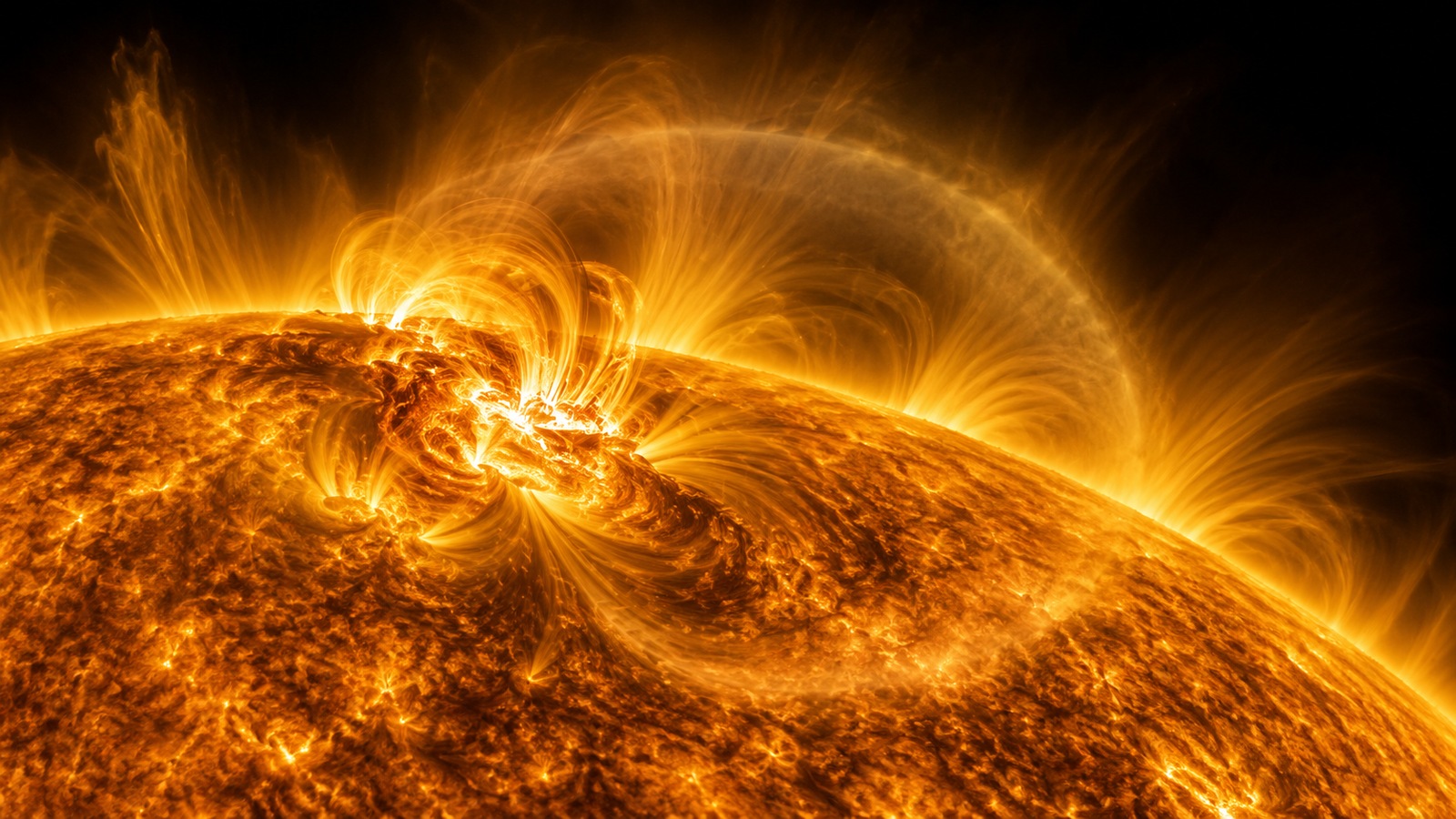
Though the Aurora Borealis graces the Earth’s polar skies, its story begins 150 million kilometers away, on the surface of the Sun. Our star constantly releases a stream of charged particles called the solar wind — a flow of electrons and protons that travel through space at astonishing speeds. When this solar wind collides with Earth’s magnetic field, something magical happens.
The particles become trapped and guided by the planet’s magnetosphere, funneling toward the poles where Earth’s magnetic field lines converge. As they crash into the thin gases of the thermosphere and exosphere, energy is released in the form of dazzling light. The result is a natural wonder visible from space and celebrated by those lucky enough to stand beneath its glow.
The scientific name “aurora” itself comes from Aurora, the Roman goddess of dawn, and “Boreas,” the Greek god of the north wind — a poetic pairing for a phenomenon that feels divine yet is grounded in physics.
The Dance of Particles and Light
At the atomic level, the aurora is an exquisite interplay of energy and matter. When high-energy particles from the Sun collide with oxygen and nitrogen atoms in Earth’s upper atmosphere, they excite these atoms — pushing their electrons into higher energy states. When those electrons return to their normal levels, they release photons — tiny packets of light. Each type of gas produces its own color. Oxygen is responsible for the most common emerald green glow, while high-altitude oxygen creates deep red hues. Nitrogen, depending on its ionization state, contributes purples, pinks, and sometimes a subtle blue. Together, these interactions form the sweeping curtains, arcs, and spirals that stretch across the night sky. Every flicker of the Aurora Borealis is a conversation between our planet and the Sun — a visible reminder of their constant magnetic connection.
An Ancient Mystery in the Sky
Long before scientists understood solar winds or magnetospheres, people across the Northern Hemisphere marveled at the aurora and sought meaning in its glow. Indigenous cultures in the Arctic and sub-Arctic regions wove rich stories around its mystery.
To the Inuit of Alaska, the lights were thought to be the spirits of ancestors playing games in the sky, their laughter echoing faintly in the crackling air. The Sámi people of northern Scandinavia saw them as sacred forces deserving respect and silence. In Norse mythology, the lights were believed to be reflections from the armor of the Valkyries — the warrior maidens who guided souls to Valhalla.
In medieval Europe, the aurora was sometimes seen as an omen — a celestial warning of war or plague. For the Chinese and Japanese, records of red auroras appear in ancient texts, interpreted as dragon-like entities twisting in the heavens.
Every culture found poetry and power in the phenomenon. Today, while science explains its mechanism, the sense of wonder remains timeless.
Aurora Borealis vs. Aurora Australis
While northern skies host the Aurora Borealis, the southern hemisphere is home to its twin — the Aurora Australis, or “Southern Lights.” Both are identical in cause and appearance, their differences merely geographic. The two auroras occur simultaneously, mirroring each other across Earth’s magnetic poles.
However, the Aurora Borealis is far more famous, largely because more people live in northern high latitudes. Cities like Tromsø in Norway, Fairbanks in Alaska, and Yellowknife in Canada have become pilgrimage sites for travelers seeking the shimmering glow.
The Southern Lights, by contrast, dance over the remote expanses of Antarctica and the southern oceans. Occasionally, they grace the skies of southern New Zealand, Tasmania, or Patagonia, offering a rare and stunning spectacle for those far from the Arctic Circle.
Together, they form a global phenomenon — Earth’s way of glowing in response to the energy of its star.
The Science of Solar Storms
The Sun is not a quiet star. Its surface constantly churns with magnetic turbulence, producing solar flares and coronal mass ejections (CMEs) — massive bursts of plasma that hurl billions of tons of charged particles into space. When these eruptions are directed toward Earth, they intensify the solar wind and can dramatically amplify auroral activity. During powerful geomagnetic storms, the Aurora Borealis can extend far south of its usual range, becoming visible as far as New York, Paris, or Beijing. The most famous of these events, the Carrington Event of 1859, produced auroras so bright they were seen in the Caribbean. Telegraph lines sparked and caught fire as electrical currents surged through them. Today, a storm of similar magnitude could disrupt satellites, GPS systems, and power grids. Thus, the aurora is both a beauty and a warning — a visible sign of the Sun’s immense influence on our technological world.
Where and When to See the Northern Lights
The Aurora Borealis typically occurs in a ring-shaped zone around the magnetic poles known as the auroral oval. The best places to witness it lie within high latitudes — roughly between 60° and 75° north.
Prime viewing regions include:
- Norway and Sweden: The Scandinavian Arctic offers long, dark winters and frequent displays.
- Iceland: The island’s isolation and lack of light pollution make it a hotspot for aurora chasers.
- Canada’s Northwest Territories and Yukon: Vast wilderness and clear skies offer unmatched views.
- Alaska: Fairbanks sits directly under the auroral oval, offering near-daily opportunities during winter.
- Finland’s Lapland: Snowy forests and glass-roofed igloos make aurora watching a fairytale experience.
The best season for viewing is between September and March, when nights are long and skies are dark. Solar activity, which follows an 11-year cycle, also plays a key role — with peaks producing more frequent and vivid displays.
For travelers, patience is essential. The aurora can vanish as quickly as it appears, but when it emerges, the experience is unforgettable.
Colors of the Cosmic Canvas
One of the most captivating aspects of the Aurora Borealis is its color diversity. The hues and tones depend on altitude, particle energy, and atmospheric composition.
- Green: Produced by oxygen at altitudes between 100 and 300 kilometers, green is the most common auroral color.
- Red: Emitted by oxygen above 300 kilometers, red auroras are rarer and usually faint, appearing during intense solar activity.
- Purple and Violet: Result from nitrogen molecules, often forming the edges or lower portions of auroral curtains.
- Blue: Created by energetic nitrogen ions at lower altitudes, blue tones are less visible to the naked eye.
These colors often blend into one another, forming dynamic bands and rippling curtains that pulse with energy. The aurora is not static — it flickers, undulates, and sometimes explodes in sudden bursts known as auroral substorms, creating a spectacle of motion and light unmatched anywhere else on Earth.
The Sound of the Lights
Though often described as silent, some witnesses claim to have heard faint sounds during intense auroral activity — soft crackles, hisses, or whispers that seem to echo the visual display. For centuries, scientists dismissed these reports, but recent studies have detected low-frequency electromagnetic emissions that could, under certain conditions, create audible sounds close to the ground. The phenomenon remains debated, but the idea that the sky’s light show might also have a voice adds yet another layer of enchantment to an already mysterious event.
Chasing the Aurora: Modern-Day Adventure
In recent years, aurora tourism has flourished. People travel thousands of miles to experience the Northern Lights firsthand, and entire industries now cater to this pursuit. Tour companies offer guided excursions to remote areas with optimal viewing conditions, often pairing the experience with cultural or wilderness adventures. Photographers, armed with tripods and wide-angle lenses, wait for hours in subzero temperatures to capture the perfect shot — a dance of light over frozen lakes or snow-covered forests. Technology has also transformed aurora hunting. Apps and websites now track solar wind data in real time, predicting auroral activity based on measurements from satellites like NOAA’s DSCOVR and NASA’s ACE. These tools empower travelers to chase the lights more effectively than ever before. Still, the true magic lies not in prediction, but in surprise — that moment when the sky suddenly awakens, and green ribbons unfurl across the darkness like brushstrokes from the Sun itself.
The Aurora on Other Worlds
Earth isn’t the only planet that hosts auroras. Wherever magnetic fields and atmospheres coexist, similar phenomena appear.
- Jupiter has the most powerful auroras in the solar system, fueled by its immense magnetic field and interactions with its volcanic moon, Io.
- Saturn displays brilliant ultraviolet auroras visible only through space telescopes.
- Even Mars and Venus, despite their weak or patchy magnetic fields, show faint auroral glows caused by solar particles interacting with their atmospheres.
These extraterrestrial auroras remind scientists that magnetic fields play a crucial role in planetary protection, helping to shield atmospheres from the constant bombardment of the solar wind.
In studying them, researchers gain deeper insight into both Earth’s own defenses and the habitability of worlds beyond.
Auroral Physics: The Magnetic Connection
Beneath its beauty lies complex science. The aurora is fundamentally a magnetic phenomenon — a visible trace of the interaction between solar plasma and Earth’s magnetosphere.
The magnetosphere acts like a giant shield, deflecting most charged particles from the Sun. But where magnetic field lines converge near the poles, the particles spiral inward, colliding with atmospheric gases.
This process generates electrical currents — known as Birkeland currents — that flow along magnetic field lines between the ionosphere and space. These currents not only produce light but also influence radio communication, satellite orbits, and power systems on Earth.
In essence, the Aurora Borealis is both an art form and an experiment in plasma physics, unfolding nightly above our heads.
Auroras and Space Weather
While breathtaking, auroras are also indicators of space weather — the ever-changing conditions in the space surrounding Earth. Scientists monitor auroral activity to understand how solar energy interacts with our planet. When geomagnetic storms occur, they can disrupt satellites, degrade GPS accuracy, and even endanger astronauts. Power grids may experience surges from induced currents, as happened during the 1989 Quebec blackout, triggered by a solar storm. Studying auroras helps researchers predict and mitigate such effects. Instruments like magnetometers, ionospheric sensors, and space probes track the flow of energy through Earth’s magnetic environment, turning the aurora into both a spectacle and a scientific tool.
Photography: Capturing the Sky’s Masterpiece
Photographing the Aurora Borealis requires patience, timing, and a touch of luck. The key is balancing exposure to capture the lights’ movement without washing out their brilliance.
Long exposures — typically between 5 and 25 seconds — reveal the full range of colors invisible to the naked eye. Wide-angle lenses frame sweeping arcs across starry skies, while still water or snowy landscapes reflect the glow, doubling the spectacle.
Modern digital cameras have democratized aurora photography, allowing amateurs to capture stunning images once reserved for professionals. In the process, these photographs have spread across social media, inspiring a global fascination with nature’s most spectacular light show.
Myth, Science, and the Human Connection
The Aurora Borealis sits at the crossroads of myth and science. It reminds us that the natural world can be both understood and revered. For physicists, it’s a manifestation of electromagnetic principles; for poets, it’s a living symbol of wonder and impermanence. The same phenomenon that inspires data analysis also evokes spiritual awe. In that sense, the aurora connects humanity across time — from ancient storytellers to modern astrophysicists, from frozen explorers to photographers capturing eternity in a single frame.
Aurora Forecasting: Reading the Sky
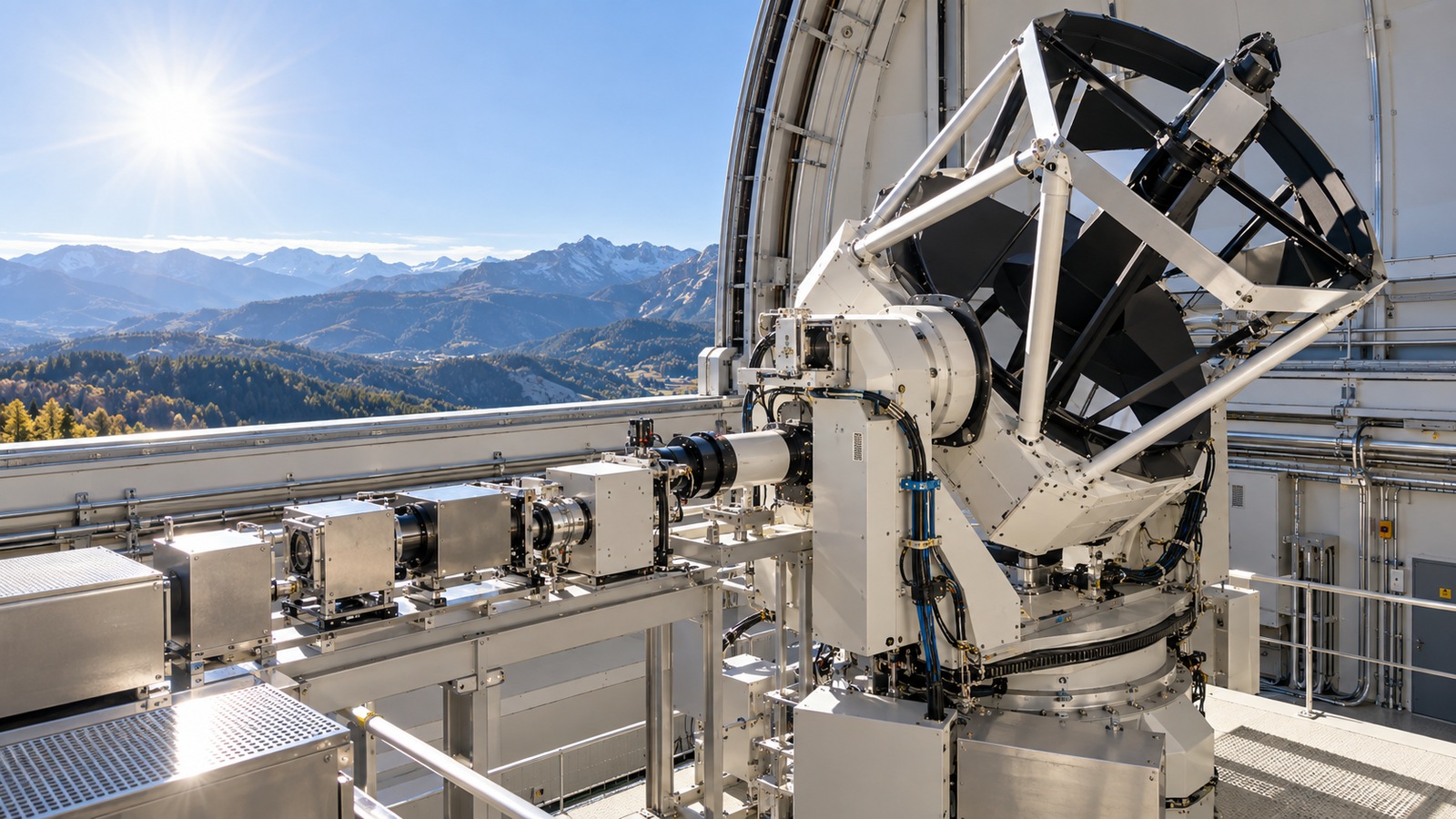
Modern forecasting relies on space-based observation. Satellites monitor the Sun’s activity, tracking sunspots, flares, and CMEs. Instruments like the Solar and Heliospheric Observatory (SOHO) and Parker Solar Probe provide real-time data on solar wind speed, density, and magnetic orientation.
Scientists use this information to predict when and where auroras will appear, translating complex plasma physics into accessible indices like the Kp index, which rates geomagnetic activity on a scale from 0 (quiet) to 9 (extreme storm). When Kp values rise above 5, auroral activity becomes visible at lower latitudes — a rare treat for observers far from the Arctic. Forecasting has turned aurora hunting into both art and science, allowing enthusiasts to chase the lights with precision once unimaginable.
The Future of Aurora Research
As technology advances, scientists continue probing deeper into auroral mysteries. Missions like NASA’s THEMIS and the European Space Agency’s Swarm satellites measure magnetic field fluctuations and particle flows with unprecedented accuracy.
Researchers are also studying how auroras influence radio wave propagation, atmospheric chemistry, and climate interactions. On a planetary scale, understanding auroral physics helps in designing better satellite protection and deep-space navigation systems.
In the coming decades, artificial intelligence may predict auroras with near-perfect accuracy, combining solar data with atmospheric modeling — turning the once-mystical event into a fully understood, yet forever awe-inspiring, phenomenon.
Standing Beneath the Lights
No amount of explanation can replace the experience of seeing the Aurora Borealis in person. The moment it begins — a faint green arc that suddenly bursts into motion — feels like stepping into a living dream. The sky becomes fluid. Curtains of light ripple across the stars, shifting from emerald to violet, from silent to roaring in imagination. Snow glows with ghostly illumination; the air feels alive with unseen electricity. For those who witness it, the memory lingers — not just as a visual marvel, but as a profound connection between Earth and the Sun, between science and spirit, between humanity and the cosmos.
The Solar Symphony Above
The Aurora Borealis is one of nature’s greatest works of art — a visual symphony composed by the Sun and performed by the Earth’s magnetic field. Each flicker and swirl is a note in a cosmic melody, played across a stage larger than imagination itself.
Scientifically, it teaches us about space weather, magnetism, and atmospheric chemistry. Emotionally, it humbles us — a reminder that even in the age of satellites and science, there are still wonders that make us look up in awe.
The Sun paints the sky not with fire, but with light, leaving trails of color across the polar heavens. In those moments when the Aurora Borealis dances, the boundary between art and science disappears — and humanity stands illuminated beneath the brushstrokes of the universe.