Four Moons, Four Worlds
When comparing Earth’s Moon (Luna, Earth I) with Titan, Europa, and Ganymede, it becomes clear that not all moons follow the same script. Luna is a rocky, airless body, familiar as our closest celestial neighbor. In contrast, Titan, Europa, and Ganymede—moons of Saturn and Jupiter—are worlds of ice, atmosphere, and hidden oceans. Together, they represent a spectrum of planetary possibilities within the solar system. Studying the contrasts between these moons provides insight into geology, chemistry, and the conditions that may foster life. Earth’s Moon is geologically silent but geochemically rich, while the outer moons host environments that remain active beneath their icy shells. Comparing them highlights both Luna’s unique role as Earth’s stabilizer and the tantalizing potential of other moons as habitats in the cosmos.
Origins and Formation
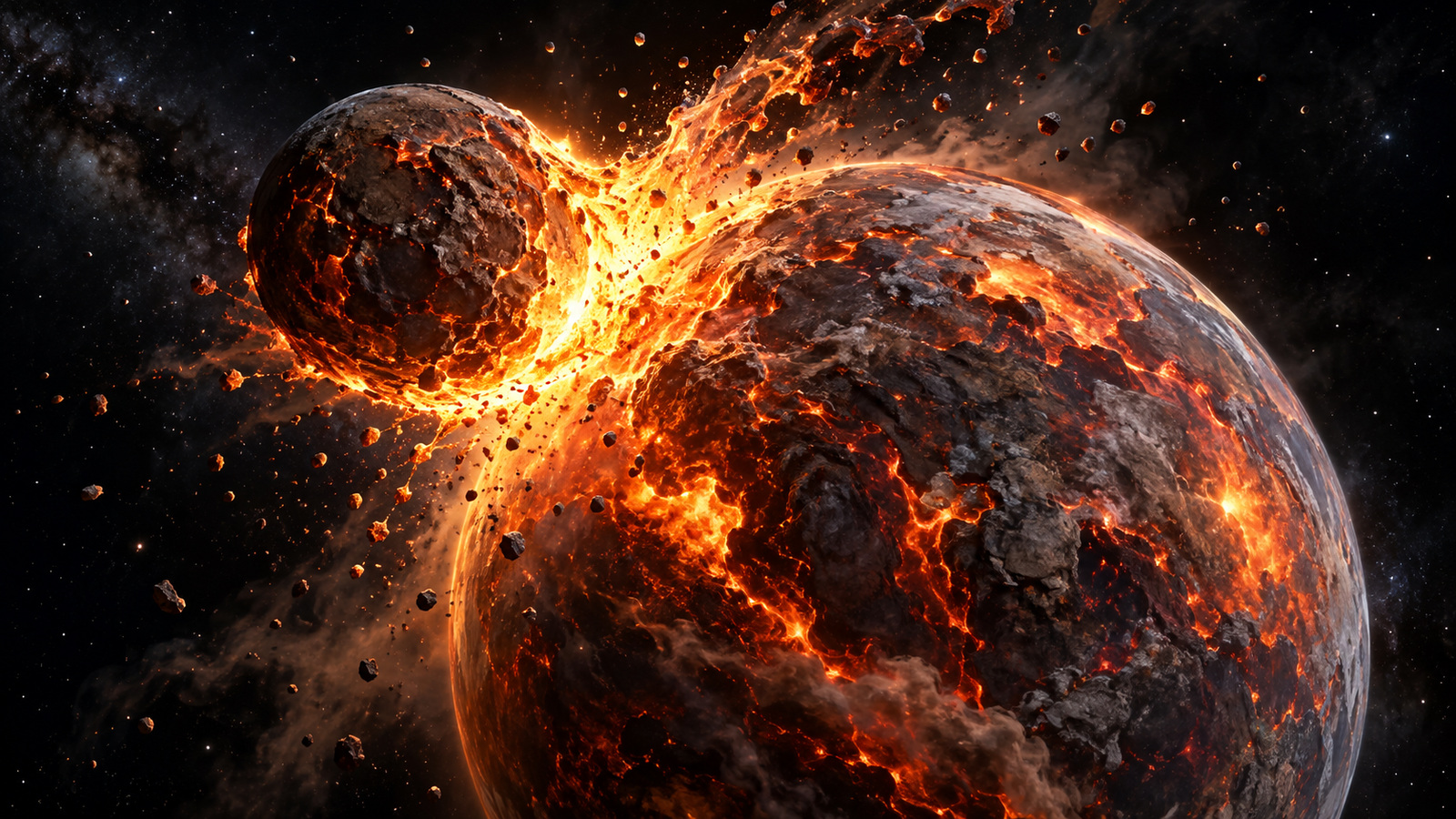
Luna likely formed 4.5 billion years ago from debris created by a giant impact between Earth and a Mars-sized body called Theia. This cataclysm produced a chemically similar companion that orbits Earth to this day. Its origin is directly tied to Earth’s own history, making the Moon a fragment of our planet’s evolution. Titan, Europa, and Ganymede, however, formed within the circumplanetary disks around Saturn and Jupiter. These environments were rich in ice as well as rock, resulting in moons with vastly different compositions from Earth’s Moon. Ganymede and Europa differentiated into layered worlds with metallic cores, rocky mantles, and icy shells, while Titan accreted with a thick supply of volatile compounds that created its dense atmosphere. The differences in origin explain why Luna is a barren rock, while its distant cousins are icy worlds rich in volatiles.
Size and Scale Differences
Earth’s Moon is the fifth largest moon in the solar system, with a diameter of 3,474 kilometers. Titan and Ganymede, however, are even larger, surpassing Mercury in size. Ganymede holds the title of the largest moon at 5,268 kilometers across, while Titan comes in second at 5,151 kilometers. Europa, at 3,121 kilometers, is slightly smaller than the Moon but still substantial in scale. The size differences have major implications for geology and atmospheres. Titan and Ganymede’s gravity allows them to retain thick volatile layers, while the Moon’s smaller mass and lack of atmosphere expose its surface to solar radiation. Europa’s size, combined with tidal heating from Jupiter’s pull, fuels its internal ocean. These contrasts show how size and environment interact to shape moons, producing everything from rocky deserts to watery, atmosphere-rich worlds.
Atmosphere or Airless Silence
Perhaps the starkest difference between Earth’s Moon and these other moons is atmosphere. Luna is essentially airless, with only a tenuous exosphere of trace gases such as helium, argon, and hydrogen. Without air, the Moon cannot shield its surface from radiation or retain heat, leading to extreme temperature swings. Titan, in contrast, boasts a thick nitrogen-rich atmosphere denser than Earth’s. It is the only moon with stable weather systems, including clouds, rain, and lakes of liquid methane and ethane. Europa and Ganymede lie in between, each possessing extremely thin oxygen atmospheres created by charged particles striking their icy surfaces. While these exospheres are far from breathable, they hint at active surface chemistry. These contrasts underscore Luna’s status as a world shaped in silence, while Titan, Europa, and Ganymede exist in atmospheres that sustain dynamic processes.
Surface Features and Landscapes
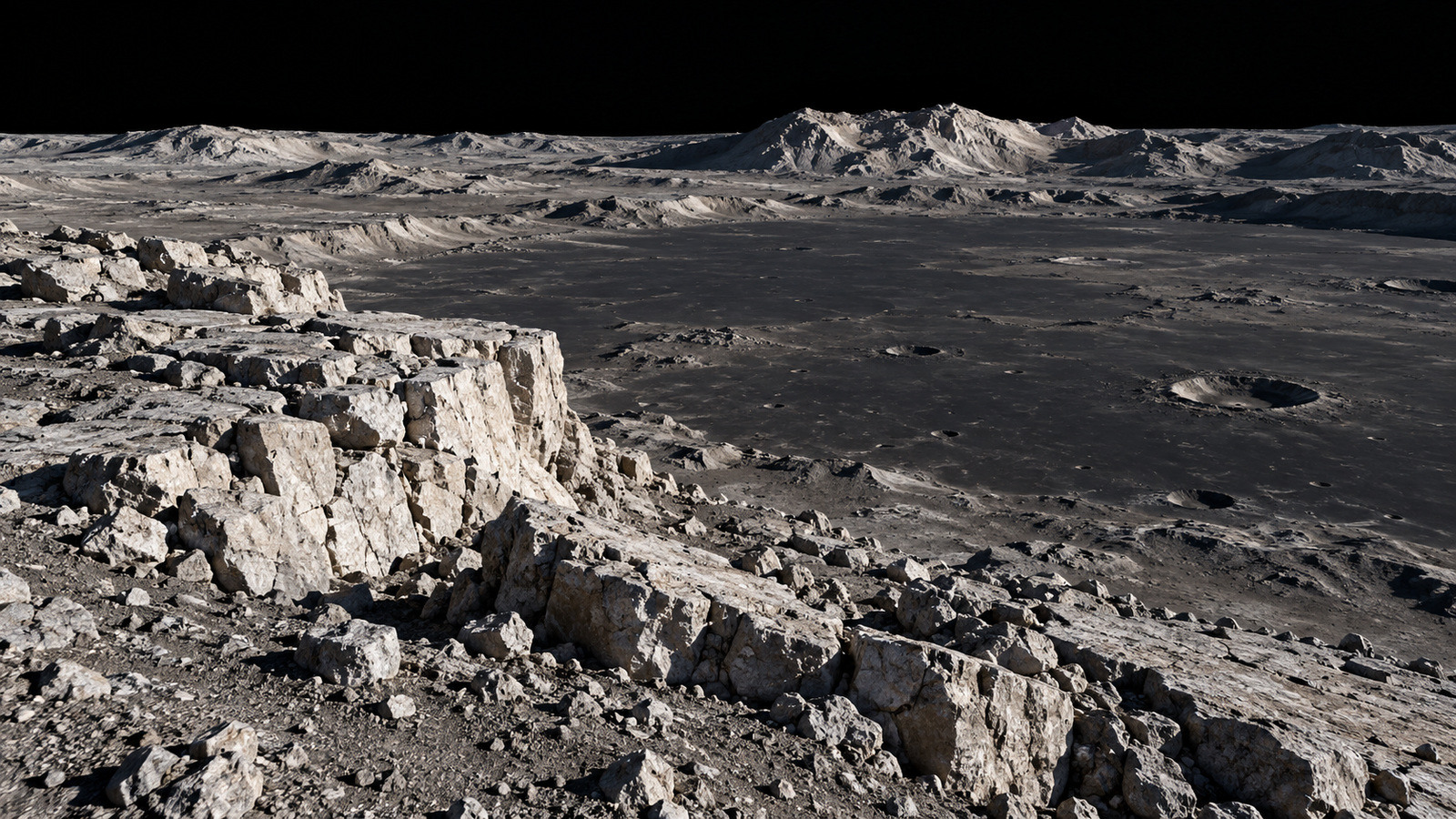
Luna’s surface is dominated by impact craters, volcanic plains known as maria, and bright anorthositic highlands. Its surface tells a story of bombardment, volcanism, and gradual cooling into geological quiet. Without an atmosphere or water, erosion is absent, and craters remain preserved for billions of years. Titan’s surface, hidden beneath its hazy skies, contains dunes, river channels, and hydrocarbon lakes, sculpted by methane in place of water. Europa’s surface is a fractured icy crust crisscrossed by ridges and chaotic terrains, signs of subsurface activity. Ganymede combines features of both—a heavily cratered surface interspersed with grooved terrains that suggest tectonic-like movements. These differences reveal how Luna is frozen in geologic time, while the outer moons remain dynamic worlds where ice and chemistry reshape landscapes.
Interiors and Oceans
The Moon has a small metallic core, a rocky mantle, and a thick crust, but little internal heat remains to drive geologic activity. Its interior is largely solidified, leaving only faint moonquakes to hint at lingering processes. By contrast, Europa, Ganymede, and Titan are believed to harbor vast subsurface oceans beneath their icy crusts. Europa’s ocean may contain more water than all of Earth’s oceans combined, kept liquid by tidal heating. Ganymede has multiple layers of oceans sandwiched between ice, while Titan likely holds a salty liquid water ocean beneath its methane-rich surface. These interiors are worlds within worlds, contrasting sharply with Luna’s inert geology. While the Moon preserves the past, these icy moons may still support active chemistry and even the conditions necessary for life.
Volcanism and Cryovolcanism
Luna’s volcanic history is written in its maria, where basaltic lava once filled impact basins. Volcanism peaked billions of years ago and ceased as the Moon cooled, leaving behind a silent surface. No active volcanoes remain today, only ancient flows and volcanic domes. Titan, Europa, and Ganymede exhibit a different form of volcanism: cryovolcanism. Instead of molten rock, these moons may erupt water, ammonia, or methane. Europa shows signs of water plumes venting from its surface, while Ganymede’s grooved terrains may indicate ice-driven tectonics. Titan possibly hosts cryovolcanic activity that replenishes its atmosphere with methane. The contrast is stark—Luna’s volcanism is extinct, while icy moons continue to pulse with activity beneath their frozen shells.
Interaction with Parent Planets
Luna’s relationship with Earth is unique. Its gravitational influence stabilizes Earth’s axial tilt, shapes tides, and lengthens our days. Its presence has profoundly influenced Earth’s climate and biology, making it essential for the evolution of life. Mars’ and Jupiter’s tidal forces shape their moons in different ways. Europa’s fractured surface results from tidal flexing as it orbits close to Jupiter, while Ganymede’s magnetic field is a product of its metallic core stirred by tidal heating. Titan, orbiting Saturn, experiences less intense tidal heating but maintains a dynamic atmosphere and weather system. Compared to Luna, whose primary role is stabilizing Earth, the outer moons are laboratories for studying how giant planets drive activity in their satellites.
Radiation Environments
The Moon is exposed to solar radiation and cosmic rays, with no atmosphere or magnetic field to provide protection. Astronauts walking on Luna must contend with radiation directly from space. Europa and Ganymede face extreme radiation environments within Jupiter’s magnetosphere. Europa, in particular, receives doses that would be lethal to unprotected humans in hours, though its icy crust may shield its ocean. Ganymede is unique as the only moon with its own magnetic field, offering localized protection. Titan’s dense atmosphere shields its surface from radiation, creating a surprisingly Earth-like environment despite its frigid temperatures. These differences underscore how environments range from hostile silence to protective envelopes among the solar system’s moons.
Potential for Life
Luna, while scientifically fascinating, is inhospitable to life. Its lack of atmosphere, water on the surface, and protective magnetic field mean it cannot support biology as we know it. It serves instead as a record of solar system history, preserving ancient craters and rocks. Europa, Titan, and Ganymede, however, are considered prime targets in the search for extraterrestrial life. Europa’s salty subsurface ocean may harbor microbial ecosystems, warmed by tidal heating. Titan’s methane lakes and complex organic chemistry hint at pathways to exotic life forms, though very different from Earth’s. Ganymede’s layered oceans could also provide stable environments for biology. The difference is clear: while Luna tells the story of Earth’s past, these distant moons may hint at life’s possibilities elsewhere.
Exploration Histories
Earth’s Moon has been the most explored celestial body beyond Earth. Six Apollo missions brought back nearly 400 kilograms of samples, while robotic missions from multiple nations continue to map, probe, and prepare for Artemis astronauts. Humanity’s relationship with Luna is intimate, filled with both science and symbolism. Europa, Ganymede, and Titan have been studied primarily through spacecraft flybys and orbiters. NASA’s Galileo mission revealed Europa’s fractured ice and Ganymede’s magnetic field. Cassini transformed Titan from a mystery to a world of methane lakes and hazy skies. Upcoming missions like NASA’s Europa Clipper and ESA’s JUICE will explore these moons in detail, probing oceans and atmospheres. Compared to the deeply studied Moon, these distant worlds remain frontiers full of unanswered questions.
Cultural and Scientific Symbolism
The Moon has inspired humanity for millennia, guiding calendars, myths, and exploration. Its phases structured human life long before telescopes revealed its craters. Apollo turned it into a symbol of achievement, forever linking Luna with exploration and wonder. Titan, Europa, and Ganymede, while less embedded in culture, have become scientific icons. Europa is a symbol of the search for life, Titan represents alien weather and chemistry, and Ganymede stands as a giant among moons. These worlds lack the cultural history of Luna but occupy central roles in humanity’s scientific imagination. Their symbolism lies not in ancient myths but in the promise of discovery.
Lessons for Planetary Science
Comparing Luna with Titan, Europa, and Ganymede provides essential lessons about planetary diversity. The Moon demonstrates the role of giant impacts and long-term geological preservation. Titan shows how atmospheres and weather can develop on moons. Europa exemplifies the power of tidal heating to maintain oceans, and Ganymede illustrates how size and magnetism shape a moon’s identity. Together, they form a comparative laboratory for planetary science. Each moon offers insights into how worlds evolve under different conditions—rocky versus icy, airless versus atmosphere-rich, stable versus dynamic. By studying them, scientists refine theories of planetary formation and habitability across the solar system.
Implications for Human Exploration
Luna is the natural next step for human exploration, with Artemis aiming to build a long-term presence and test technologies for Mars. Its resources, such as water ice in polar regions, could sustain future missions and serve as fuel depots. The Moon’s proximity makes it a proving ground for survival on other worlds. Europa, Titan, and Ganymede remain too distant for human settlement in the near term, but they inspire robotic missions and long-term visions. Titan’s atmosphere might allow future explorers to fly with wings, while Europa’s ocean demands probes capable of drilling through ice. These missions will expand humanity’s reach, using Luna as a stepping stone while distant moons remain destinations for robotic exploration.
Why These Moons Matter Together
Though Luna differs greatly from Titan, Europa, and Ganymede, studying them together highlights the diversity of planetary bodies. The Moon is a dry, rocky relic tied to Earth’s fate, while the outer moons are icy, dynamic, and potentially habitable. Each plays a unique role in understanding the solar system’s evolution. For humanity, the Moon represents proximity and possibility, a gateway to the stars. Titan, Europa, and Ganymede represent mystery and potential, worlds that may host oceans, atmospheres, or even life. Together, they remind us that moons are not mere companions but worlds in their own right, each carrying a chapter of the solar system’s story.
Space Products Reviews
Blast off with Lyra Street’s ultimate guide to the Top 10 Best Space Products Reviews! From high-powered telescopes to stellar star maps and astronomy gear, we explore the most impressive cosmic tools available today. Dive into detailed reviews and an easy-to-navigate comparison chart to find the perfect gear for your stargazing adventures or space-inspired lifestyle.